Dion, the sacred city of Macedonia, is where Alexander the Great made sacrifices to the Olympian gods, before setting off on his campaigns. It’s where statues to the Egyptian goddess rose out of the watery marsh, and where a prosperous town grew during Hellenistic and Roman times with paved streets, public baths, statues and mosaics decorating wealthy houses.
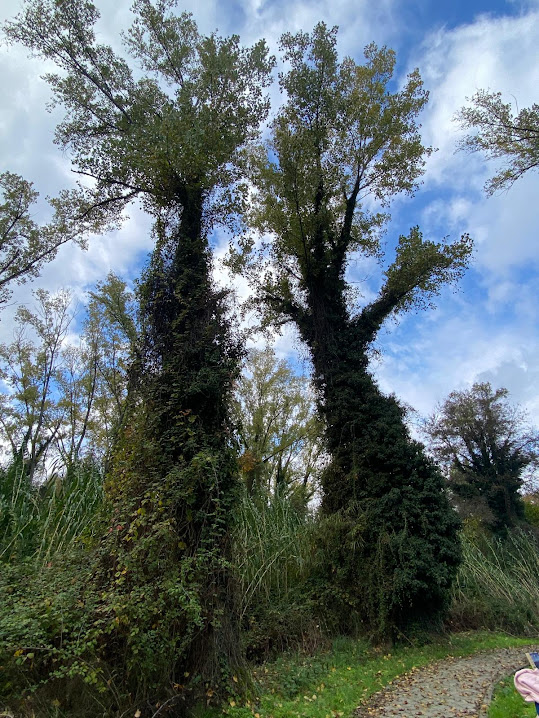
Welcome to the archaeological site of Dion and ancient town next to it. It almost seems enchanted, this vast site of green, with branches of its tall trees reaching to the sky and its bubbling springs of water. In fact, Dion, on the foothills of Mt. Olympus, is fed by mountain streams that flow for a short distance, disappear into the earth, and then resurface here.
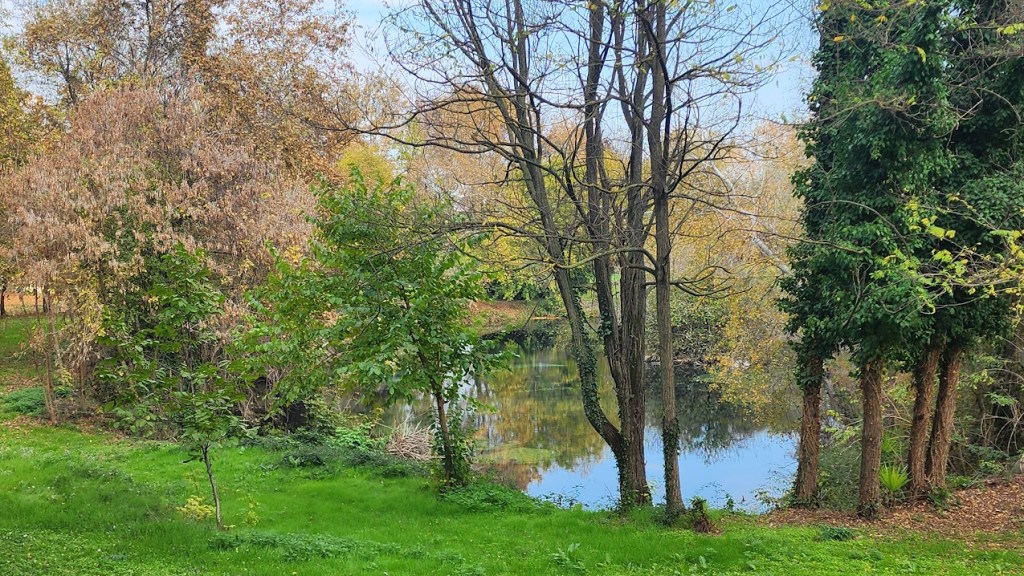
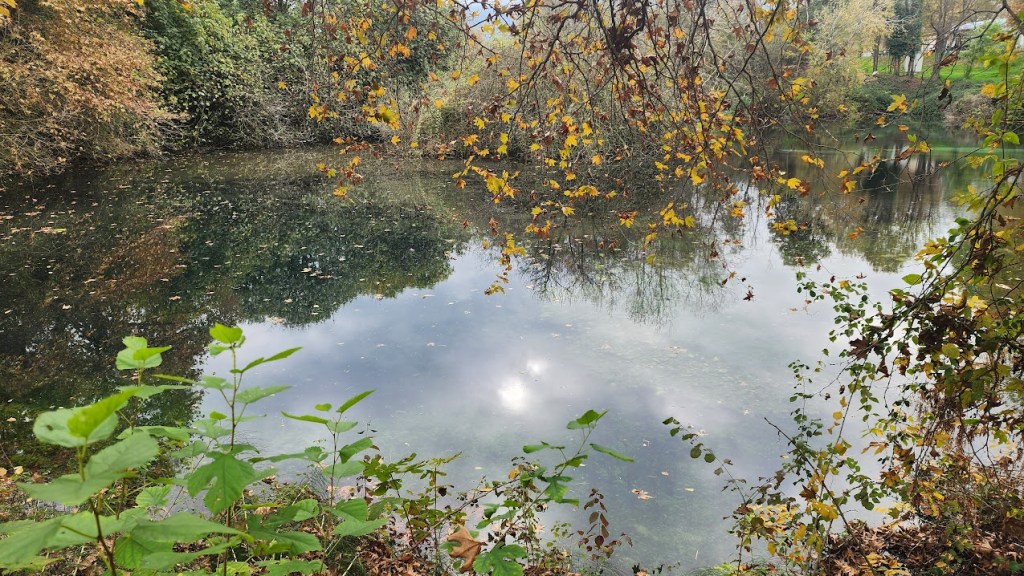
There’s a legend about the ancient river Vafyras, that flowed through Dion toward the sea (that was closer to the site than now). According to Pausanias, 2nd c AD peripatetic Greek geographer, the maenads in the area also known as bacchae, (frenzied followers of Dionysos) killed the legendary lyre player and singer Orpheus. Their aim was to wash off the blood in the river, but out of shame, the river sank under the earth and resurfaced in Dion. taking the name “Vafyras” from the Greek “vafo,” meaning dye, as a result of the blood. Vafyras was a river god, worshiped in addition to the other gods whose sanctuaries we see at Dion.
Above all Dion is a sanctuary for Zeus. The name Dion, from the Greek name for Zeus (Dias) has been a shrine to the head god on Mt. Olympus since at least the 6th c BC. About a century later, the king of Macedon organized Olympic games in Dion, much the same as in Olympia, with gymnastics, sacrifices and dramatic performances. And in fact the games lasted 9 days, according to the 9 muses, Zeus’ daughters who were honored along with him. Remember on Mt. Olympus, the 12 gods made their homes on the peak and on the lower hills, lived the muses, the nymphs and the harites (graces)..
Like at Olympia, at the huge altar outside the Zeus sanctuary, we see at Dion the hecatomb where 100 oxen (or in practice much fewer) were sacrificed for contestants and visitors in this great feast, also accompanied with music and song.
Before embarking on his legendary military campaign against the Persian Empire in Asia, Alexander the Great gathered his army at Dion. He performed a massive hecatomb to Olympian Zeus to secure the favor of the gods for his conquest. Alongside the sacrifice, he hosted a magnificent 9-day festival featuring athletic games and theatrical competitions.
Panhellenic Veneration of Zeus
All over Greece, Olympian Zeus is venerated in many forms. One of the oldest shrines from 3,000 years ago is found in the Peloponnese on Mt. Lykaio, where according to one myth, Zeus was born in this mountainous area of Arcadia west of Megalopoli. Here, Zeus lived on the peak and Pan (also worshiped here) lived on the lower hills. Olympic games flourished here as well, from the 7th c BC. This is not a site with temples like in Olympia, but an open air mountain ash altar site. You can learn more about the history and mythology of Arcadia and of Zeus Lykaio here.
The Dion sanctuary reached its peak during Hellenistic and Roman times (from the 3rd c BC), when Zeus was venerated in the area of Macedonia by the Macedonian kings and the populace.
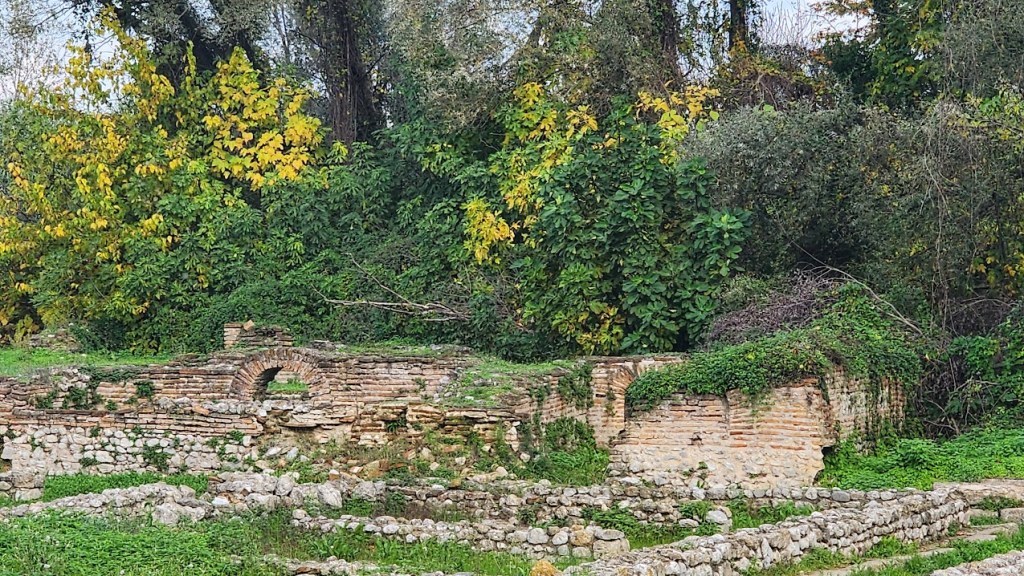
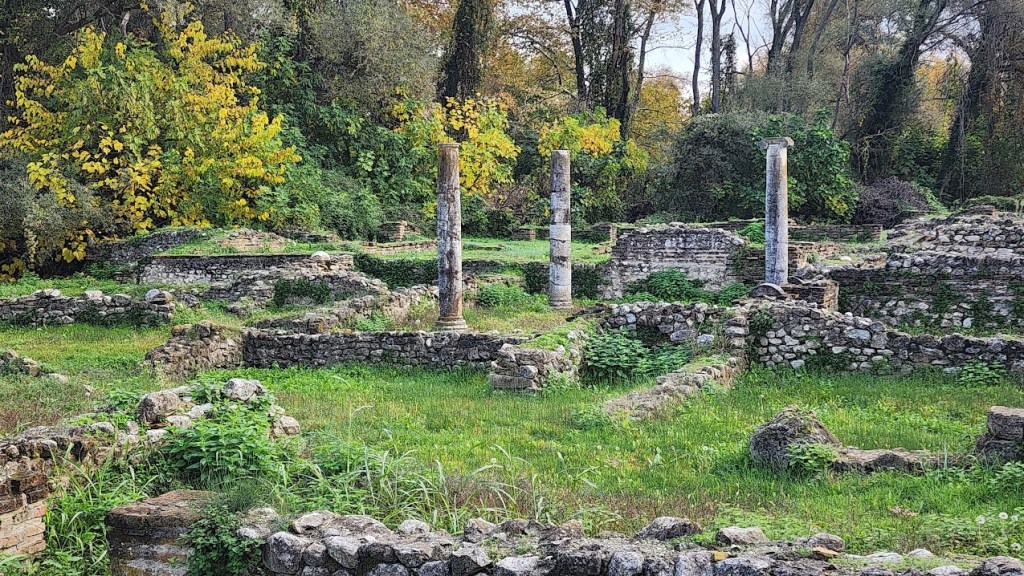
The site contains both the sanctuaries to Zeus and other gods, and the ancient city of Dion that flourished until the 5th c AD when it sank into the mud, the usual fate of archaeological sites, including Olympia and the Athens Ancient Agora, until they were discovered thousands of years later and excavated.
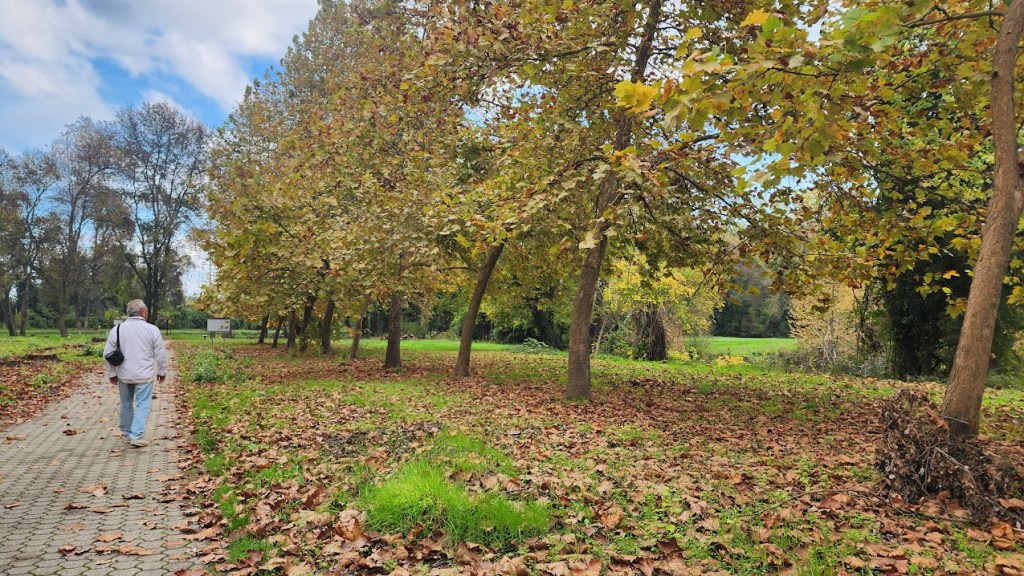
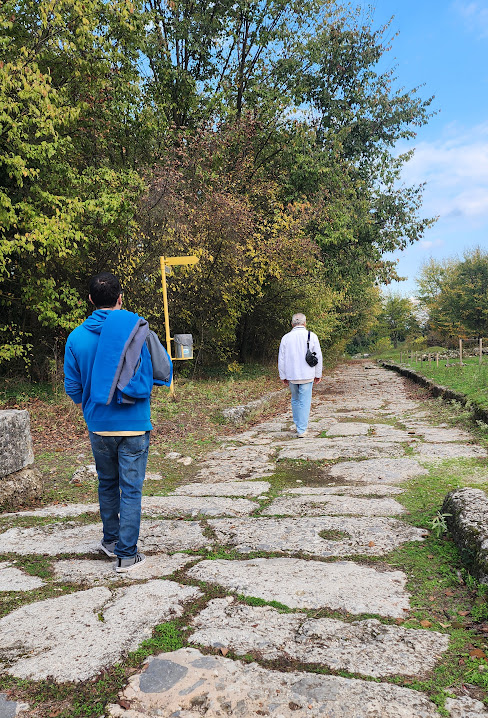
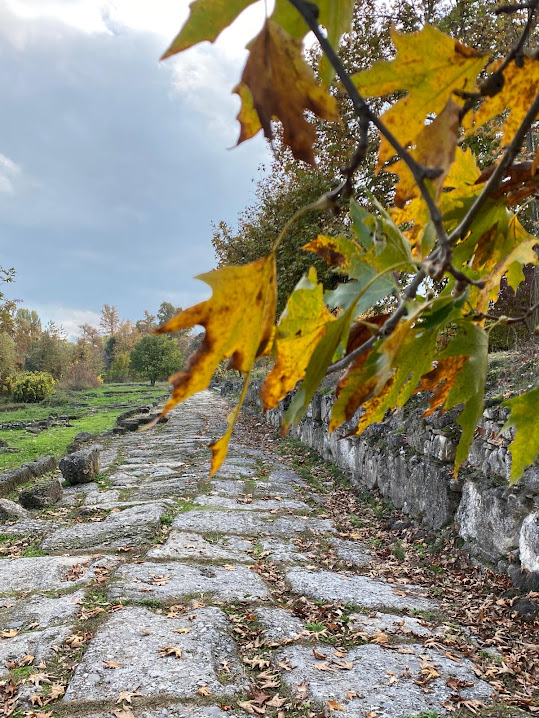
It’s a crisp fall day and a treat to walk among the leaves in their changing colors. Walking along this ancient central path means you’re walking in the footsteps of the ancients. Plenty of plaques along the way explain the site, so don’t waste time trying to decipher the microscopic letters in the leaflet they give you at the ticket window.
Sanctuaries and theaters.
The Hellenistic theater from the 3rd c BC, made of stone and brick built on a natural hill slope, could hold 4,000 people. A couple of rows of the original are still left. Every summer the theater, with renovated wooden rows, is used for performances.
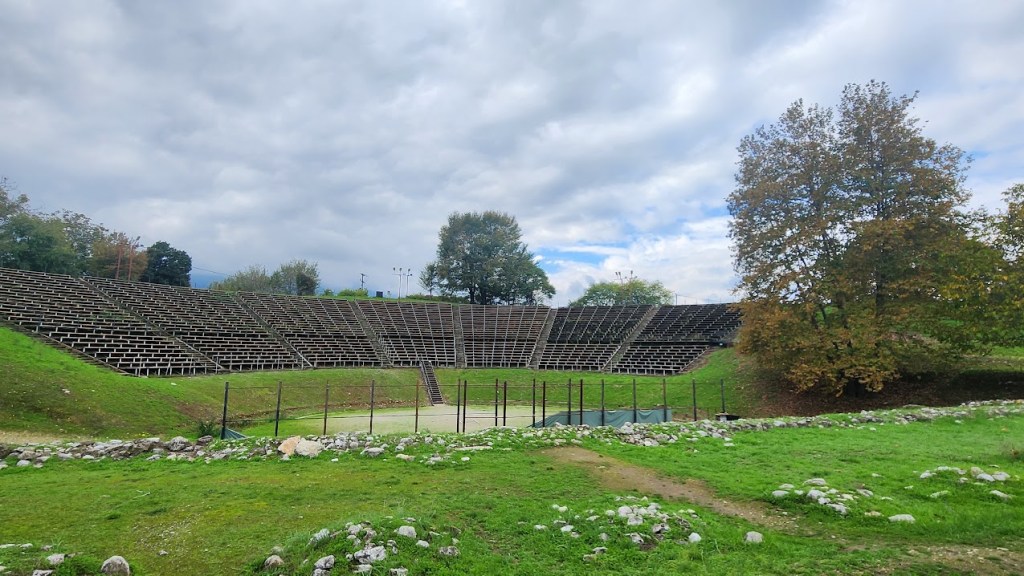
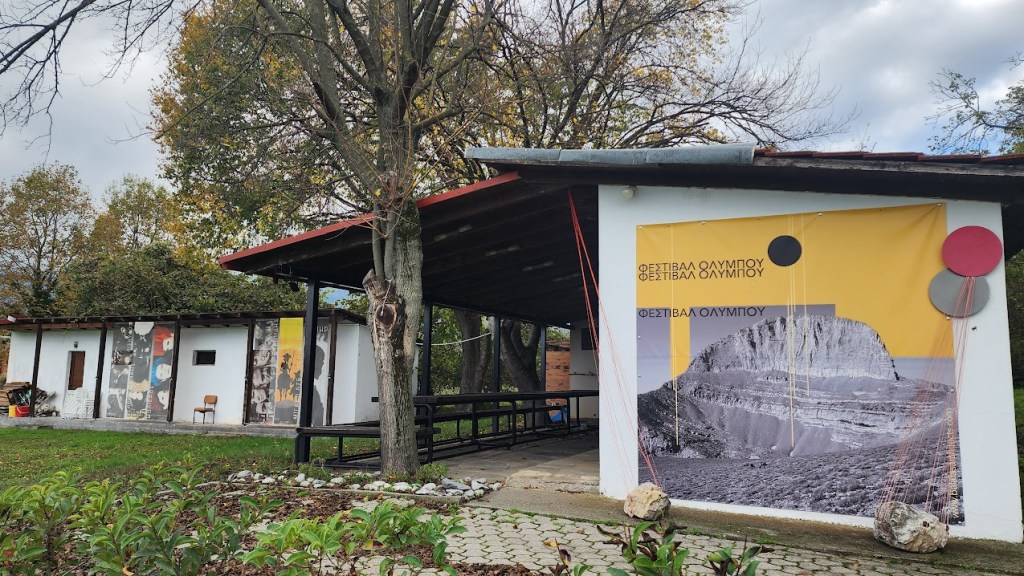
A ticket office advertises for modern productions
For the Roman theater built in the 2nd c AD, you need a bit of imagination to try to reconstruct how it looked then.
Sanctuaries to Zeus and other gods
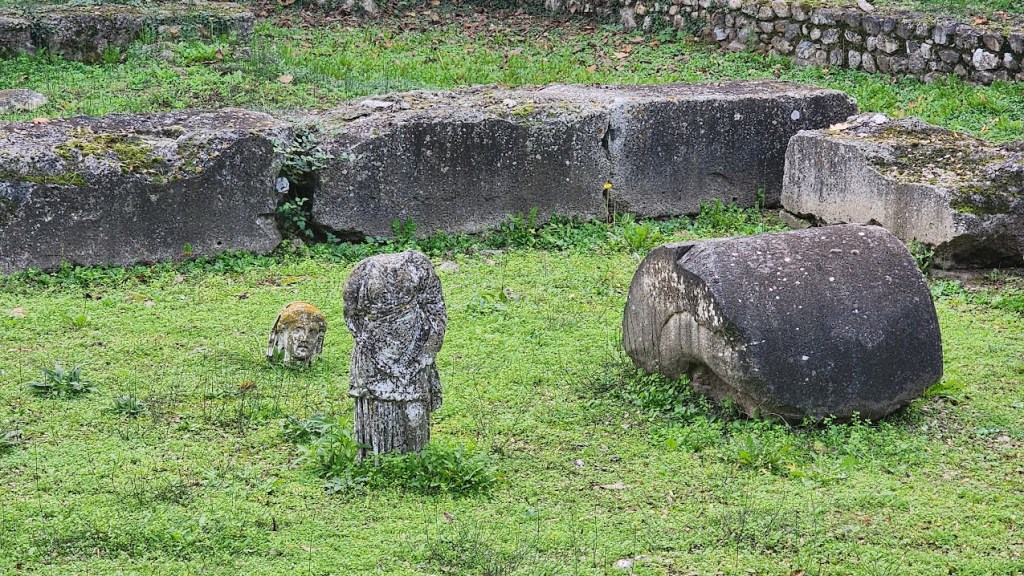
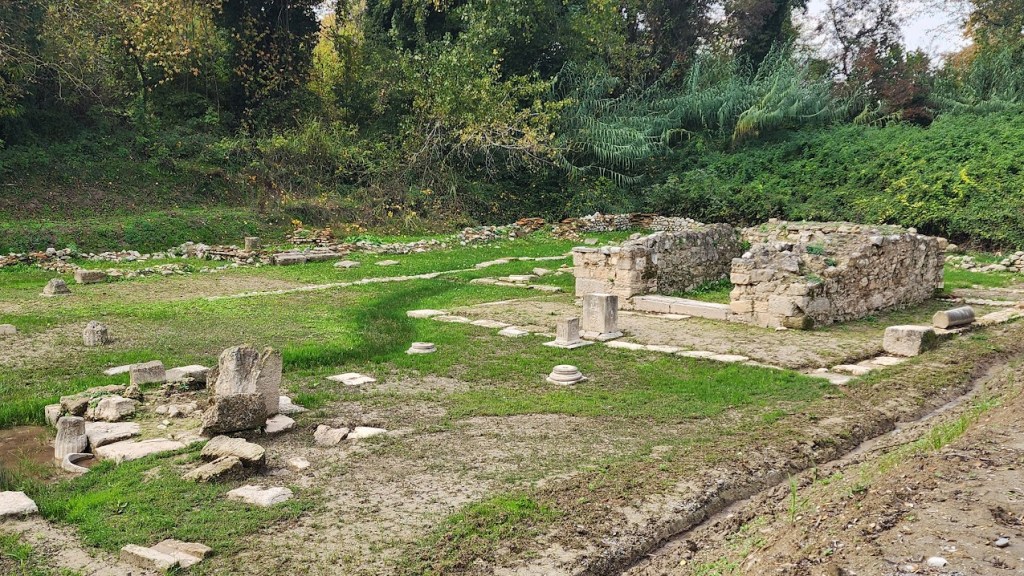
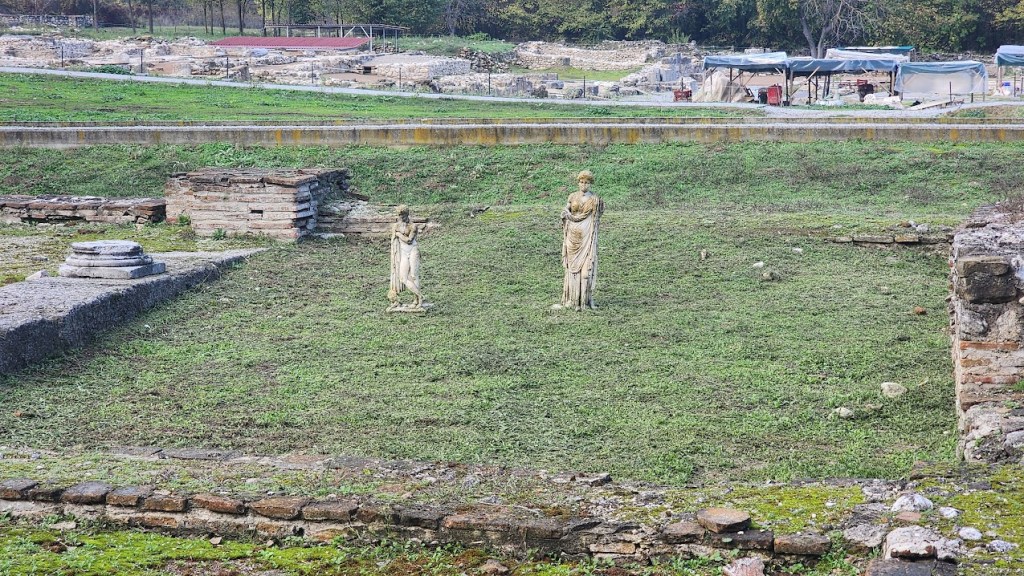
The sanctuary to Demeter and her daughter Persephone (also known as “Kore,” meaning daughter) is the oldest sanctuary here, from the 6th c BC. Clay statues of the two goddesses have been found, along with offerings left by worshipers that give a picture of agricultural life. It’s a charming sanctuary with small statues of Demeter and Persephone out on the lawn. {Notice the detached head on its own)
Water played a role in worship and healing. Near the river and sacred springs, the ancient inhabitants of Dion first built a shrine to Aphrodite, goddess of the foothills of Olympus, and Artemis, goddess of childbirth. In the 2nd c. AD she was succeeded by Isis, an Egyptian deity.
Numerous statues here date back to this time or even earlier. The Isis Festival occured every spring and autumn. Outside the sanctuary walls, villagers, craftsmen and merchants gathered, selling animals, gold and silver artifacts, a wide variety of merchandise.
But only initiated pilgrims could enter the sanctuary, where they spent the night waiting for the great goddess to visit their dreams and listen to their prayers.
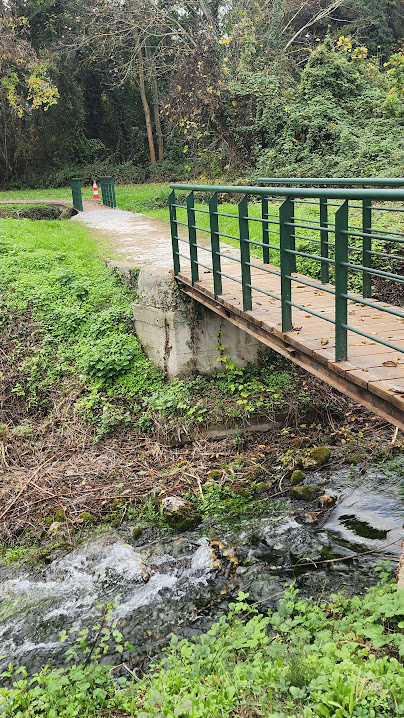
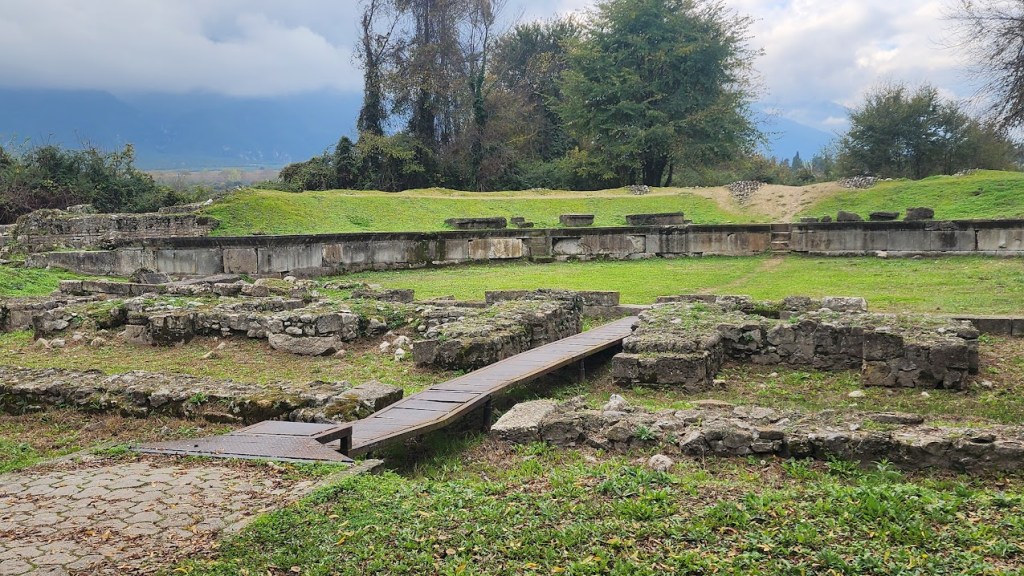
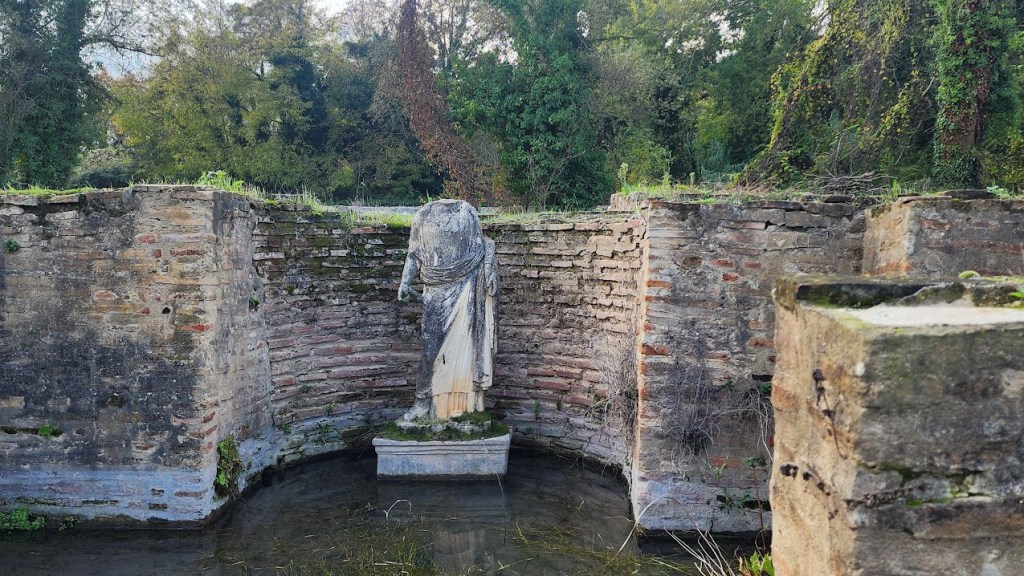
The sanctuary used the natural sacred water source. Today, because of constant flooding and worry about this bridge (in the photo), there was a rope barrier over it. But as we looked at the sanctuary from the back, we really wanted to cross and see it from the front. The rope barrier was easy to maneuver (!) and we crossed over the little bridge.
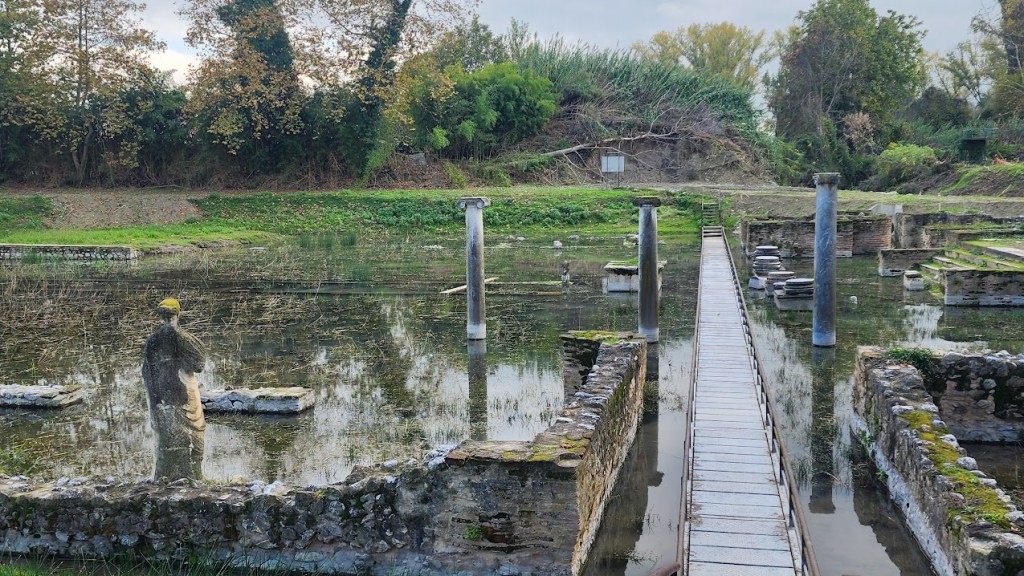
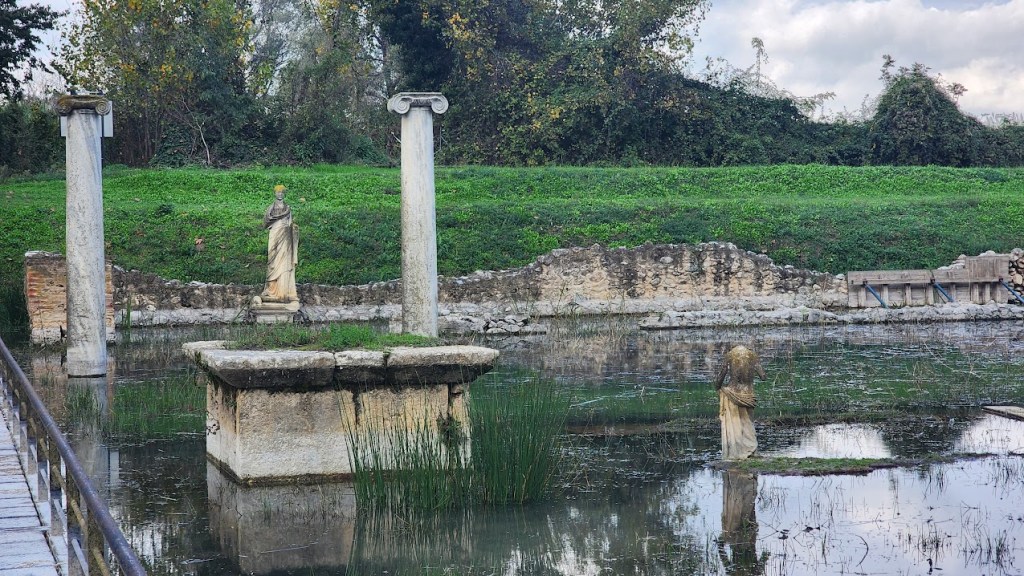
It’s a fascinating site, with small statues inside the water. Notice the head and shoulders peeking up. Crossing the bridge again, we carefully put the rope back. No one was around on this weekday in early November….
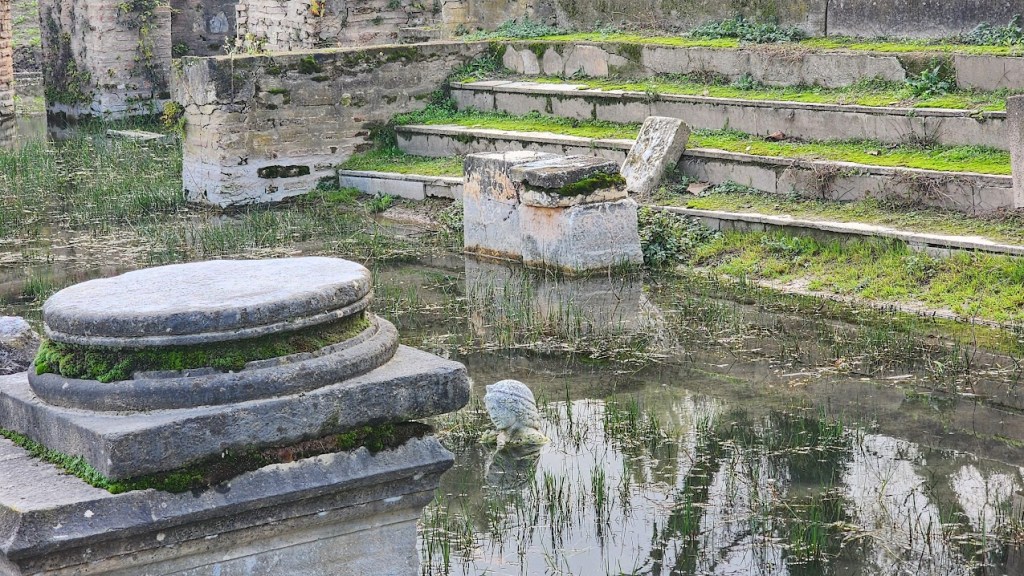
My friend Diana, who visited the site some years ago, writes in an article about Dion, “This small, intimate shrine, so unlike the formal Doric temples we are used to, must have been soothing to worried women supplicants. When you see it, you just want to grin with delight!” So true.
A sanctuary was found nearby to Asclepius, the god of healing. But what about Zeus? After all this sanctuary is to the king of the gods.
Of the Olympian Zeus shrine, archaeologists found a monumental altar where bulls were tethered and sacrificed. Nearby finds include metal rings used to secure the animals and a wealth of charred animal bones confirming centuries of grand-scale sacrifices.
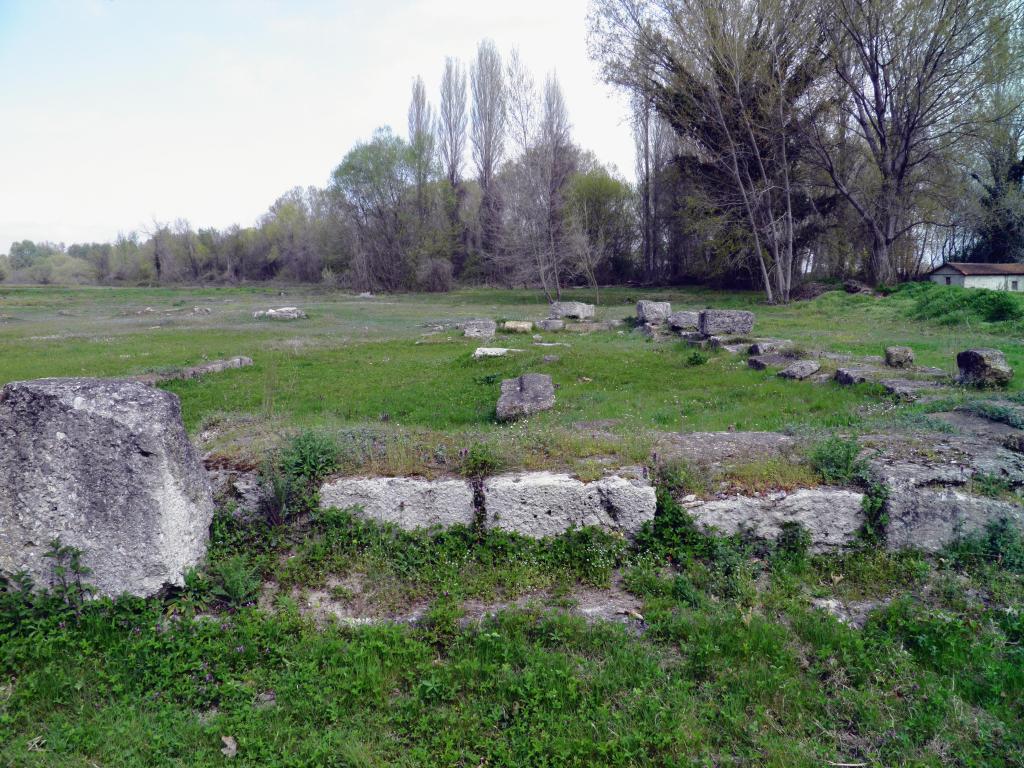
Adjacent to the sanctuary of Olympian Zeus, another Zeus was worshiped at Dion, one that dominated in fact during the Roman period. His name was Zeus Hypsistos, meaning “height,” or Zeus, the highest god. The floor mosaics found in the Zeus Hypsistos sanctuary depict imagery of white bulls and double axes, the traditional tools used by priests to slaughter the sacrificial cattle.
A sacred road led to the sanctuary of Zeus Hypsistos, lined with small columns with marble eagles.
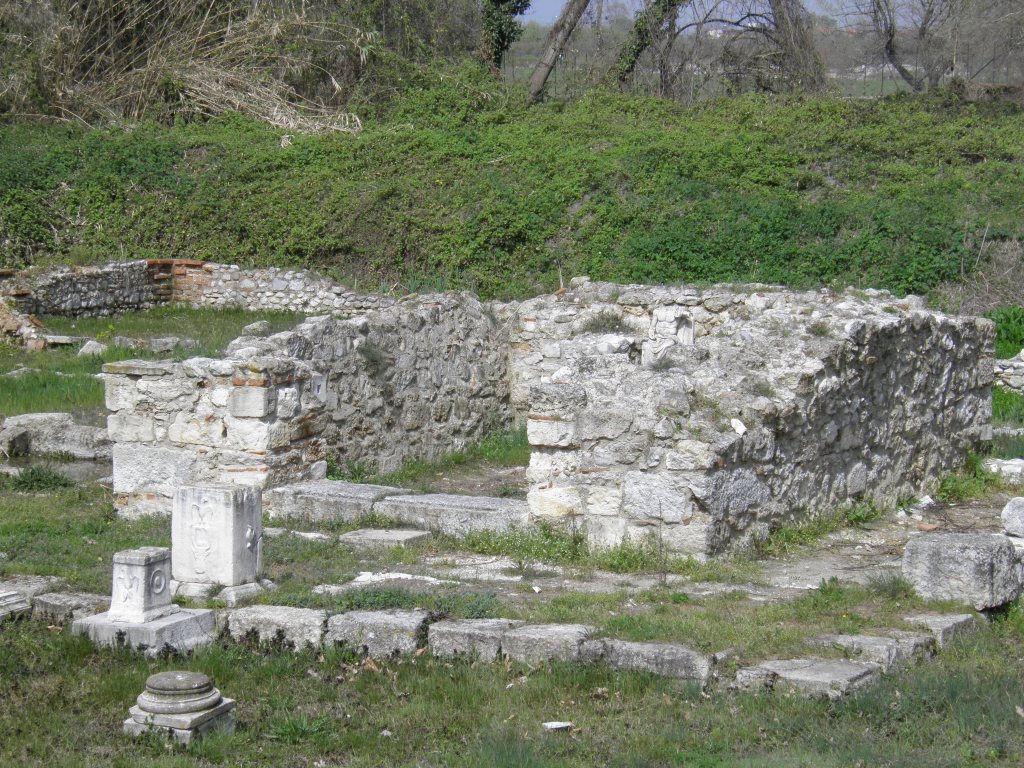
Both gods, Zeus Hypsistos and Zeus Olympios, were simultaneously venerated. While Zeus Olympios ruled the people from the top of Mount Olympus, Zeus Hypsistos dominated the sky, that is, all the supernatural.
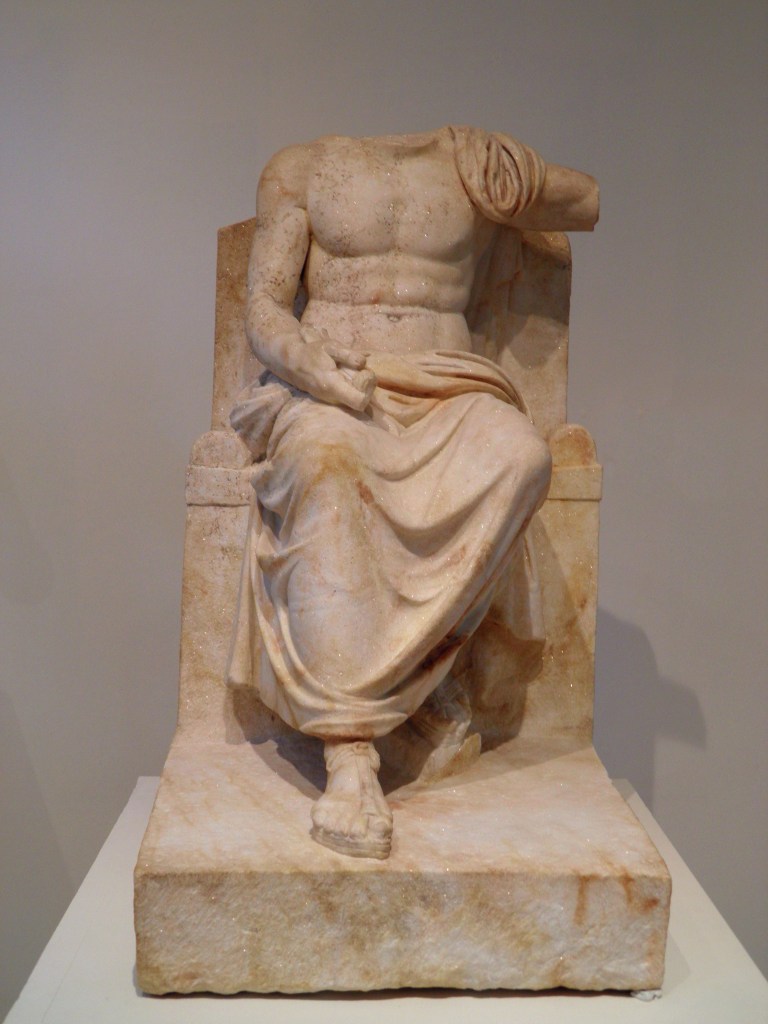
Inside the temple, a figure of a marble eagle and his statue was found of him seated on a throne, his right hand holding a thunderbolt while the left arm is raised to hold a scepter. The statue is in the Dion museum (more on the museum below)
The Ancient Town of Dion
You have to cross a road to get to the city that grew up next to these sacred sites, protected by a wall, with private homes and villas, public buildings like great baths (thermae), a Roman market (forum), an odeon for entertainment, shops and public toilets. There were also accommodations for officials and guesthouses.Some of these public spaces were added in the 3rd c AD, after Dion had already been a Roman colony for a few centuries.
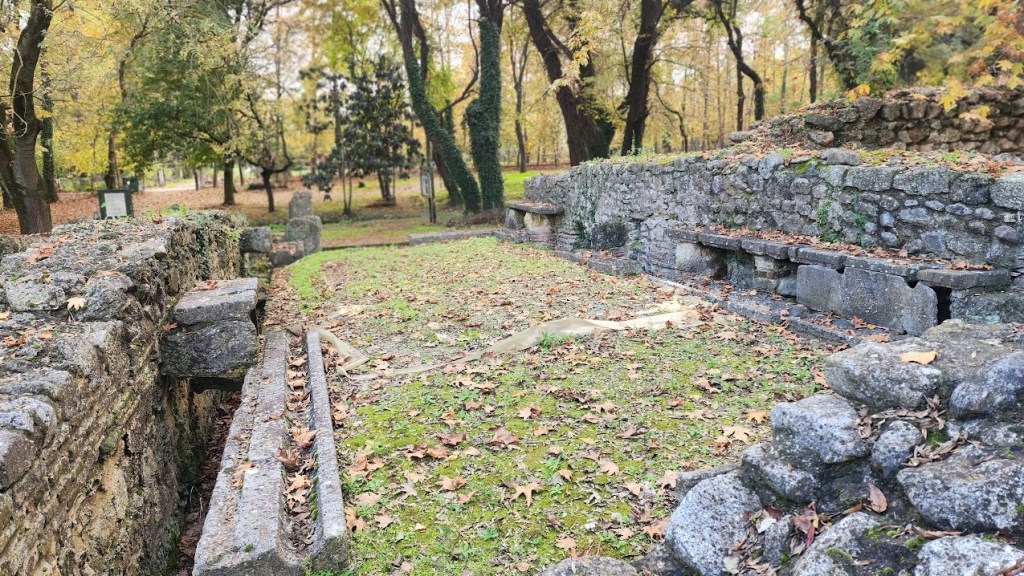
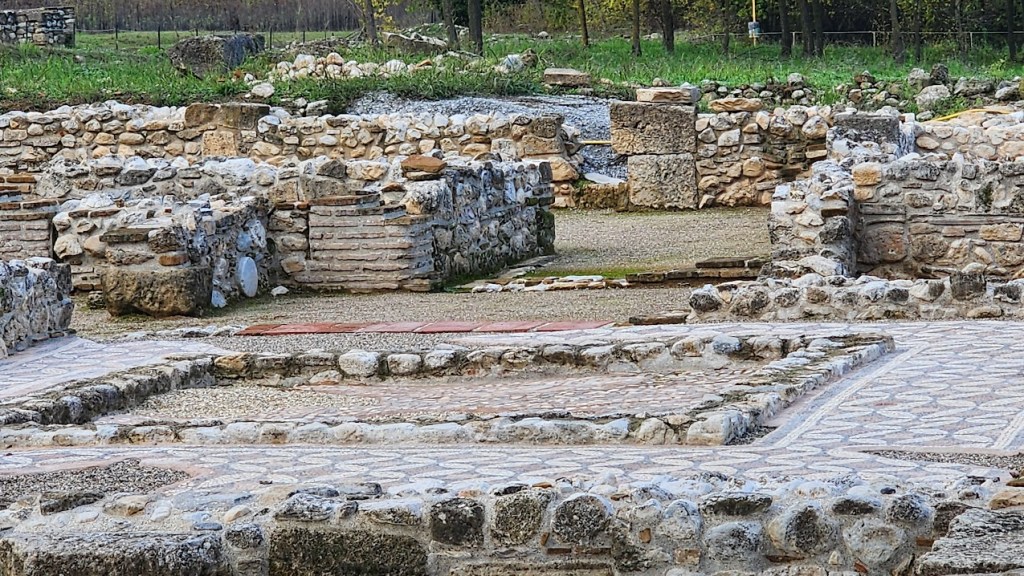
One of the amazing finds was the Great Baths (Thermae), a public bath complex. As with all Roman baths, it had an open air atrium, cold and hot baths, sweating rooms and massage rooms. There were also toilets, shops and workshops. There was an elaborate heating system, where hot air heated the chambers, floors and walls. The baths were decorated with sculptures and statues of gods and of local dignitaries. Corners and niches were all covered, and the floors with mosaics. It must’ve been truly a beautiful place to work out, anything but minimalist like the way a modern gym tends to be.
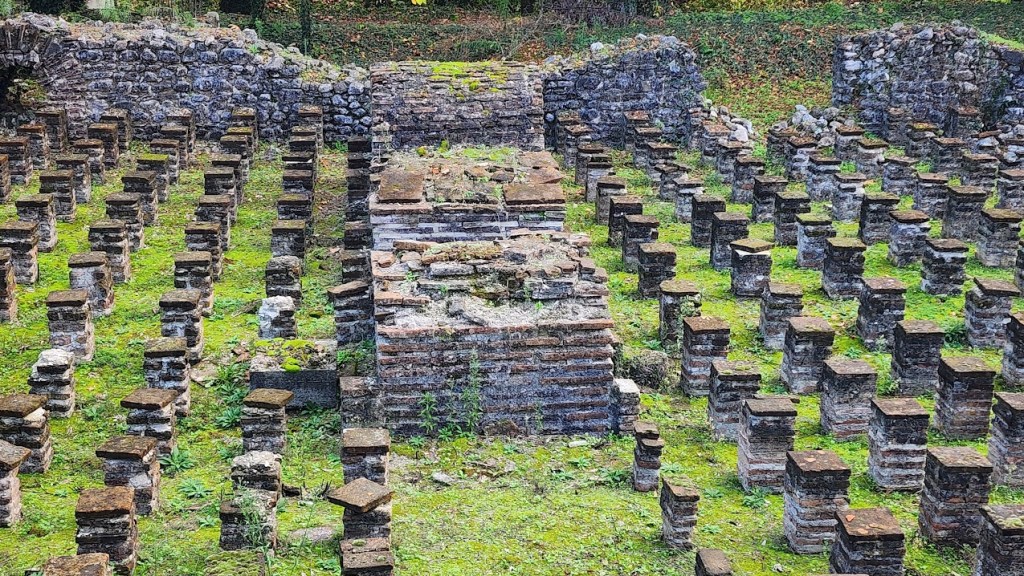
But it was also the social hub and meeting point for residents and visitors alike, as was common in Roman times.
At the Odeon, you could see musical and dramatic performances.
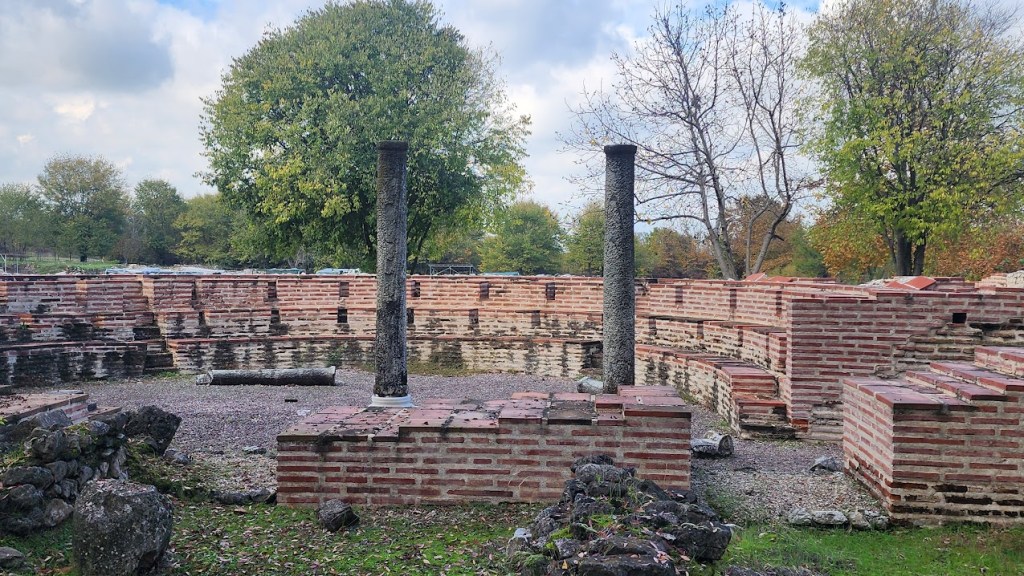
Besides the public buildings, many private residences and villas were found, decorated lavishly with mosaic floors and statues. These were places of luxury and it seemed that the residents had no problem flaunting their wealth.
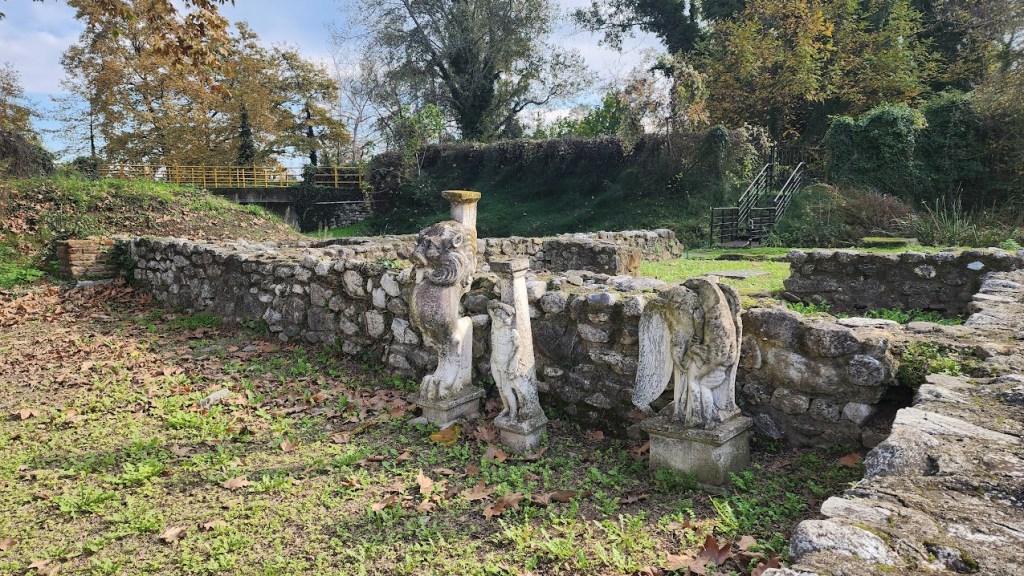
One of the main finds was the house of Dionysos.
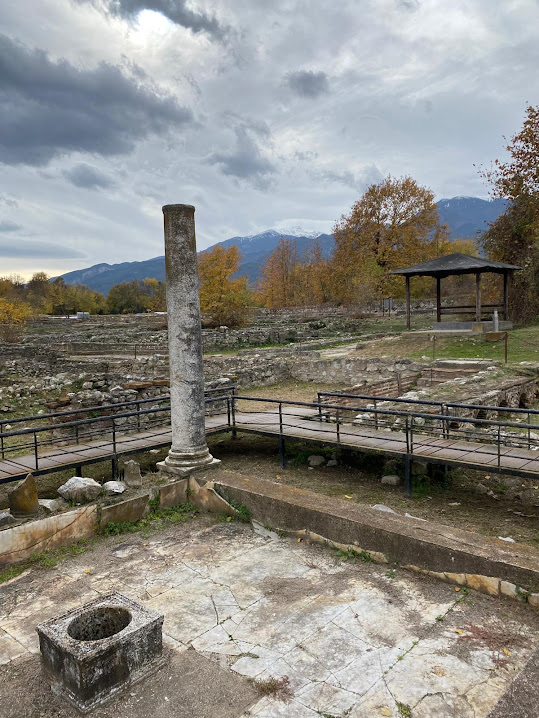
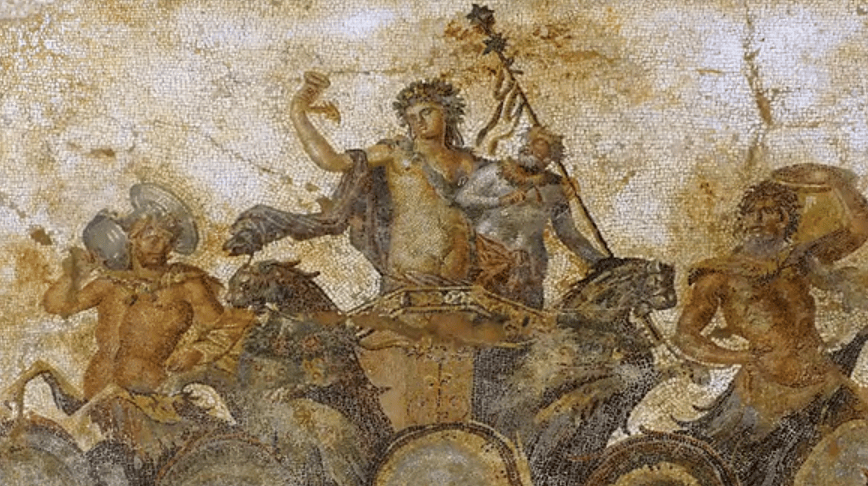
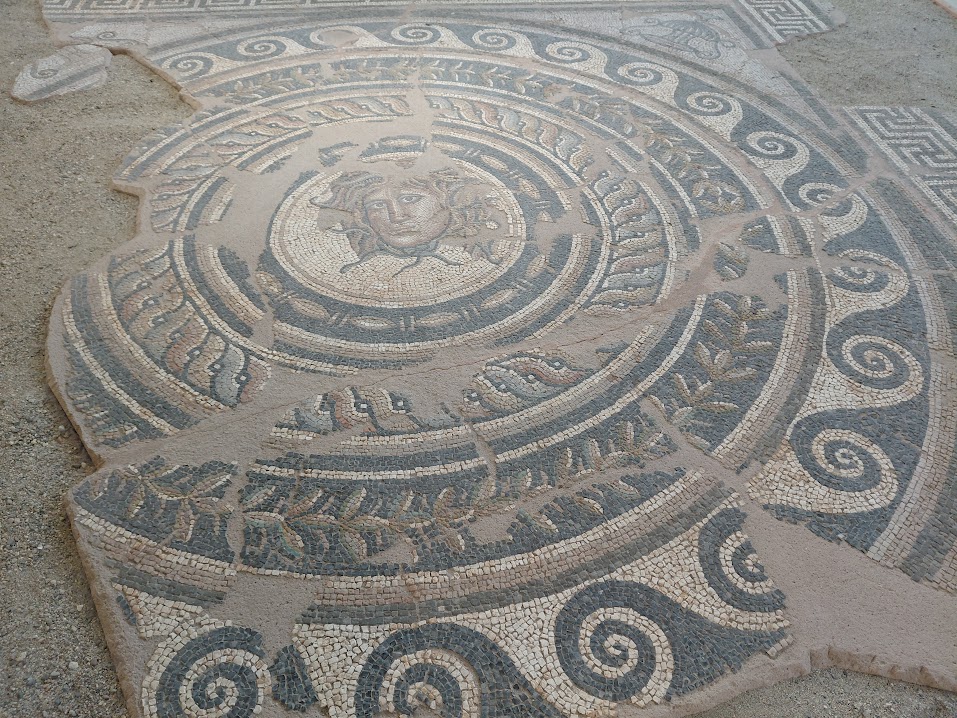
Inside the villa in the banquet room, a massive mosaic (100 sq m) was found in 1987. It shows the triumph and epiphany of the god Dionysus as a youthful, naked figure riding in a chariot pulled by sea panthers, led by sea centaurs.
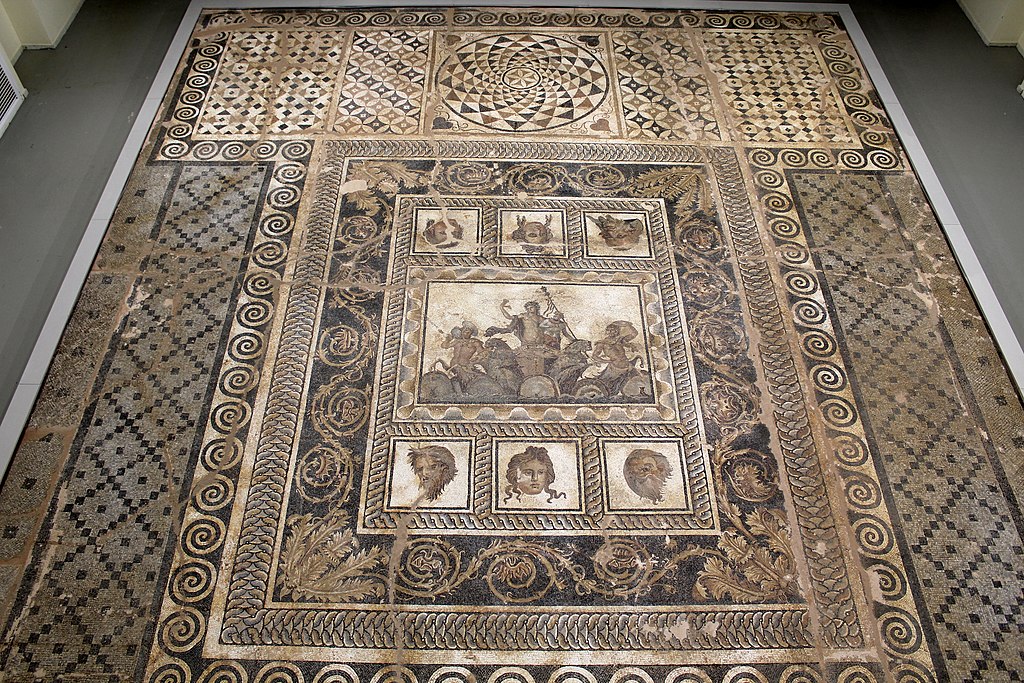
From November to April, some of the mosaics are covered with plastic and weighted with sand so it’s hard to see what they are. A number of them are in the Dion Museum.
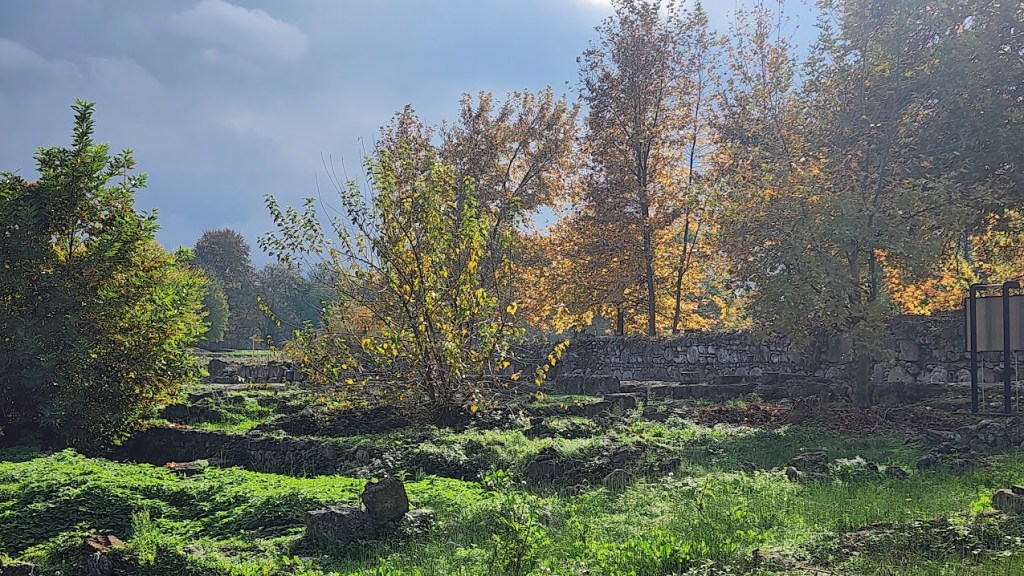
In the late 4th c, early 5th c AD when Christianity was starting to gain acceptance, the residents built a basilica, which existed side by side with the pagan shrines. Dion in fact became an episcopal seat for a short while.
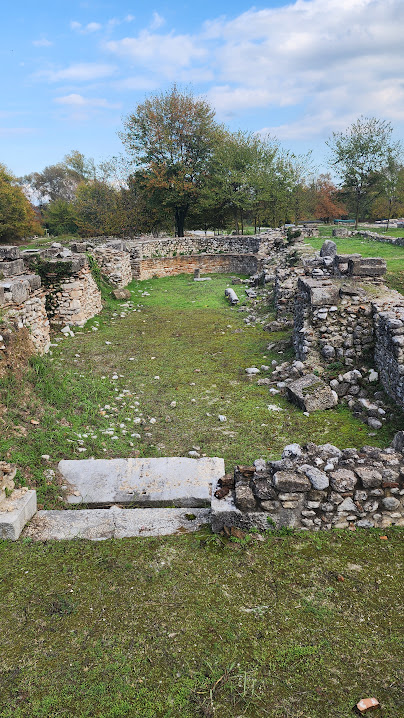
With the basilica, which was the first building in the ancient town to be excavated, and subsequent rise of Christianity, Dion experienced a period of prosperity, kind of the last heyday of the city before the end. Residents started abandoning the site due to raids, severe earthquakes and recurring floods, and moved to safer ground.
Excavations
Back in the early 19th c William Leake, a British topographer, explored the ancient site of Dion, which had been sunk into the marsh for centuries, and found parts of the city walls and the hellenistic theater.
It wasn’t until after 1912, the year of Macedonian liberation from the Ottomans, that Dion started to get more attention and in the 1920’s, the first excavations occurred, first trying to find the sanctuary of Olympian Zeus. Fun fact: coincidentally, the main archaeologist involved, George Sotiriadis, was the godfather of my friend Diana’s first husband! The 1960’s brought new discoveries to light, but it wasn’t until 1973 when Dimitris Pandermalis, Professor of Classical Archaeology at the University of Thessaloniki, got involved and spent 30 years of his life leading an excavation team, uncovering shrines like the one to Isis, villas, etc. Under him too the river was diverted to avoid flooding, which was no easy task.
The Dion Museum
An easy walk from the archaeological site, the Museum opened in 1983 to house statues found in the area and mosaics. You can use the same ticket for both the site and museum.
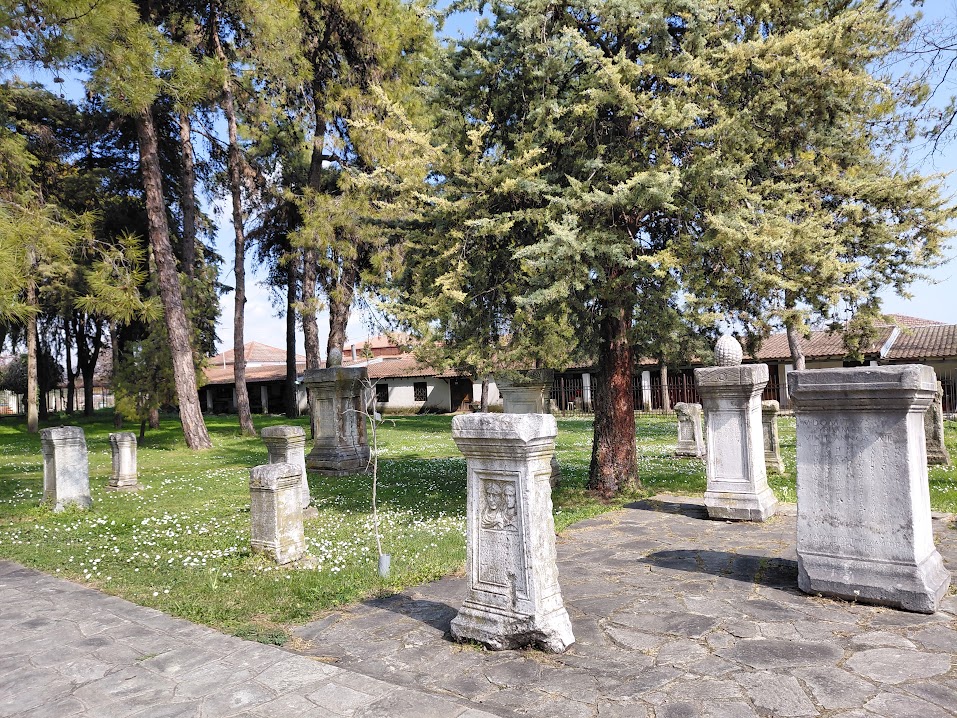
Outside it’s a huge grassy area, with rows of grave stele under the pine trees.
The main floor is filled with statues and sculptures from the sanctuaries and from the public and private buildings of the town.
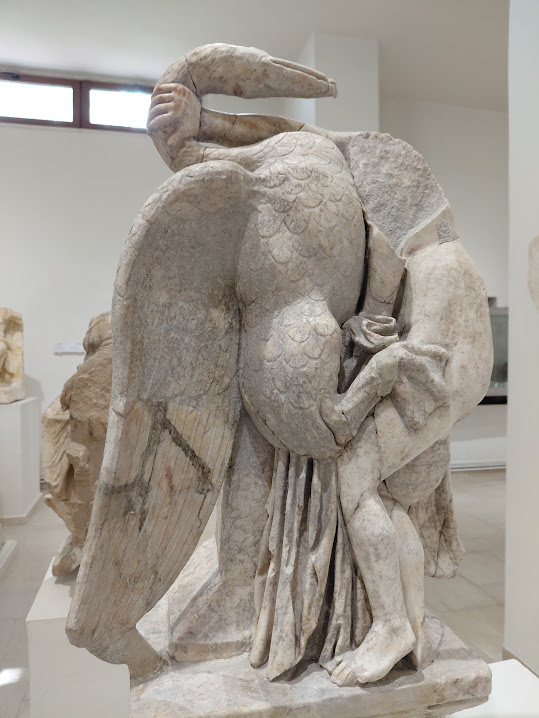
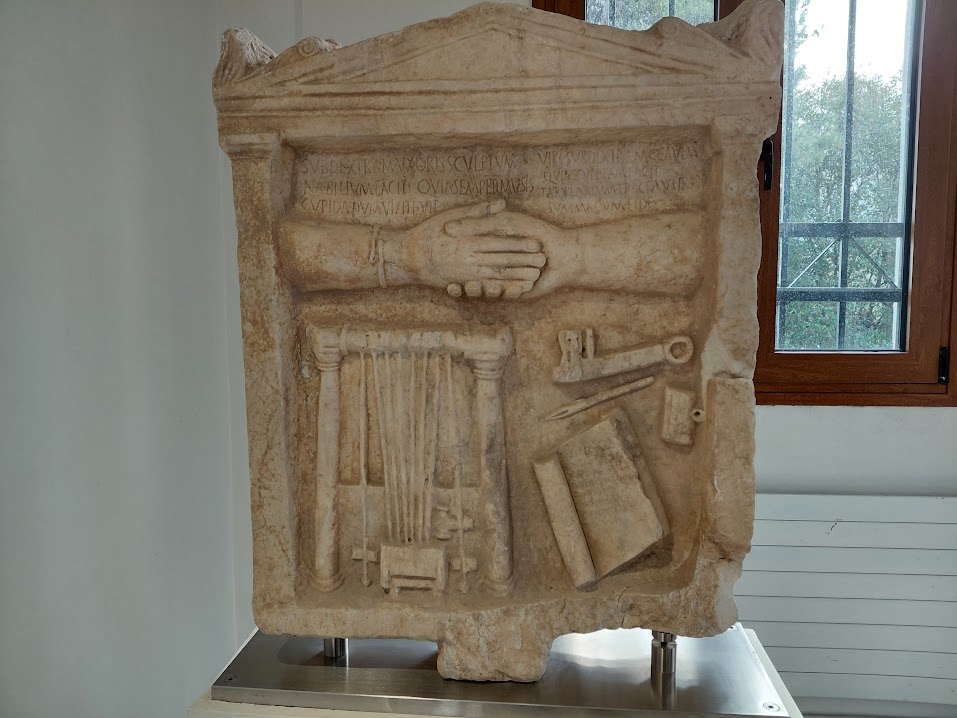
But go upstairs, these are where the treasures are.
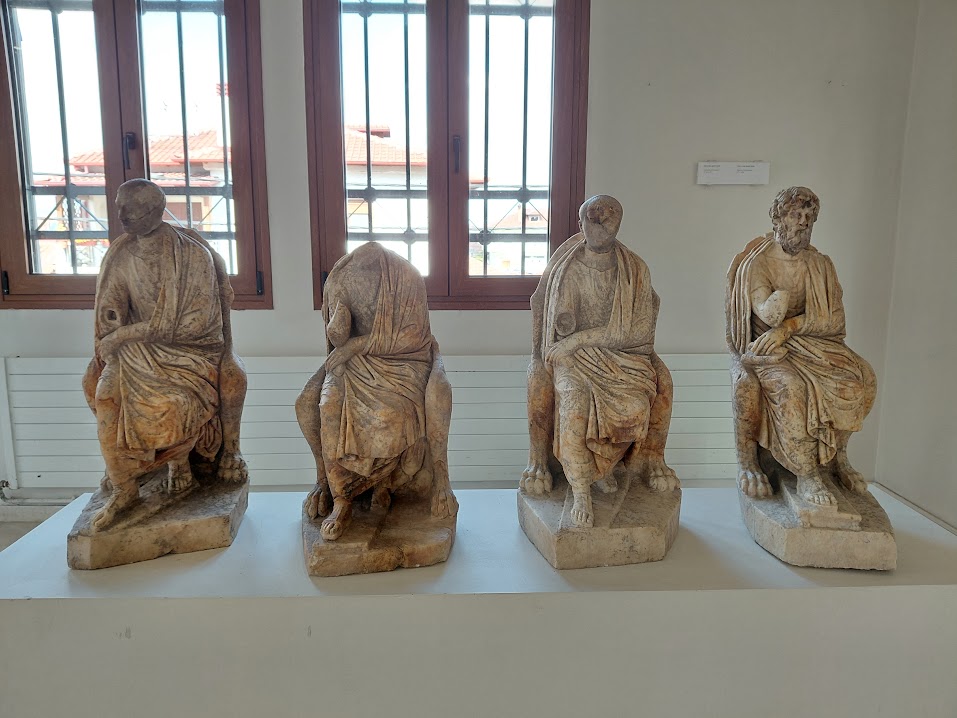
These statues representing four philosophers were found in the garden of the villa of Dionysos.
Here in the museum is the most important find of the site, discovered in the summer of 1992 outside the villa of Dionysos. It is a hydraulis, an ancient musical instrument.
The team was excavating a block near the luxurious Villa of Dionysus when they found a row of bronze pipes and large bronze plaques.
Professor Pandermalis, head of the archaeological team, described the discovery of this priceless artifact, one of the most important finds in classical music history, through a sequence of unexpected, dramatic moments:
In Pandermalis’ words: “We took great care to remove this delicate structure from its original position to the excavation labs. We had no doubt that it was a musical instrument the Greeks called a hydraulis, an ancient water organ. A very rare square polychrome glass ornament attached to the plaque has extraordinary importance…using a technique used in glass utensils mainly of the 1st c BC, so we could date it to then.”
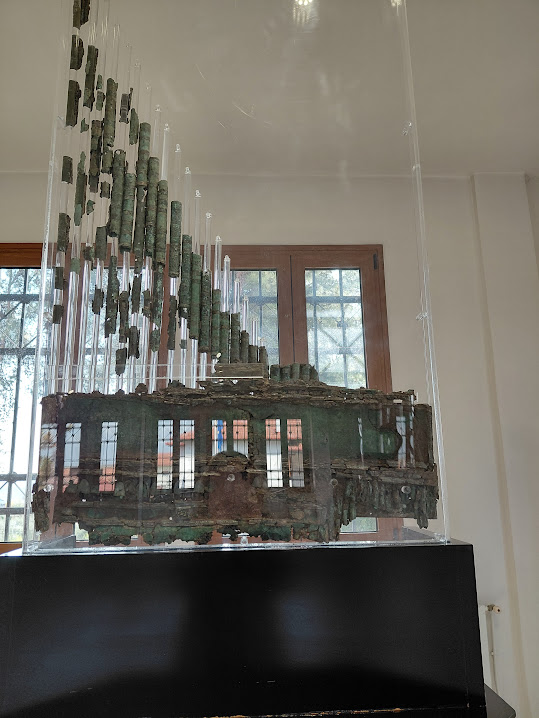
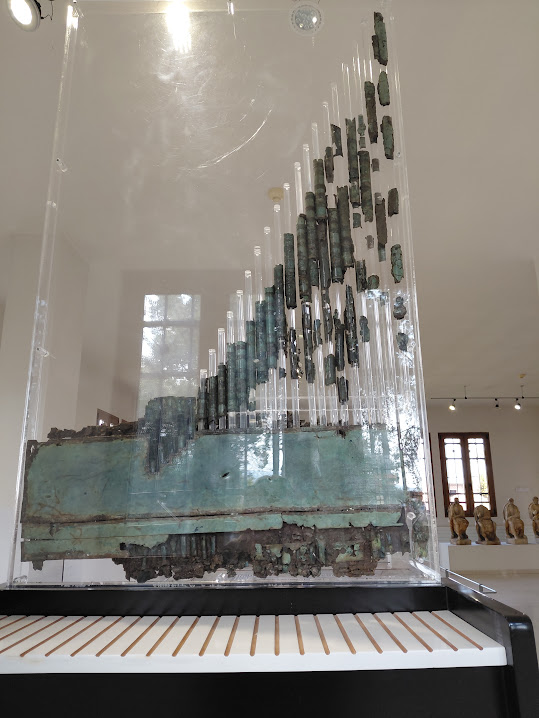
Once painstakingly cleaned and separated, the artifacts indeed revealed themselves to be the upper mechanical parts and 24 open pipes of a hydraulis. The structure showed this was a high status cultural instrument used for elite ceremonies.
The hydraulis, similar to the one invented by the engineer Ctesibus of Alexandria, is the first such instrument ever found in Greece and the oldest found in the world. It’s the forerunner of the church organ. “The sound it produced,” said Professor Pandermalis,”would certainly be sweet and joyful if we could ever listen to it.”
Our time in Dion was drawing to a close. So we found it was not only an important shrine to Zeus in the Macedonian world but an ancient bustling town with all the amenities one could ask for in a bucolic setting, on the foothills of Mt. Olympus.
II. Two Walks on Mt. Olympus
Since we’re in the foothills, we decide to do a little hiking on this mythical mountain of the 12 gods, and highest in Greece, which this past summer became a UNESCO World Heritage site.
About a 15 minute drive from Dion is Litohoro, at the base of Olympus and site of the Olympus National Park Information Center, not to be missed.
Inside, you’re given a pair of glasses for the short 3D film (available in Greek and English) that takes you on a wonderful virtual journey up to the peaks of the mountain. Flying with the eagles, feeling yourself in a snowstorm, finding yourself in a meadow of spring flowers…it’s a captivating experience.
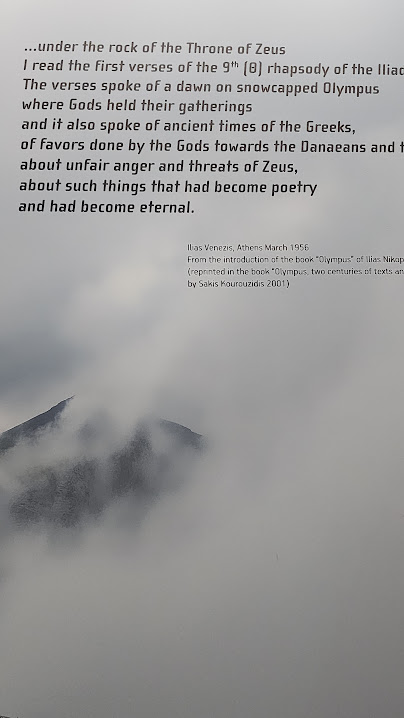
The main exhibition, designed by the Goulandris Museum of Natural History, covers the geology, biodiversity, flora, fauna, local monasteries and mythology of Mt. Olympus. There are 1700 plant species, some rare, some endemic to the area, plus there’s a varied bird life.
With relief maps, photos and interactive media, you go through seven different altitude zones, all the way up to Mytikas, the peak of Olympus at 2,918 m (9,570 feet). Leave time to go through the exhibits slowly. (Both times we were there unfortunately it was late in the day near closing time and also we wanted to be sure to hike before it got dark.) The staff is very helpful about telling you about routes and weather.
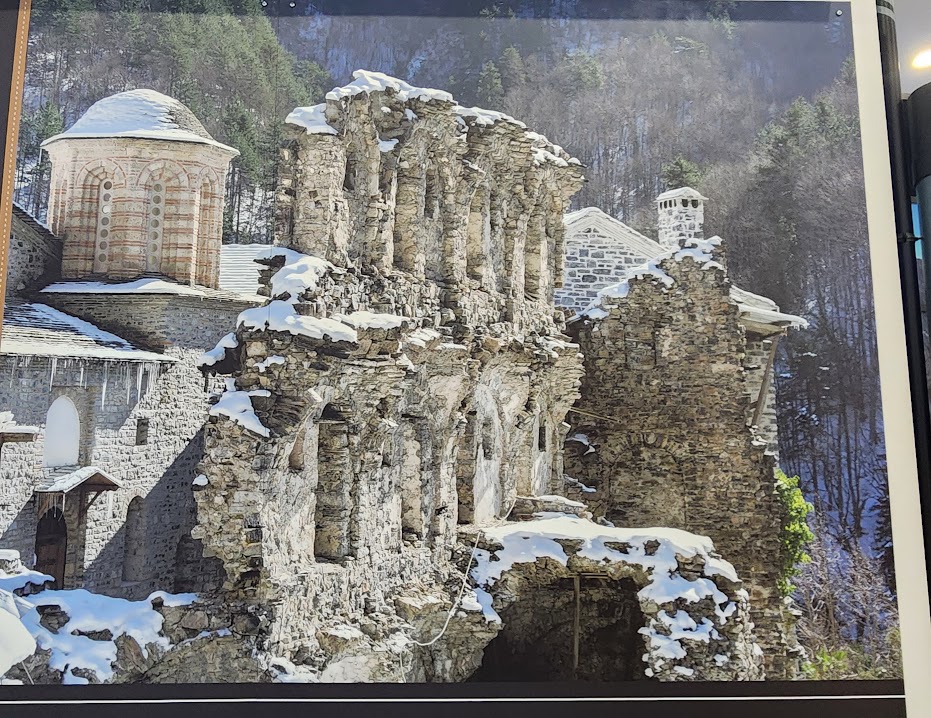
A very historic monastery in the Enipeas river gorge is Agios (Saint) Dionysos, founded by the hermit, Agios Dionysos, living in a nearby cave, in 1542. During the Ottoman times it was used as a cultural center with a rich library, while later monks played an active role against the Ottomans in the 1821 uprising. During WWII it was bombed by the Nazis and destroyed but it was rebuilt and restored about 5 km away. We’re going to pass by the monastery in our second walk.
One of the closest hikes is in the gorge of the Enipeas river, once worshiped as a god. To get there, you drive through Litohoro, with its cafes, grills and stores selling mountain hiking equipment.
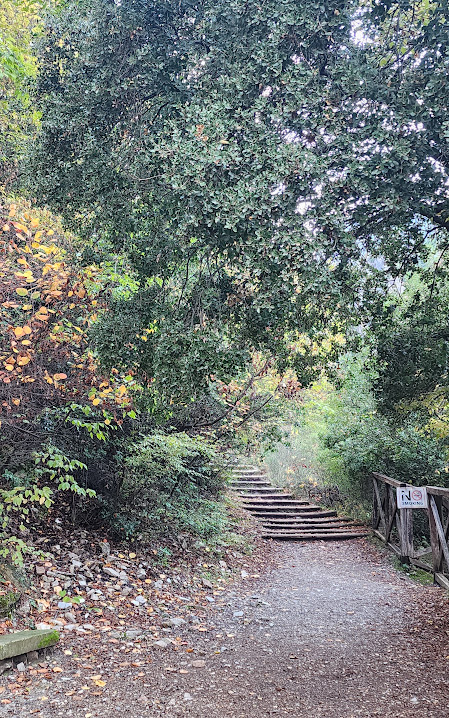
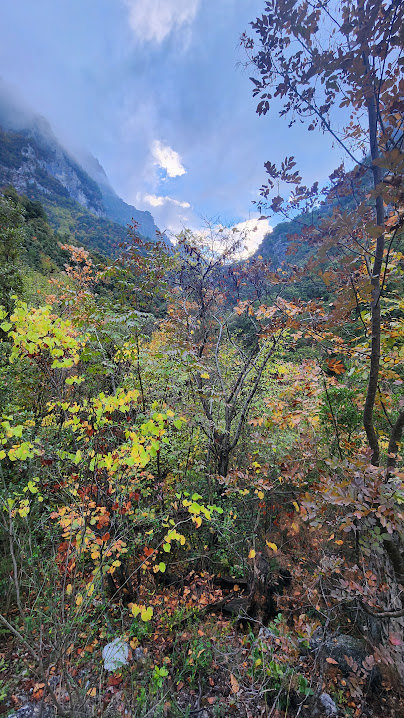
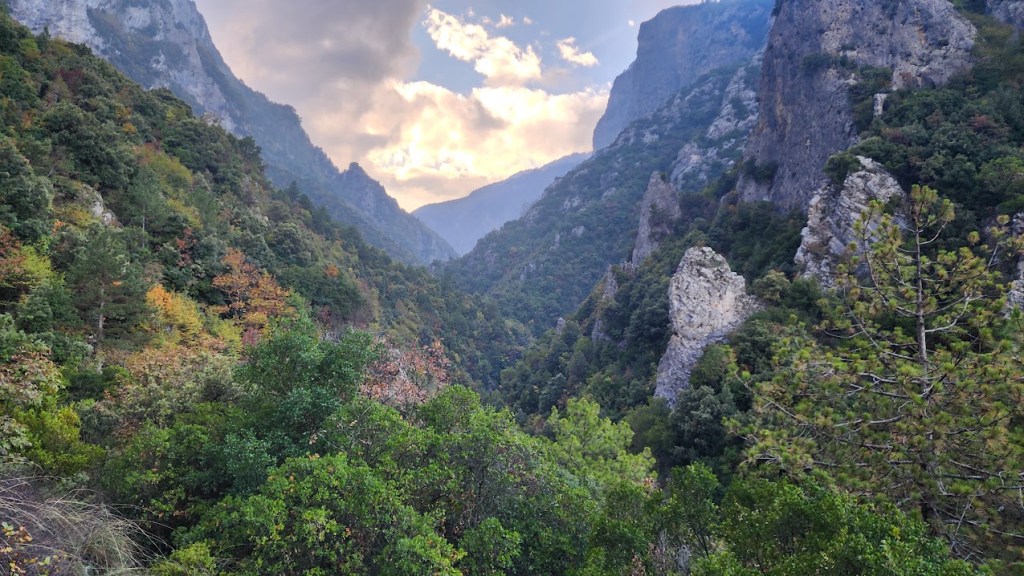
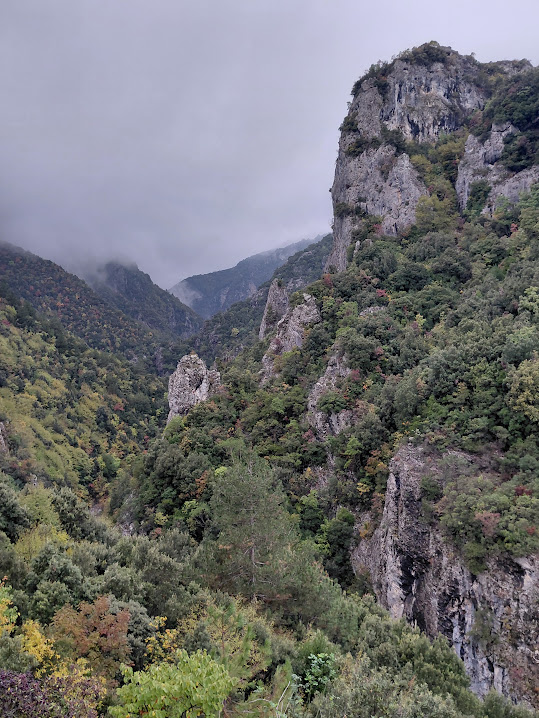
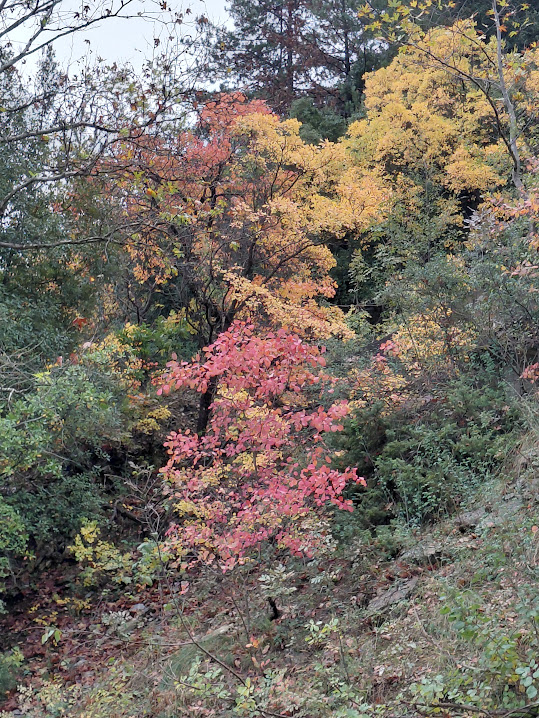
Both times we walked through the gorge, the leaves had carpeted the path in rich yellow and orange. The first time we had blue skies, but the second was shrouded in mist and though it wasn’t raining right then, it had been for days and part of the hike was closed.
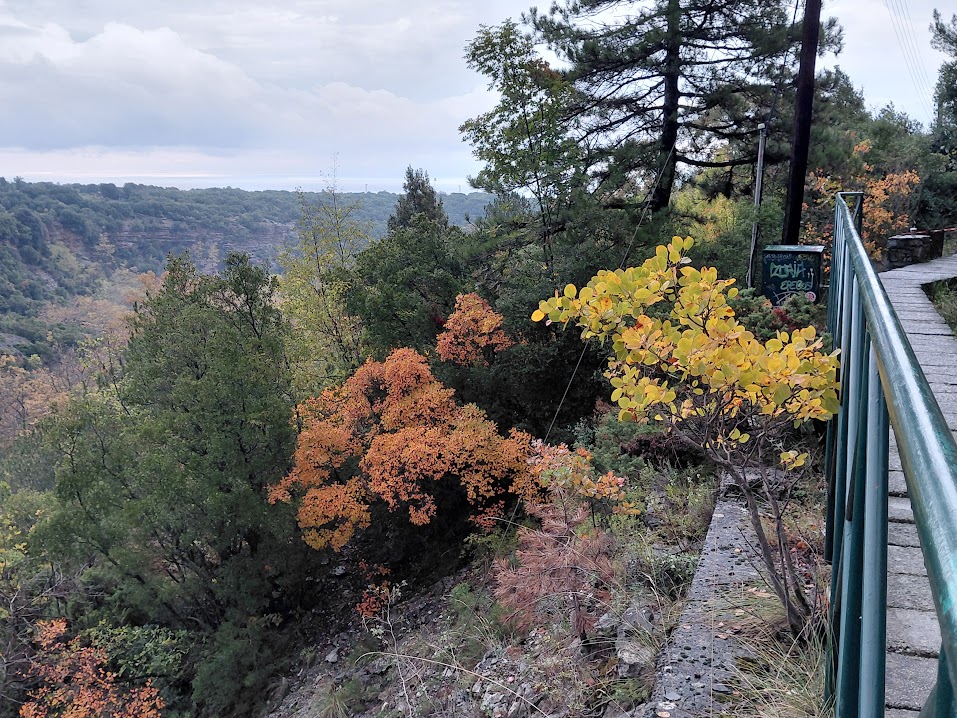
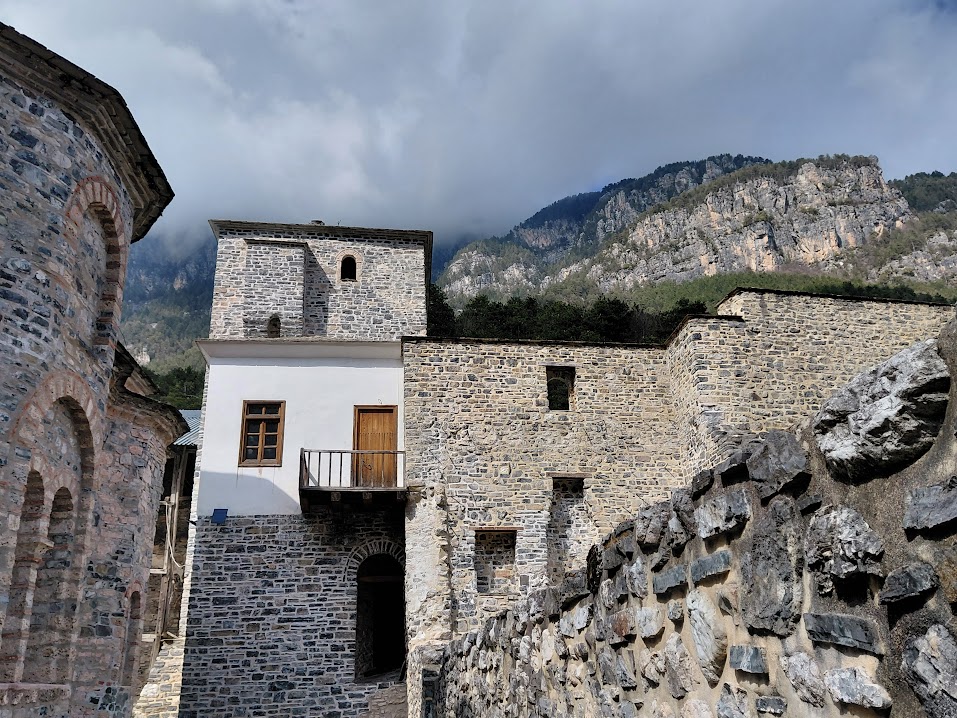
The Monastery and cave of Ag Dionysiou / Prionas
You can drive to the restored monastery from Litohoro and leave the car there.
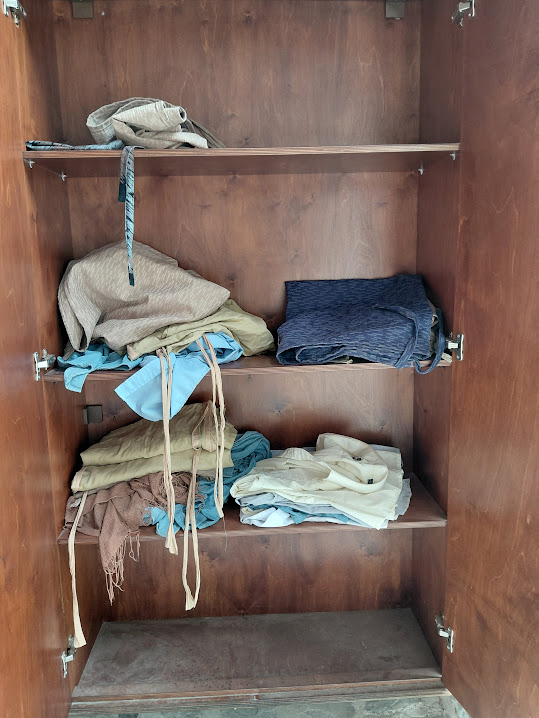
For women, you can pick up an ancient shapeless skirt to put on if you want to enter the monastery.
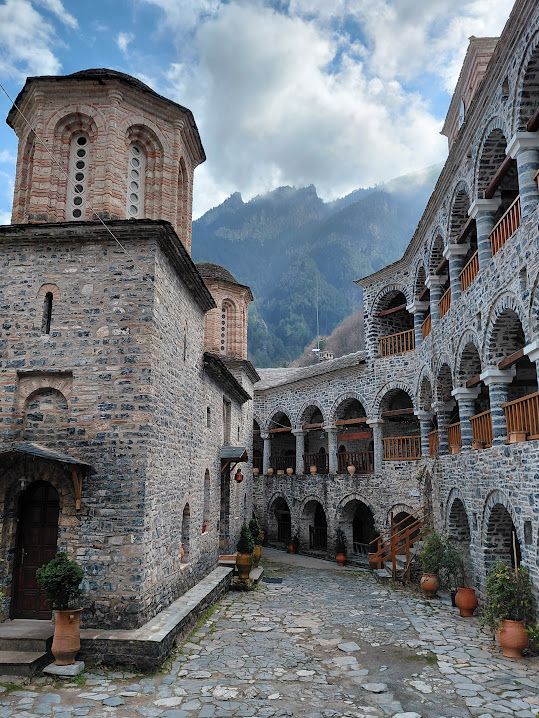
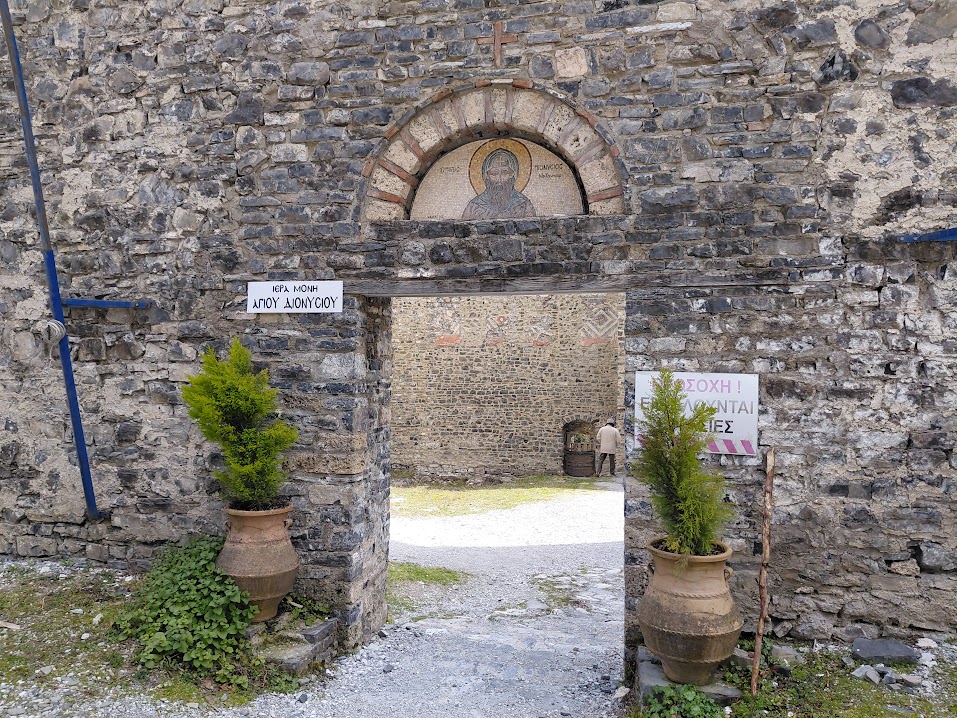
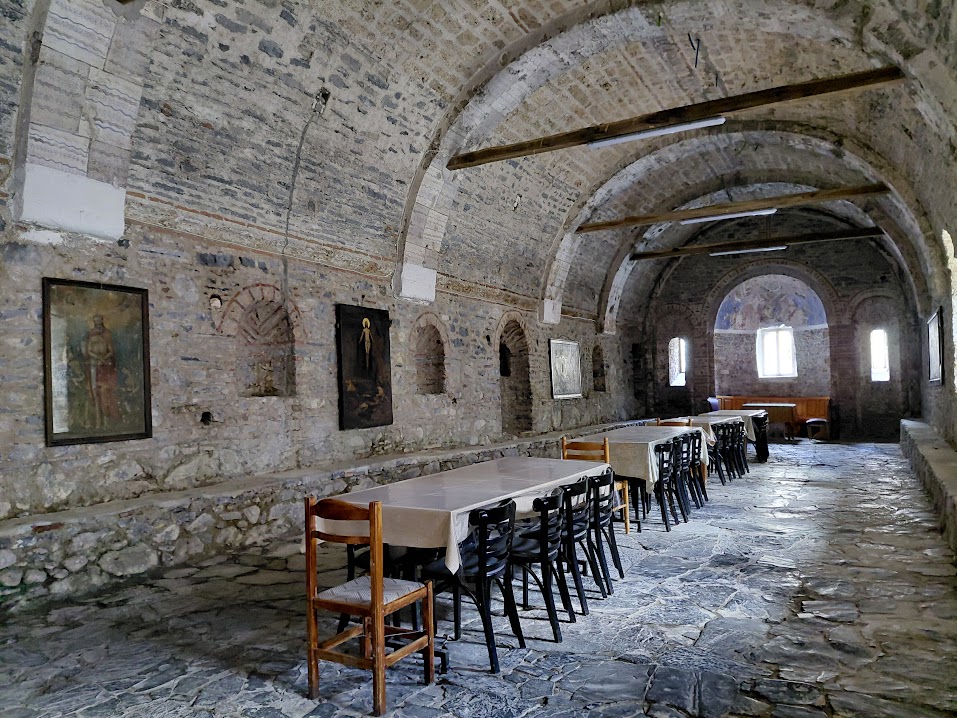
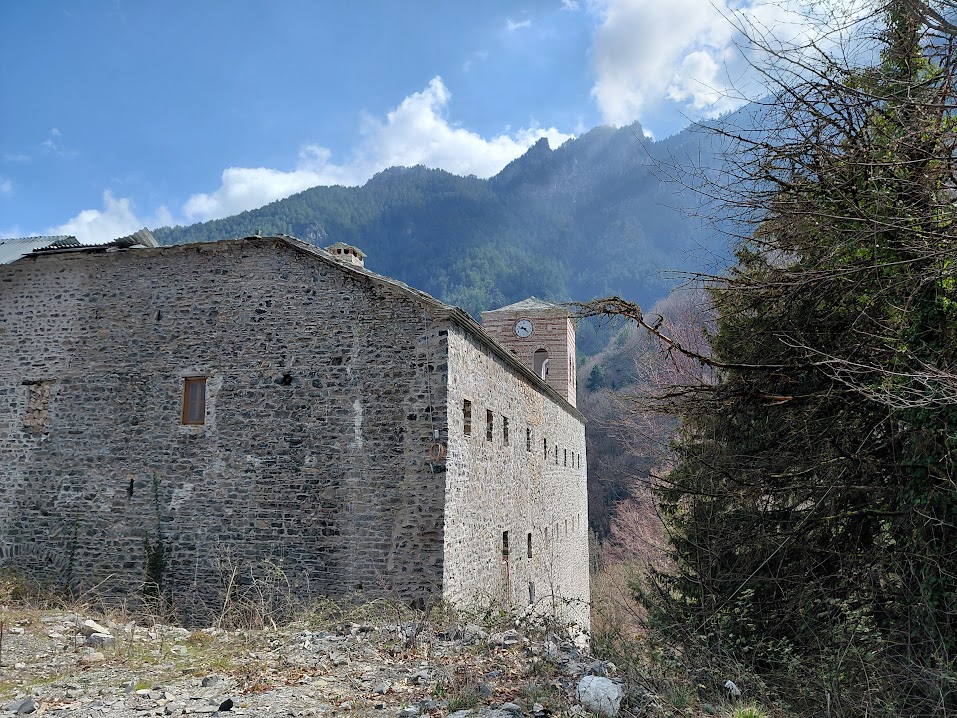
From the monastery, we take a path down to the Enipeas River that will lead us to the cave of Agios Dionysos (about a 30 to 40 minute walk).
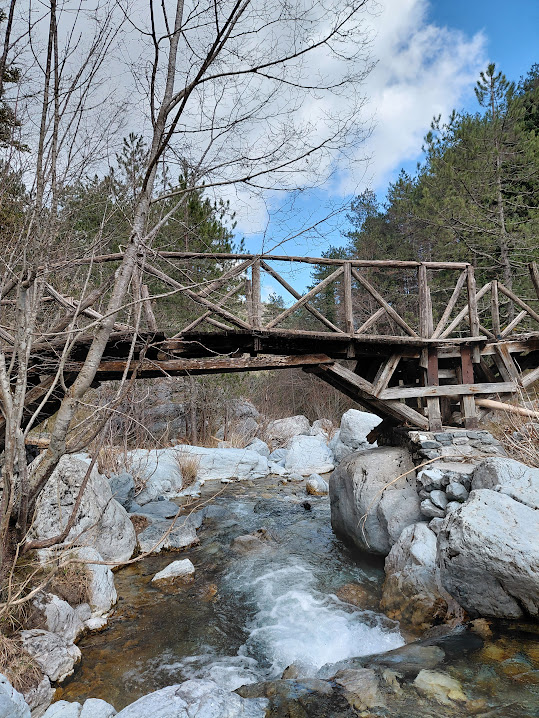
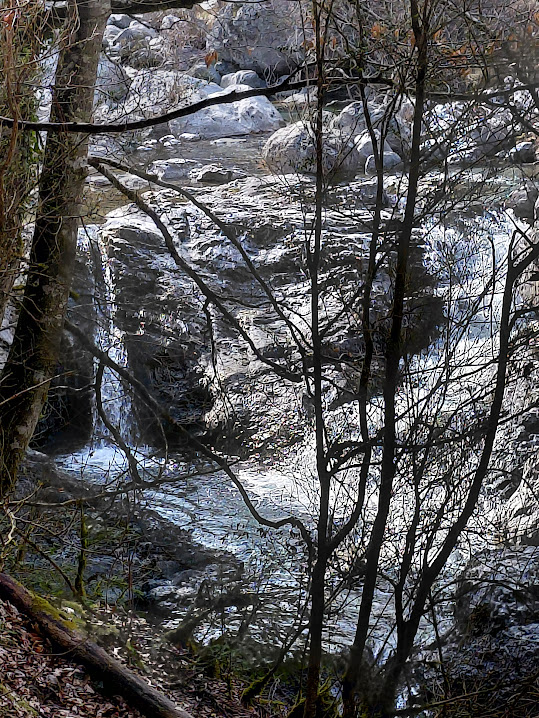
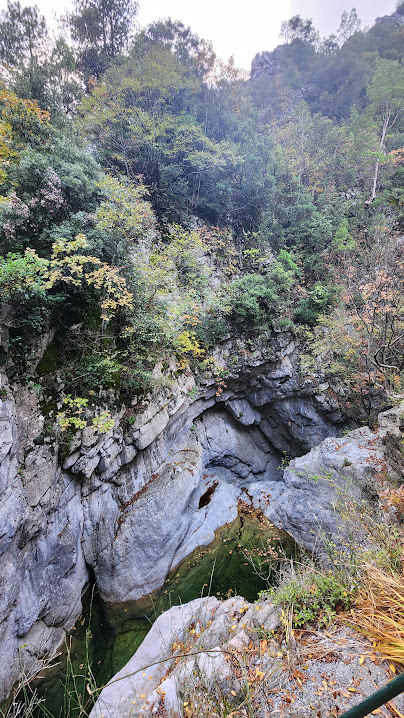
It’s idyllic and exhilarating walking along and looking down at the river. Surprisingly, quite a few people are hiking.
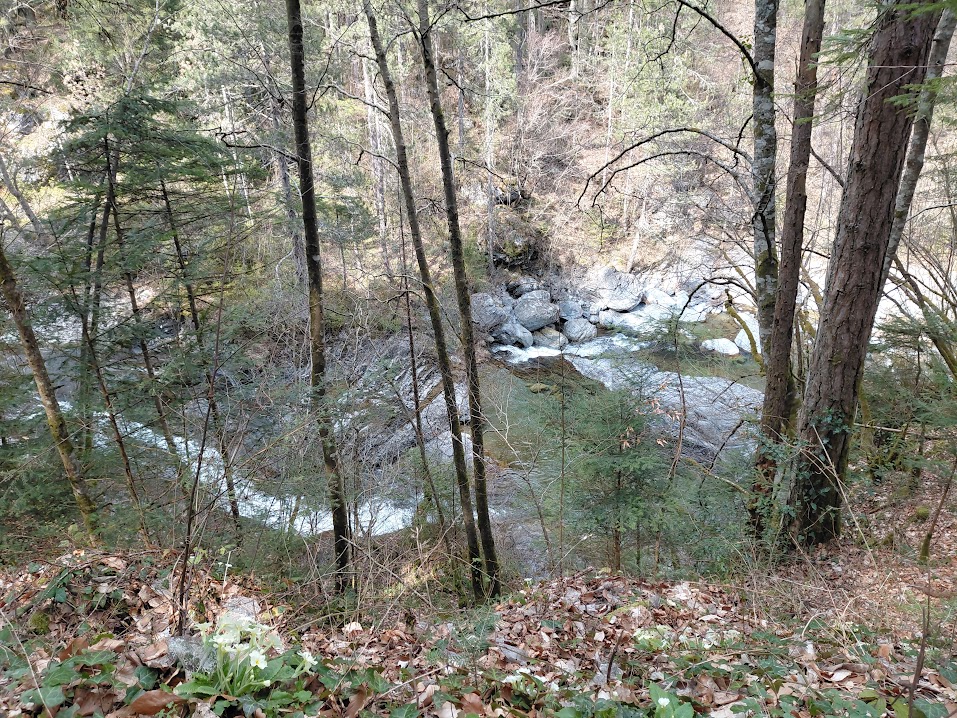
Though beautiful, it’s a very winding path that leads uphill and down. We don’t see any sign for the cave and keep asking those who are returning how far it is. “Just a little ways” is always the response.
Finally, we hear “it’s right over there” and indeed it is. With this exquisite little church peeking inside the cave.
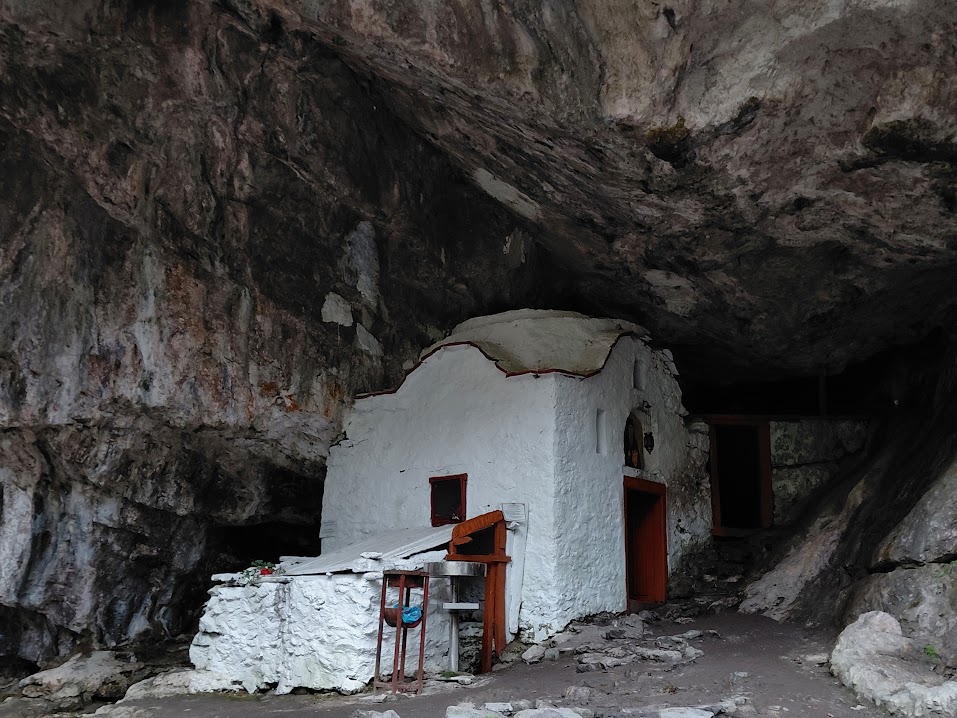
We sit for a while joining other hikers around the cave resting our weary legs. It’s the uneven terrain that makes it tiring.
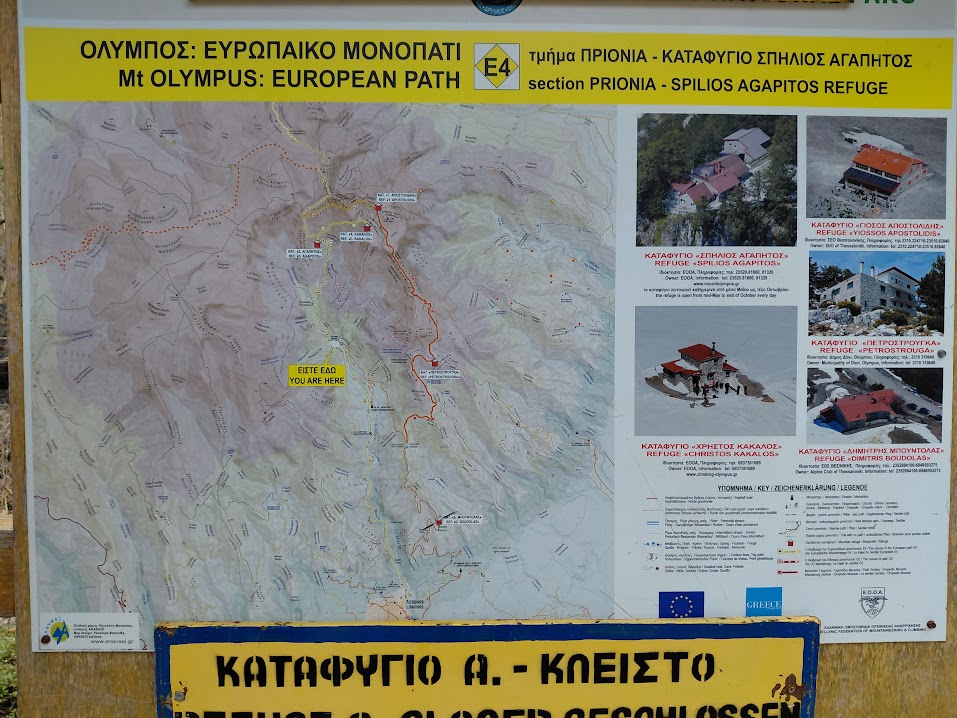
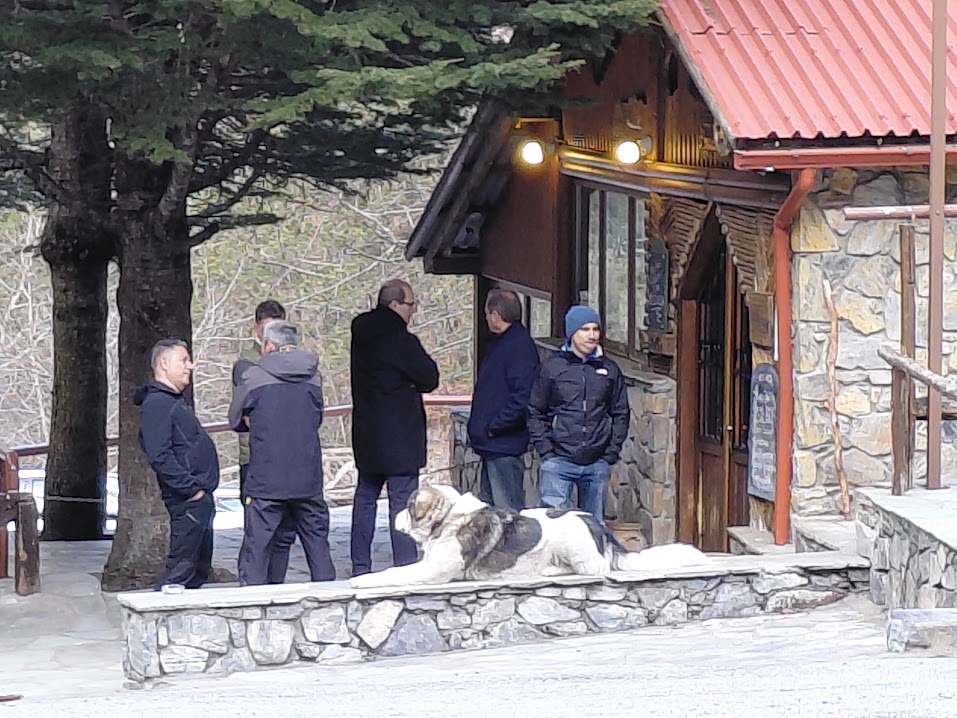
It’s getting colder too. Back at the monastery, we drive a little ways up to the shelter/refuge of Prionia, 18 km from Litohoro and the highest point you can take your car. Here is the main starting point for most hikes up the mountain. At Prionia, you can find a year round cafe/restaurant, natural spring water and public restrooms.
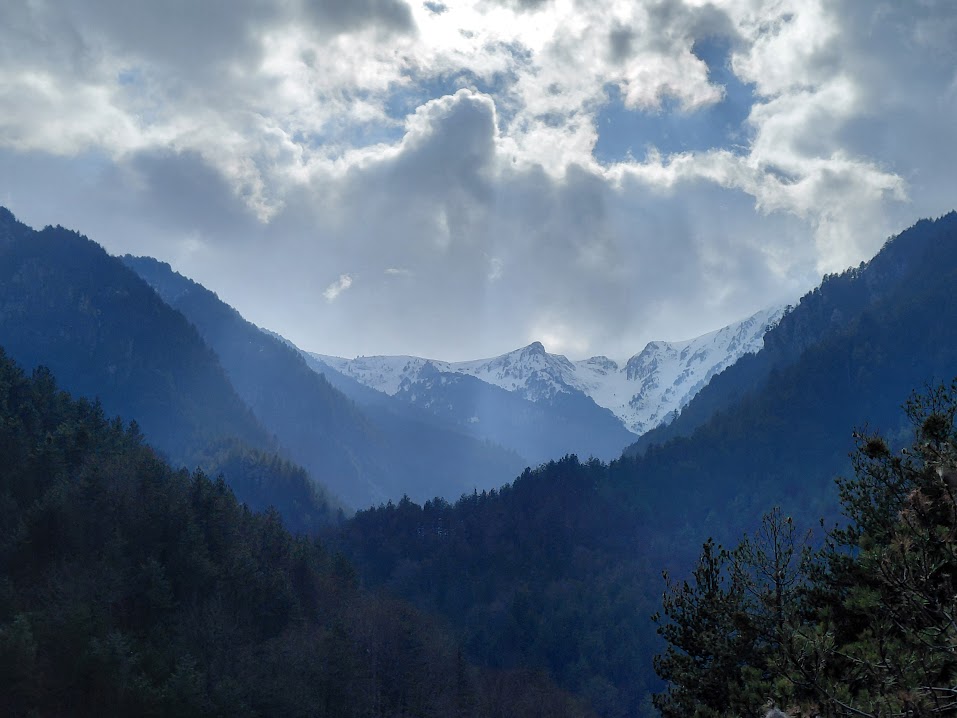
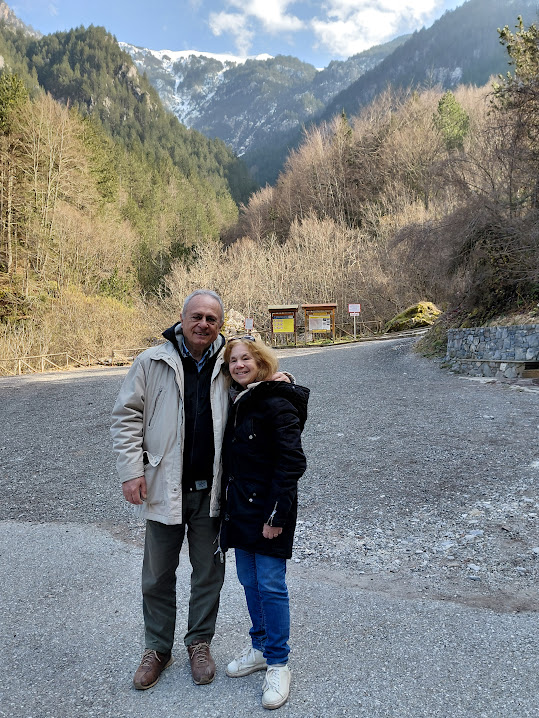
Usually at this time in March, there’s a lot more snow around, but this past winter it hardly snowed.
We have a 1 1/2 hour drive back to Larissa, where we’re staying, in the province of Thessalia (Thessaly).
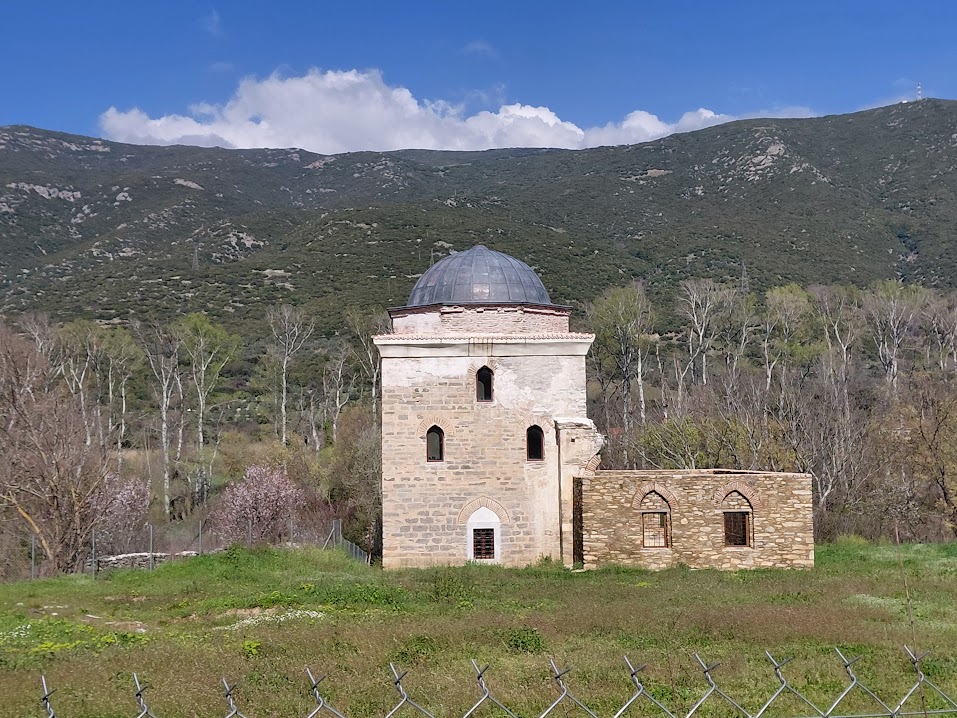
Suddenly you see this structure off in the distance, in a field. A sign tells us it’s an Ottoman tekke with no further explanation. Google tells me that a tekke is a kind of Sufi lodge, monastery, or meeting place where dervishes and members of Islamic Sufi brotherhoods (mystical sect) gathered for spiritual retreat, prayer, chanting and studies. How I would love to find out a little more about this tekke here in the middle of nowhere!
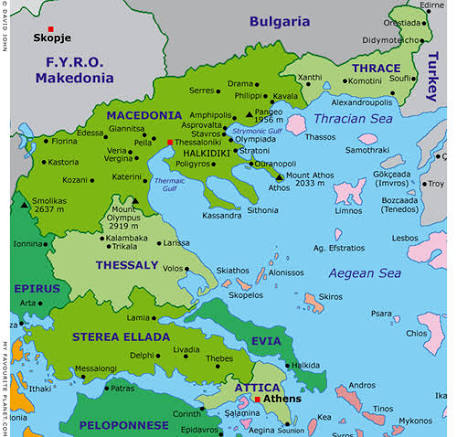
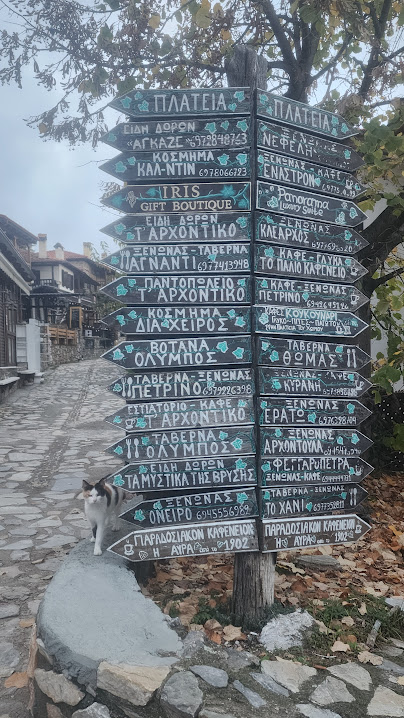
If you want to see a traditional stone village on the slopes of Olympus, then take the long and winding road up to Palaio Panteleimmon. From here, 700 m. up, you’re rewarded with a sweeping view of the Aegean / Thermaic Gulf.
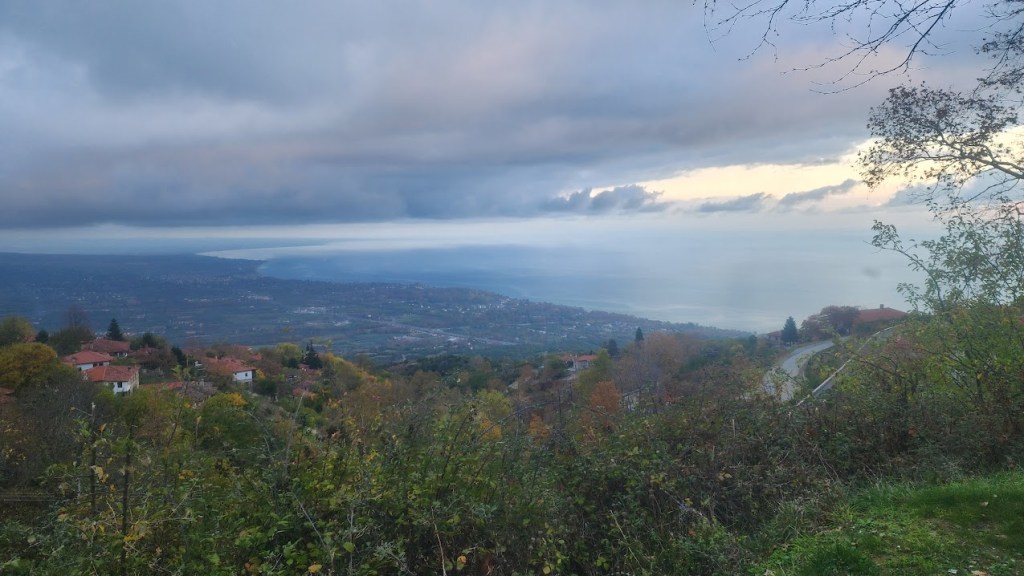
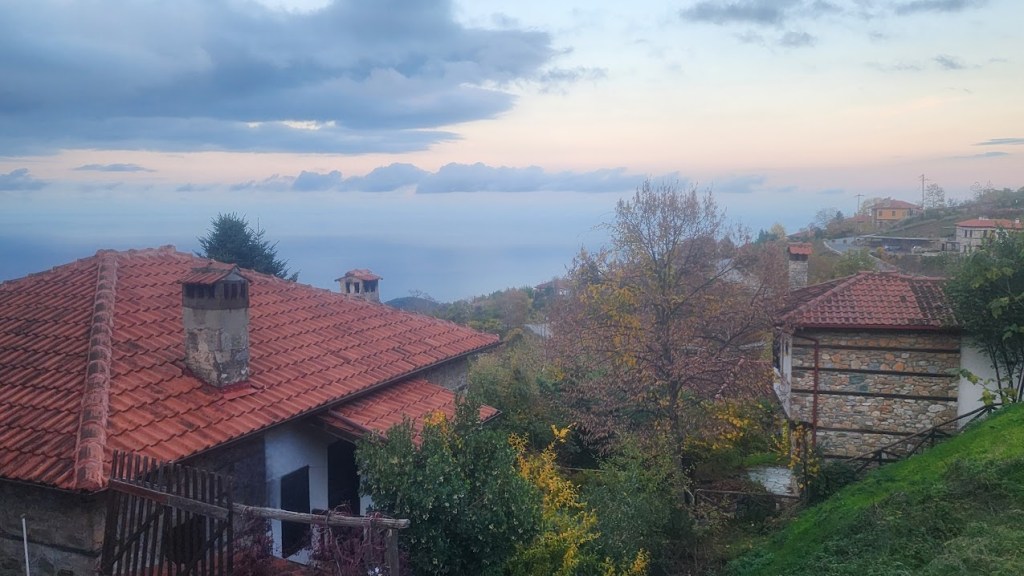
Originally settled in the 14th century, it was restored in the 1970’s as a traditional settlement with its Macedonian architecture, its restored stone mansions.
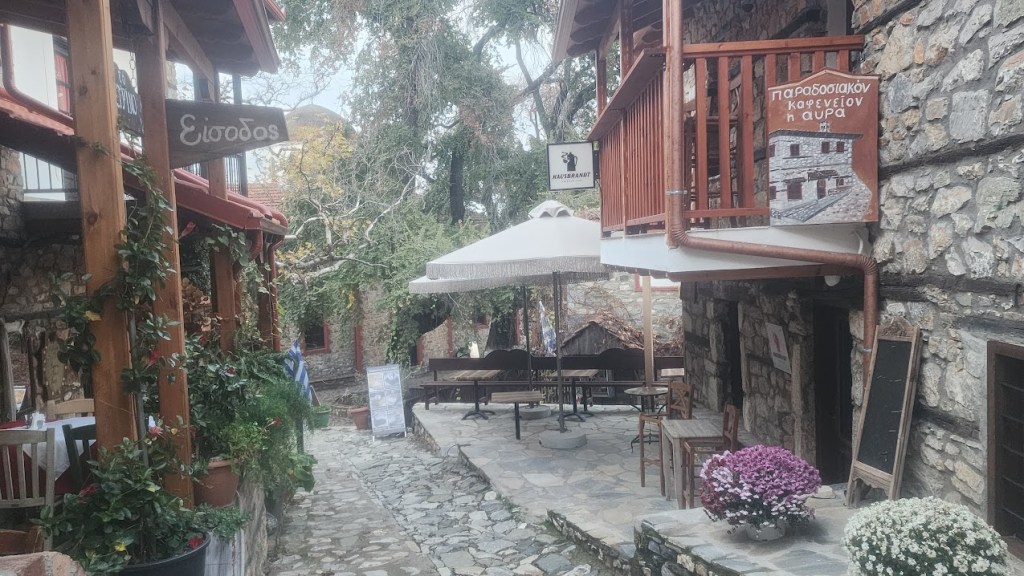
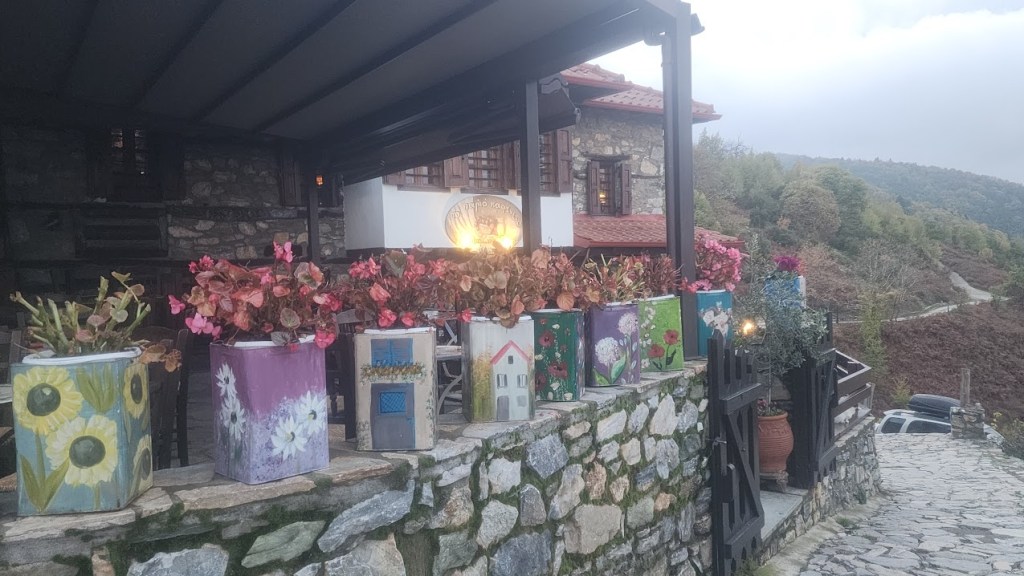
If you visit around the holidays, you’re in for a treat with the Christmas decorations.
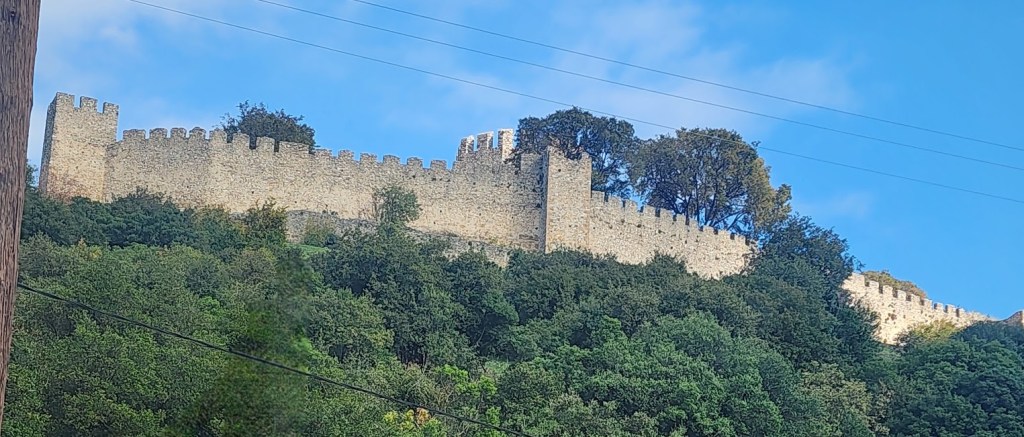
Back on the main road again, you don’t want to miss the Byzantine castle above the beach at Platamonas, a popular resort. Built in the early 13th century, it’s one of the best preserved medieval fortified castles in northern Greece.
From the beach below you can walk up to the castle to admire the fortifications and have a wonderful view of the Aegean Sea and Thermaic Gulf.
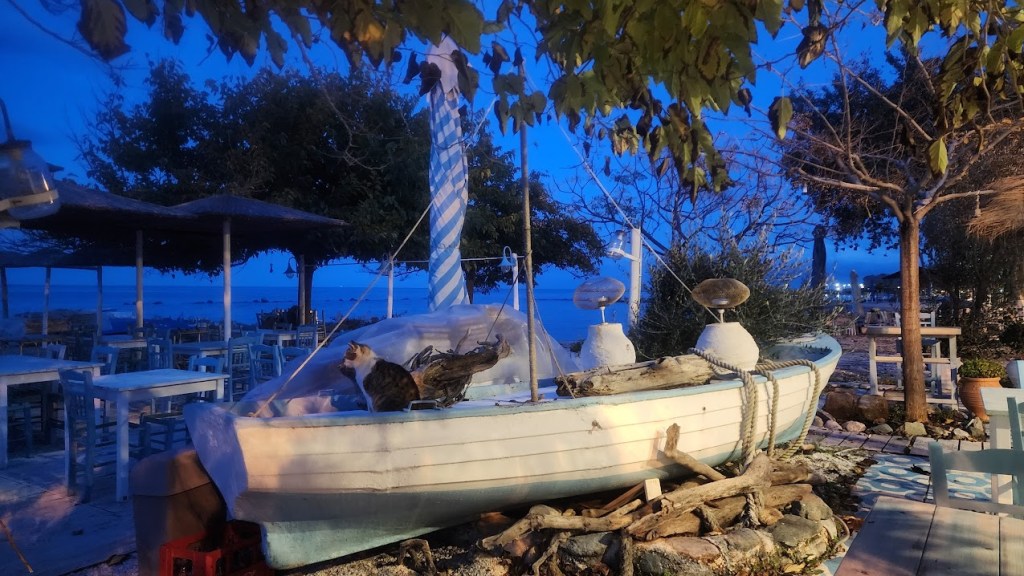
Just a short stroll along the beach at twilight time as the sky deepens in color.
Back in Larissa, we have work to do with our pomegranate trees, this ancient fruit that figures in many mythologies. In Greek mythology, Persephone ate a few of these seeds in the underworld, which bound her to return there (Zeus was able to reach a compromise with Hades that she spend six months there, six months above earth). It’s a lot of work, opening the fruit, and getting out the seeds, which are indeed delicious, but we put them in the blender and make juice out of them.
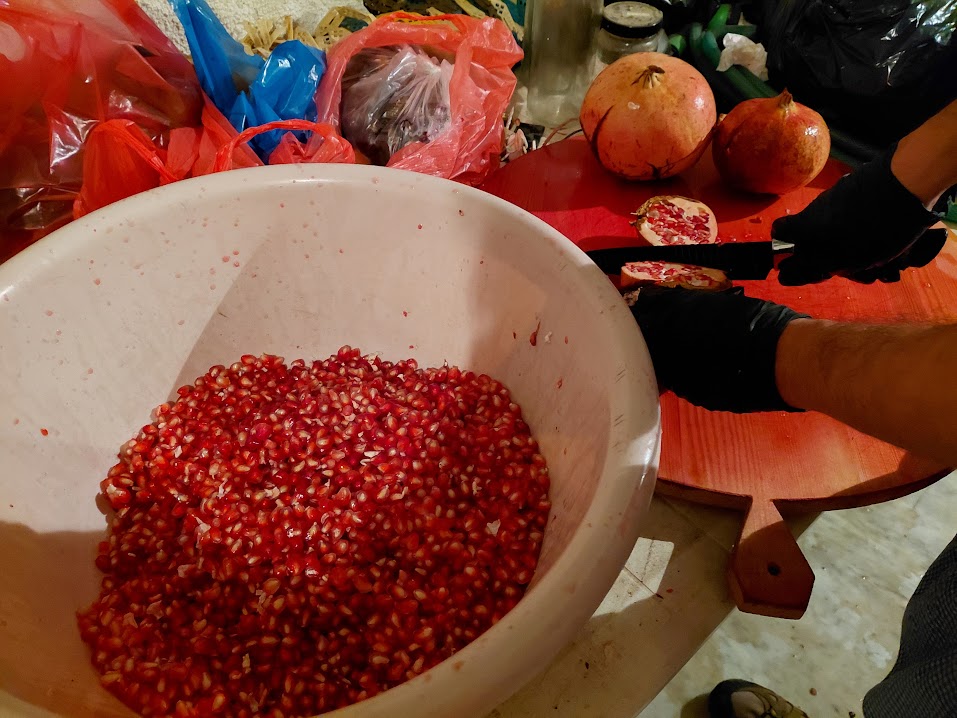
The better ones we leave whole and take back with us.
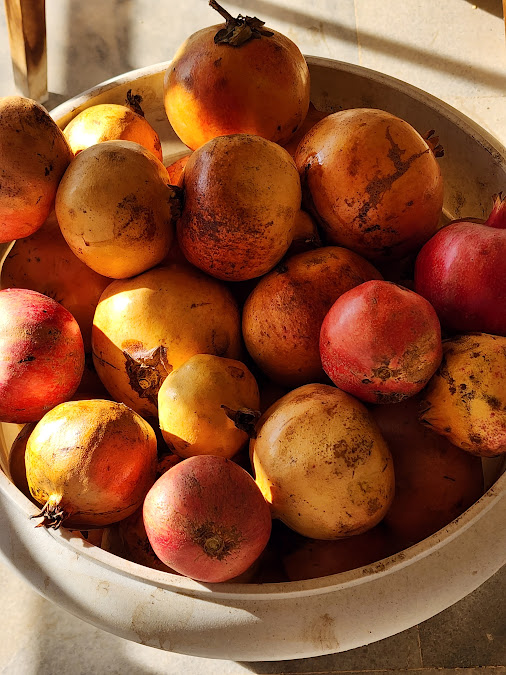
I hope you’ve enjoyed this trip to Dion and Mt. Olympus. Let me know in a comment below. Thank you!
Tips: be sure to check site times for Dion. November starts winter hours. Ticket prices for Dion are 10 euros, 5 euros reduced for over 65. Save your ticket for the museum.
Dress in layers for Olympus, allowing for temperature fluctuations, from sun to clouds and time of day. Like with any mountain, weather changes rapidly. Check at the Mt. Olympus information center for hike advice and information. Be sure you’re prepared.
If you want to stay in Palaio Panteleimona for the holidays, be sure to reserve well in advance.
Near the tekke is the Dougos winery, known for its full-bodied fruity wine. You can book a tour or just stop by and buy some wine.
If you like what you read, hit the like button and subscribe. Please share with your friends and social media. I’d love to hear your comments below.
There’s no need to log in to leave a comment. Just give an email address and your name.
Subscribe to become part of the olivesandislands community! Get new blogs and occasional newsletters delivered directly to your inbox. It costs nothing to subscribe. Olivesandislands does not share email information.
Note: Be sure to click on the confirmation email after you give your email address.

Sherri Moshman Paganos is a writer and former educator, inspired by her life in Athens, where she and her husband are happily retired and enjoying their travels in Greece and abroad. You can check out her writing — fiction, non-fiction, poetry and articles here.


Great article. I’m highly impressed by your research and knowledge. That hydraulis is something else. It’s truly a treasure.
LikeLiked by 1 person
Thanks so much Neil! I guess after I visit somewhere, I really need to make sense of what I saw. Yes, the hydraulis discovery is astonishing.
LikeLike
Superb! You should win a Nobel! Love, PIK ________________________________
LikeLiked by 1 person
Thank you — it’s very nice of you to say that! 😊
LikeLike
What a fascinating journey through Greek mythology and ancient history! Exploring Dion and the slopes of Mount Olympus must be an unforgettable experience, especially with such rich stories surrounding the landscape. Thanks for sharing!
LikeLiked by 1 person
Thanks so much for your comments! It’s quite an interesting site, so different from others especially in the way it uses nature.
LikeLike