“But you may say, there are some things disagreeable and troublesome in life. And are there none at Olympia? Are you not scorched? Are you not pressed by a crowd? Are you not without comfortable means of bathing? Are you not wet when it rains? Have you not abundance of noise, clamour, and other disagreeable things? But I suppose that setting all these things off against the magnificence of the spectacle, you bear and endure.”
When Epictetus wrote this in the 1st century AD about attending the Olympic games or Olympiad, the games had on the average 45,000 spectators a day. Conditions indeed were challenging and for sure appalling — how were all these people taken care of? But if you could bear the discomfort, these games indeed were THE panhellenic event of the ancient world that no one wanted to miss.
In addition to the athletic events, it was indeed a paniyiri, a big celebration, with poets, orators and musicians all entertaining the crowds.
By the time the Olympic games started in 776 BC, Olympia had been used as a sanctuary to worship Zeus for at least a couple of hundred years before. Mythology says that Zeus decided to go live there in 1200 BC (a move he announced with his thunderbolt). So, the Olympics were very much both a religious festival dedicated to Zeus as well as an athletic contest and a cultural event too.
Athletic competitions were taking place even in Minoan times, as we see in frescoes of bull leaping and running. Homer writes in the Iliad of chariot races. And even before the competition in Olympia, there were races in honor of Zeus at Mt. Lykaion in the southwest Peloponnese.
Getting to Olympia
We decide to combine our exploring of Ancient Olympia with a visit to our village Lykaio in the mountains of Arcadia, outside Megalopoli (actually not too far from Mt. Lykaion). It’s walnut gathering season and the village is full of walnut trees ready to give up their fruit.
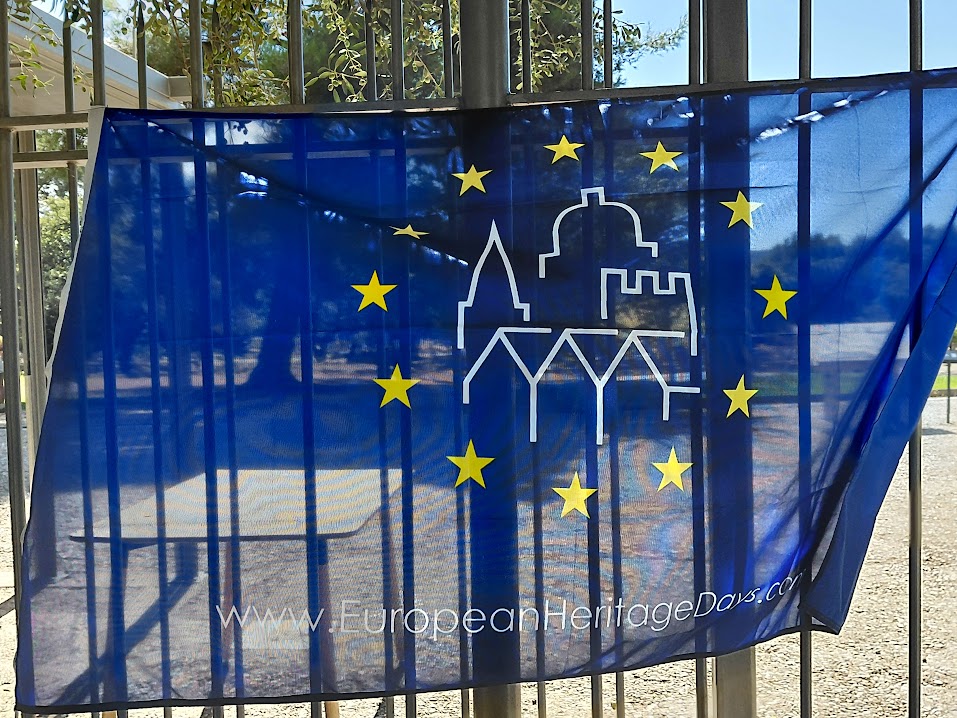
We also coincided our visit with the last weekend in September, known as the European Heritage Days, when in Greece state museums and archaeological sites are open free of charge.
From our village, it’s a good two hour drive. Going there we took the mountain road that goes through the village of Neda (named for the water nymph) and takes you near the Temple of Apollo Epicourios, one of the best preserved Greek Doric temples, definitely worth a visit.
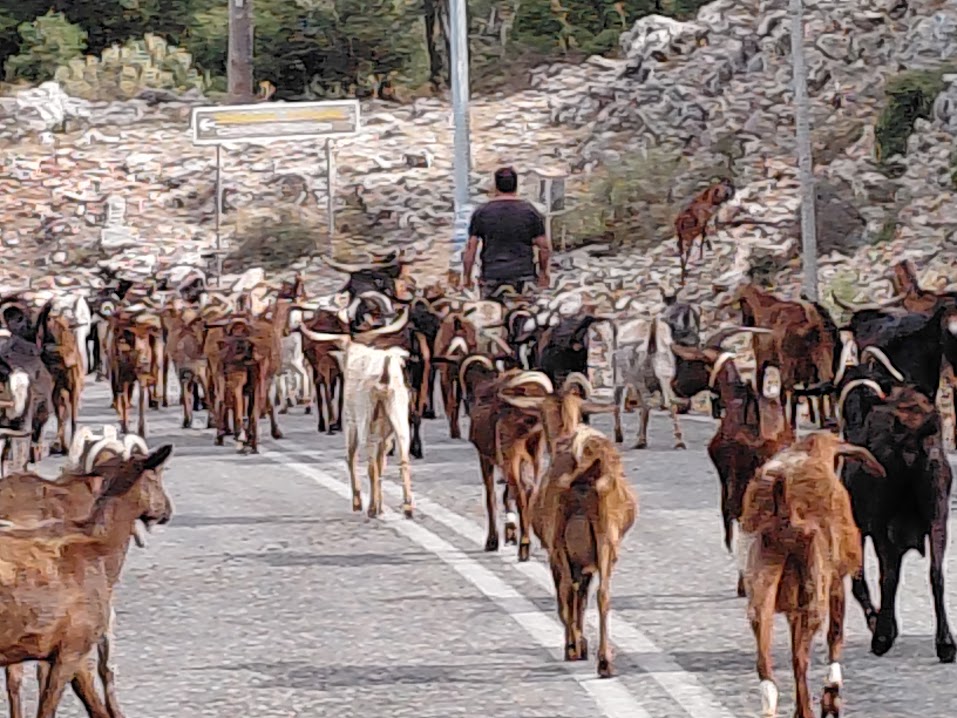
As with any road in rural Arcadia, you might have to share it with the goats. The “shepherd” was in no hurry to move them away from the road
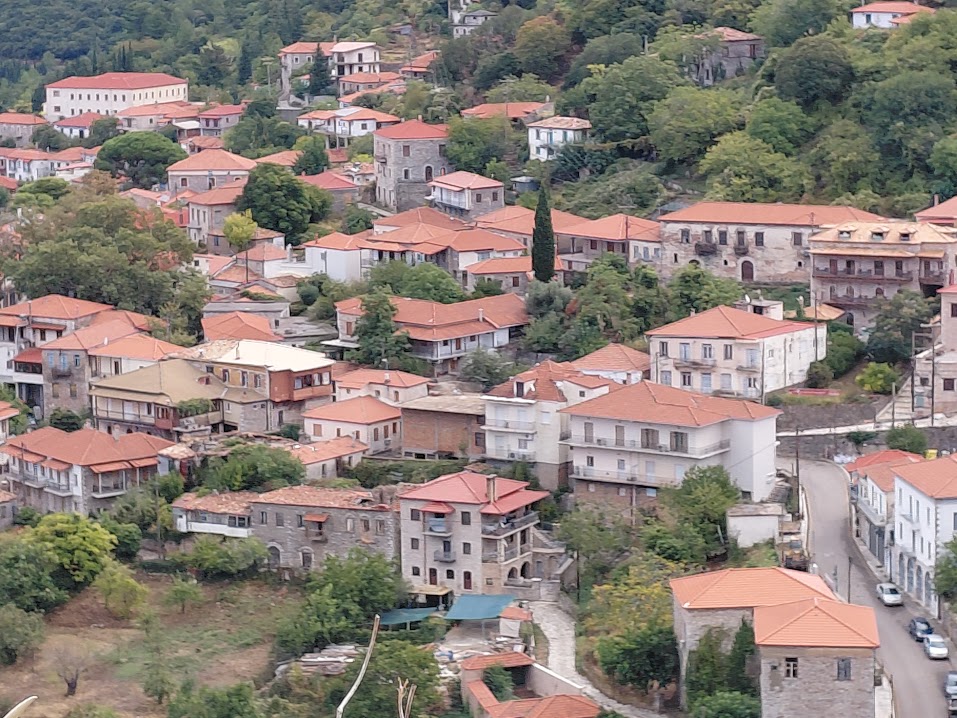
We pass through the village of Andritsena, where many years ago on a cold winter day we drank tea and brandy in the main square of the cafeneion, operating since 1830, known for its collection of glitsas or wooden canes by the door. Note the typical red ceramic roofs of the area.
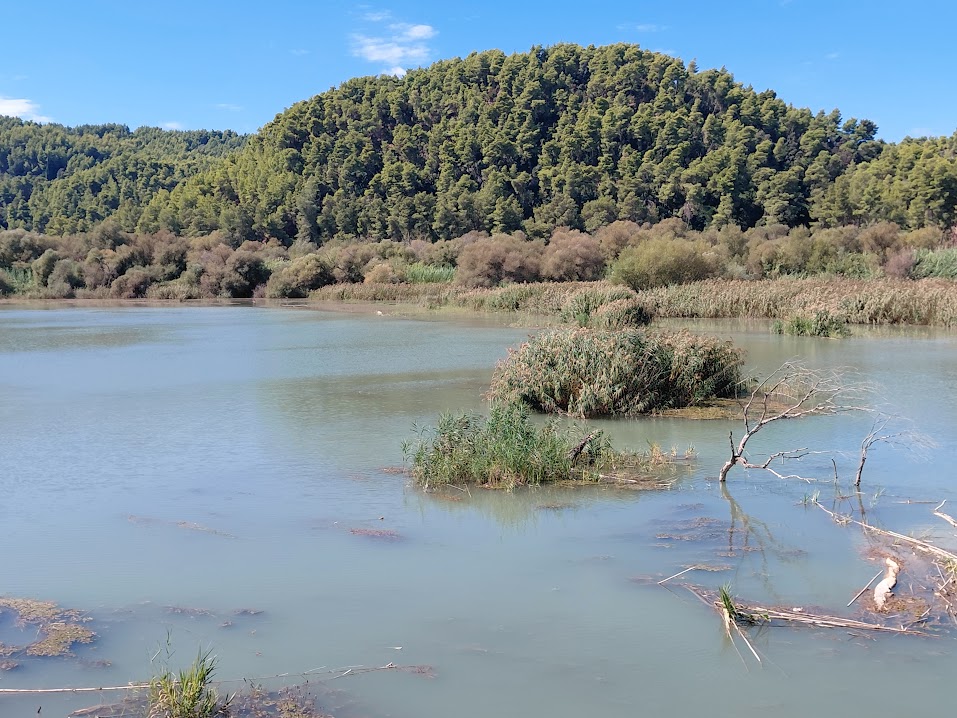
The sanctuary, in the province of Elia, is a valley between the Alfeios and the Klasthenis rivers. In ancient times, you could even reach Olympia by boat.
From the modern village, with the usual souvenir shops of magnets, hats and t shirts as well as tavernas and hotels, look for the signs for the archaeological site. From the parking area, it’s a short walk to the main gate.
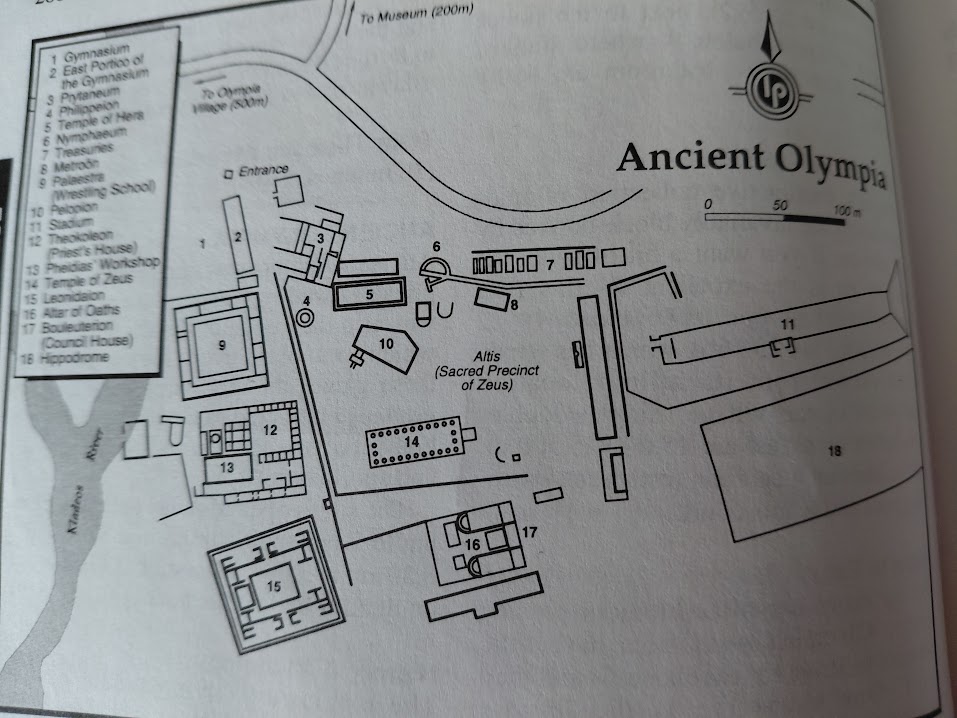
Inside the Altis, the sacred grove
The altis began to take shape as far back as the 10th c BC, devoted mainly to Zeus, but the first monumental buildings were constructed in the 7th and 6th c BC and then more were added in the subsequent years.
The spacious area is full of olive trees whose small green olives this time of year will be ready to start picking in November. Plane and oak trees also give you shady relief. And it was hot. Although it felt cloudy and cool along the way, suddenly the sun burst through blue skies while we explored the area.
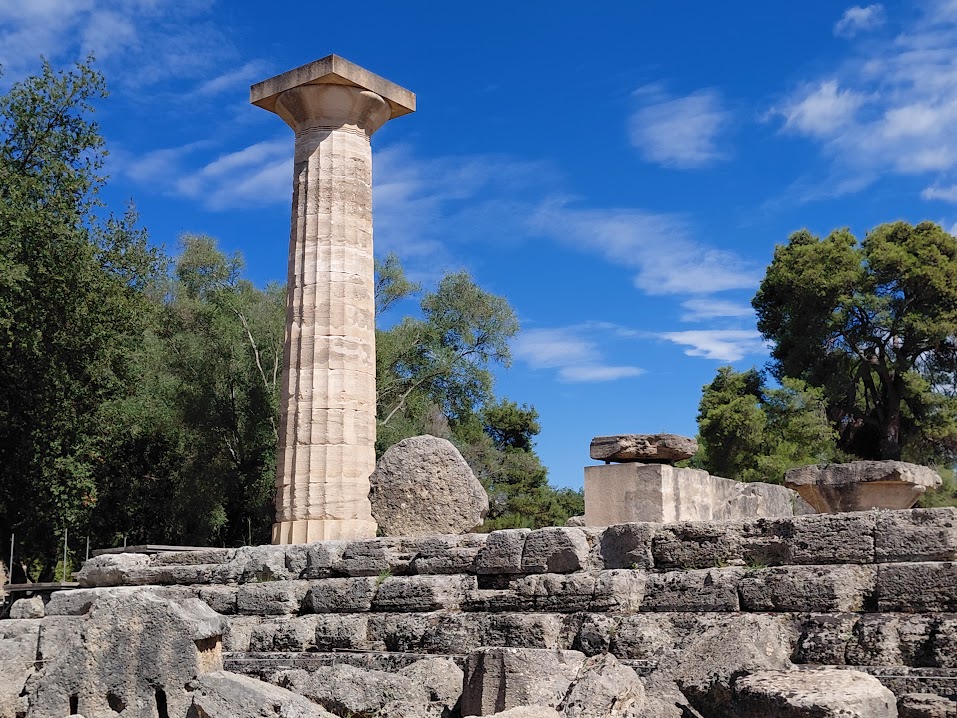
At the center of the altis is the Temple to Zeus. This column was restored by German archaeologists to show the actual size. Nothing was left standing after a couple of earthquakes destroyed it in the 6th c AD.
Inside the cella, the inner courtyard of this colossal Doric temple stood a huge gold and ivory statue to Zeus, made by the sculptor Pheidias, who had a workshop right outside the altis, in the 5th c BC. At 12 1/2 meters tall (41 feet), the statue was one of the seven wonders of the world. For 800 years it stood until the end of the 4th c AD, when the Byzantine emperor Theodosius I gave the order to close the “pagan festivities.” The statue was transported to Constantinople and most likely burned in a fire that engulfed the city in 475 AD.. Here is what it looked like (from the museum) In Zeus’ left hand he holds a scepter with an eagle and in his right, a nike (winged victory).
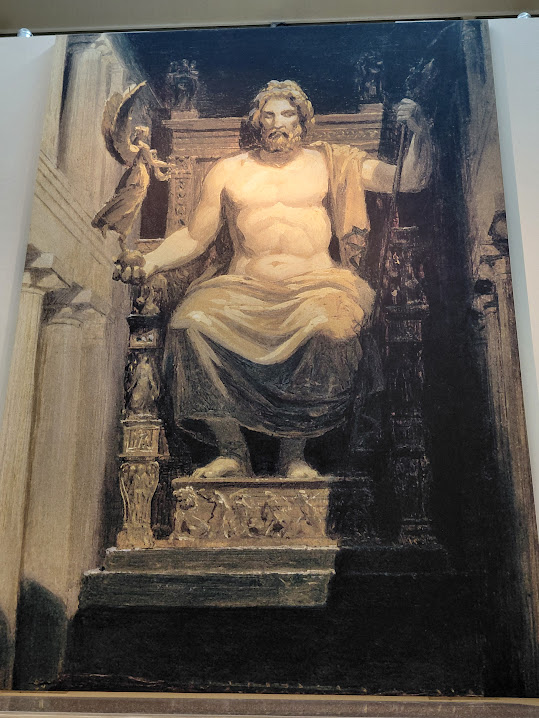
The legend says that Zeus himself showed he was pleased by the statue in sending his characteristic thunderbolt to the earth, as Pheidias had asked him
In front of the altar area is where you gave sacrifices to the god.
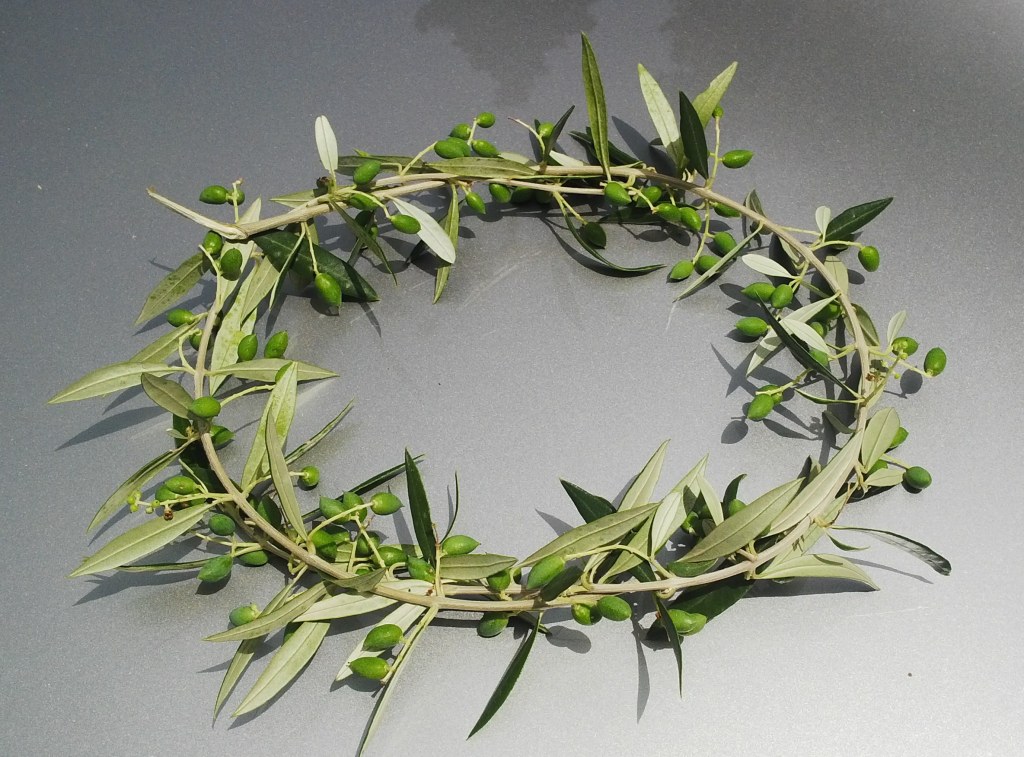
Also in front of the temple is where the sacred wild olive tree grew, that was used to crown the victor of a competition. There was only one winner, as opposed to the three — gold, silver and bronze — in modern games. The olive wreath or crown was symbolic — a victory brought incredible glory, for you, your family, your town. You had the right to have a statue made for you, as well as a poem written to proclaim your glory. What could be more important?
Pausanias, the Greek historian and traveler, writes that for people living in colonies, for example in southern Italy and Sicily, having an Olympic winner could put your village on the map and show you were as “Greek” as anyone.For instance, the destroyed Sicilian polis of Naxos, he claims, would have been completely forgotten if not for its four-time Olympic champion.
At first the games were only one day for a foot race in the stadium, but gradually other events were added like wrestling, boxing, chariot and horse racing and extended to five days. On the middle day, there was a huge barbecue in front of the Temple of Zeus known as the ekatomvi (meaning 100 oxen). After offering a little to the god, the rest was for the guests and spectators. Most people usually ate very little meat, so this was an incredible feast.
The Olympia sanctuary is devoted to both Zeus and Hera. The Temple of Hera is actually older than Zeus’ temple, dating from 600 BC.
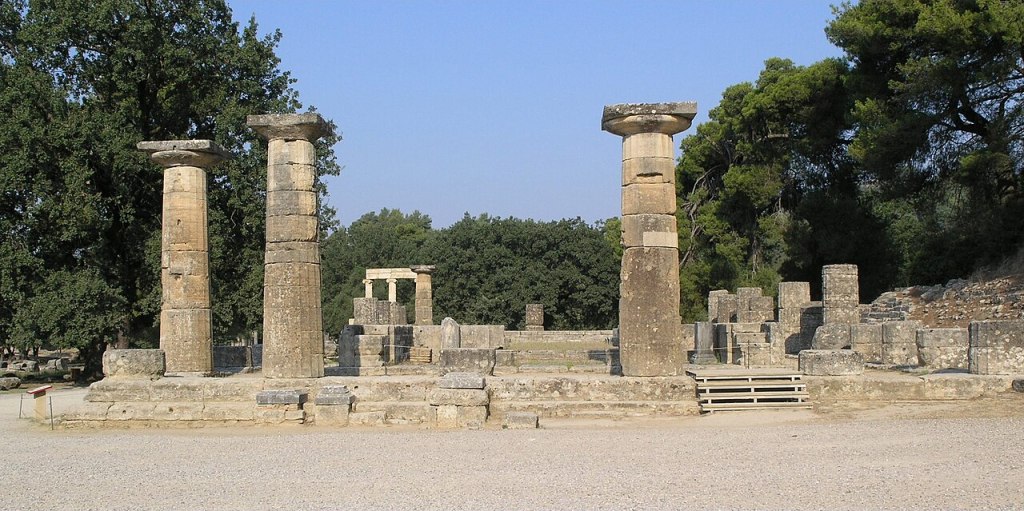
It is here that the modern Olympic flame ceremony takes place every two years, for both summer and winter Olympics. The torch is lit with a parabolic mirror (using the sun) and then with runners, it’s carried throughout Greece and then presented to the host country in a ceremony at the Panathenaic Stadium (the Kalimarmaro) in Athens.
In the ancient Olympics, the flame burned all the time as an offering to Hestia, goddess of the hearth.
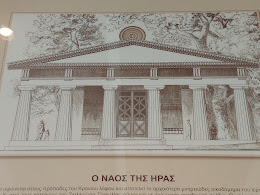
Here is what the Temple of Hera looked like (from the museum).
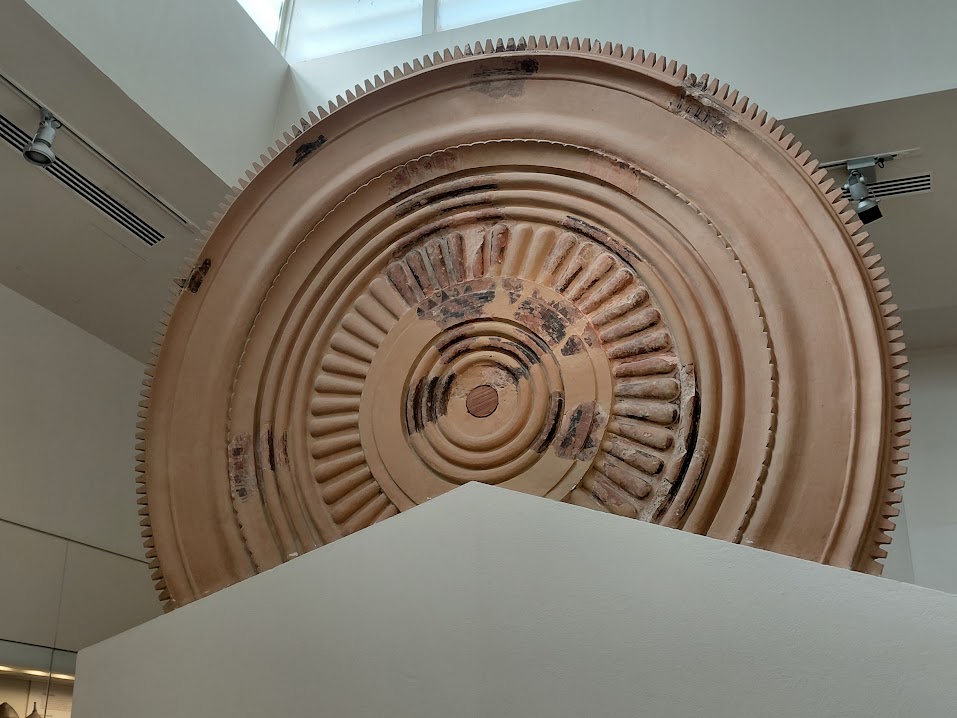
This huge architerion, as it was known, marked the top of the temple. These were decorated terracotta disks used in archaic era temples.
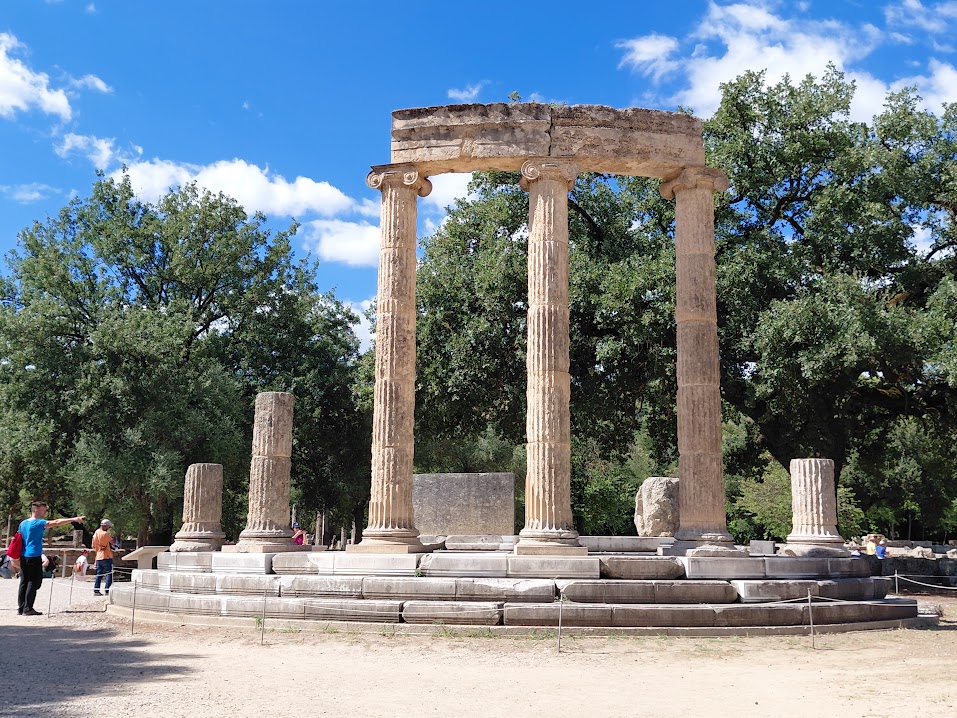
Also inside the altis is the Philippeon, the only round structure, with its ionic columns circling around. Built by King Philip to glorify the Macedonian victory at the battle of Charoneia, and dedicated to Zeus, it was completed by son Alexander the Great after his father’s death. Inside were statues of Philip’s family.
Also in the altis was a shrine to Pelops, the legendary king, whose name was given to the Peloponnese, a shrine to Rea, mother of Zeus, the Prytaneum where officials gathered, and the Boulefterion where athletes recited their oath.
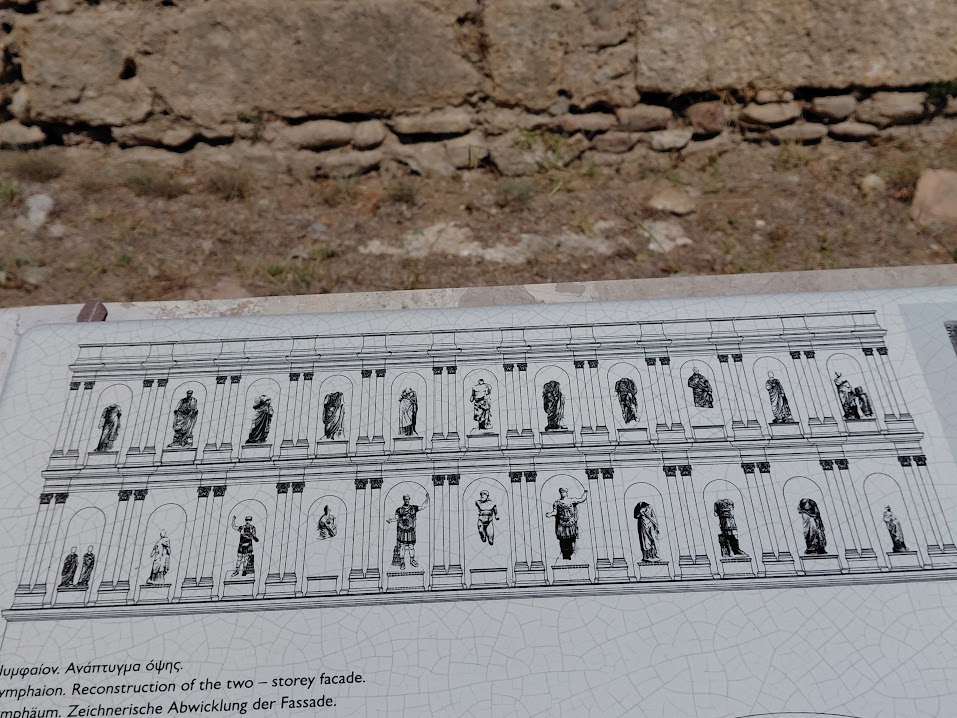
Sanitation and a water supply were always issues. With the Roman conquest of Greece, the wealthy banker Herodus Atticus (the same one who built the Herodion Theater in Athens), gave money in the 2nd c AD to build the Nymphaion, which had an aqueduct and fountain, supplying the site with fresh spring water.
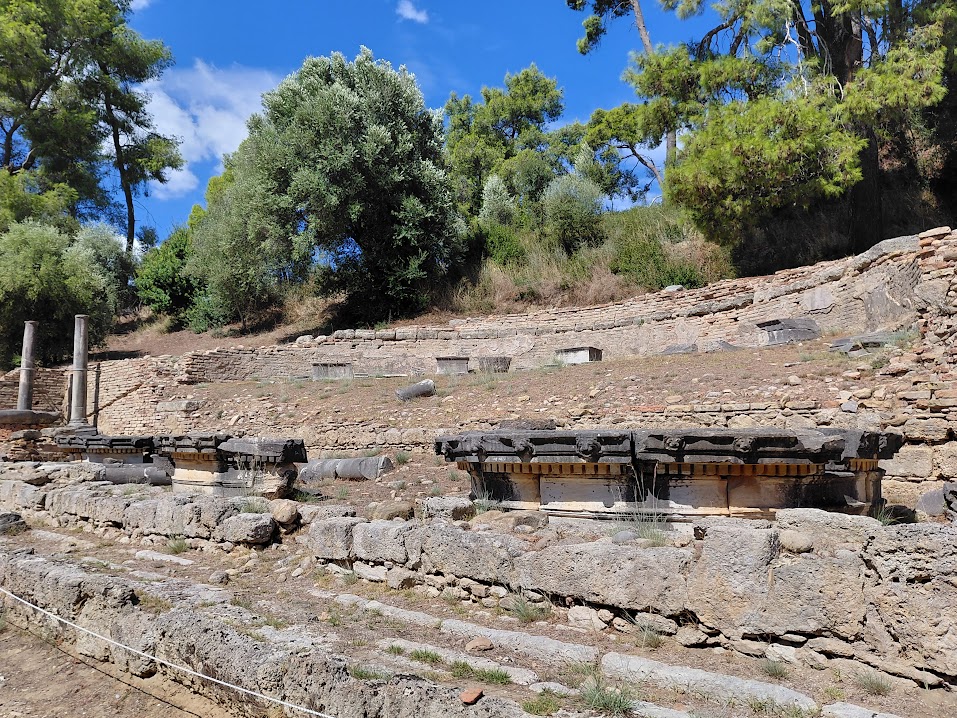
As it was a Roman project, it was large and grandiose and had statues of Herodus Atticus’ family and various emperors.
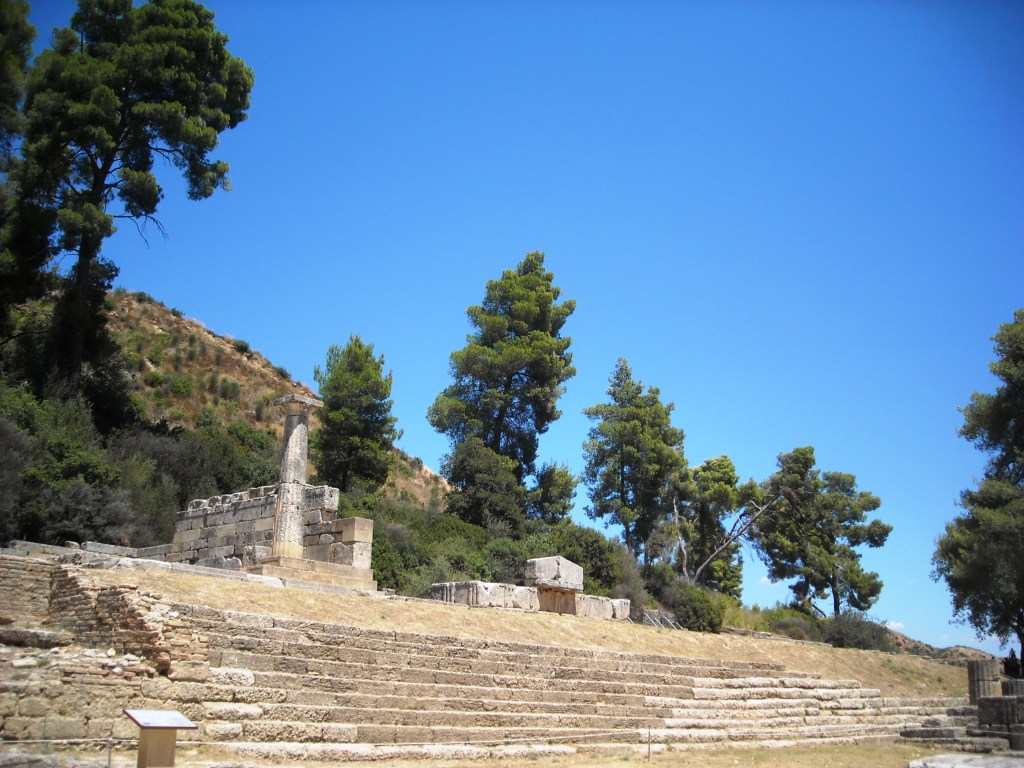
In back of the Nymphaion were the Treasuries, little miniature Temple like structures belonging to each city state.They stored precious metal vessels, statues and weapons and functioned as symbols of prestige and piety for the contributing cities.
The city states usually lived in a perpetual warring state. However, at the time of an Olympiad, there was an echeheiria, a sacred truce that was formally announced by three runners. The truce allowed spectators to travel safely to the games. (After the games, of course they went back to war.)
This was severely enforced. Sparta, that violated the truce one year, had to pay a certain amount for every soldier. It came to quite a significant sum to pay.
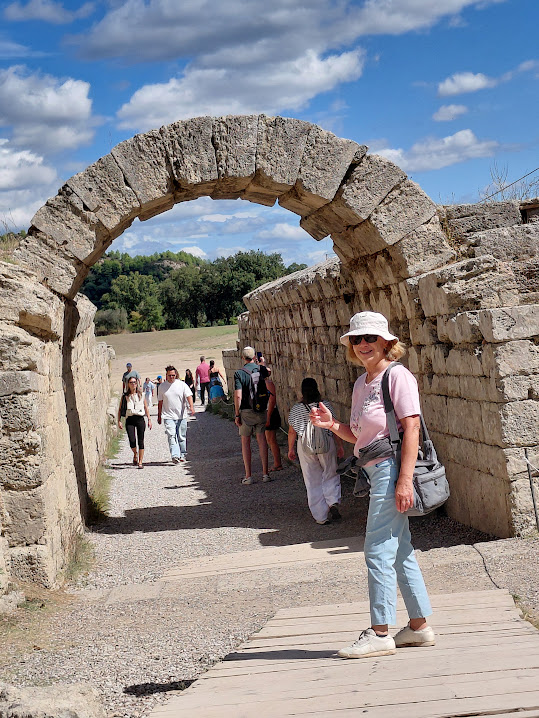
From the altis you cross into the stadium.This is the 3rd one that was built, this one from the 5th c BC
The Zanes, corruption and Nero
Right at the entrance to the stadium, sat a row of bronze statues of Zeus, known as the Zanes (local dialect for Zeus) The statues were paid for by fines imposed on athletes who cheated or broke the rules. Here was public shaming indeed; each statue had a stone base inscribed with the offender’s name, their home city, and the nature of their misdeed! Victory could not be bought, warned the Zanes, and cheating brought eternal disgrace. Lest anyone think the games were all pure, bribing and cheating were perennial problems.
The Roman emperor Nero, for example, in the Olympics of 67 AD, cared nothing for rules. He was desperate to win the chariot race. Even though he was thrown from his chariot, guess what, he claimed victory. He added contests in music and singing and would you believe it, he won all the contests, maybe because judges were too afraid to award victory to anyone else… (Does this sound at all familiar?) After his death, the Olympic judges had to repay the bribes he had given and then they declared the “Neronian Olympiad” to be void.
Although he was certainly a disgrace, a project has just begun to restore the villa where Nero stayed.
At the stadium, only the judges had special seats, that you can see to the right. otherwise, the spectators relaxed and watched on the grassy hills around, where we rested our weary feet and watched some visitors do some running. One group of tourists came prepared with olive wreaths that they crowned each other, the “Olympic winners.”
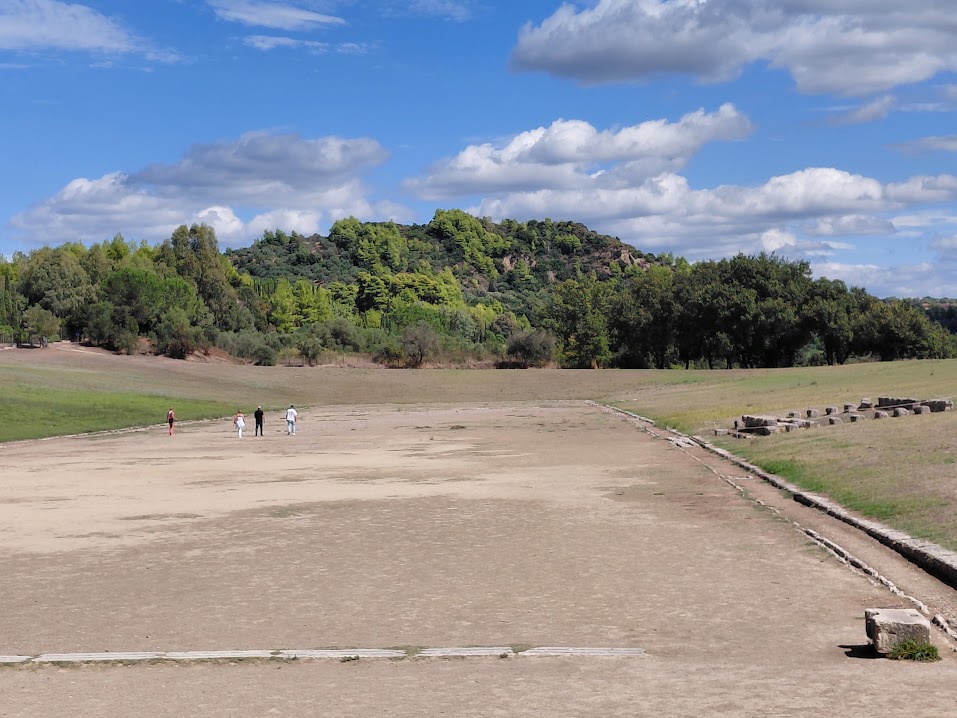
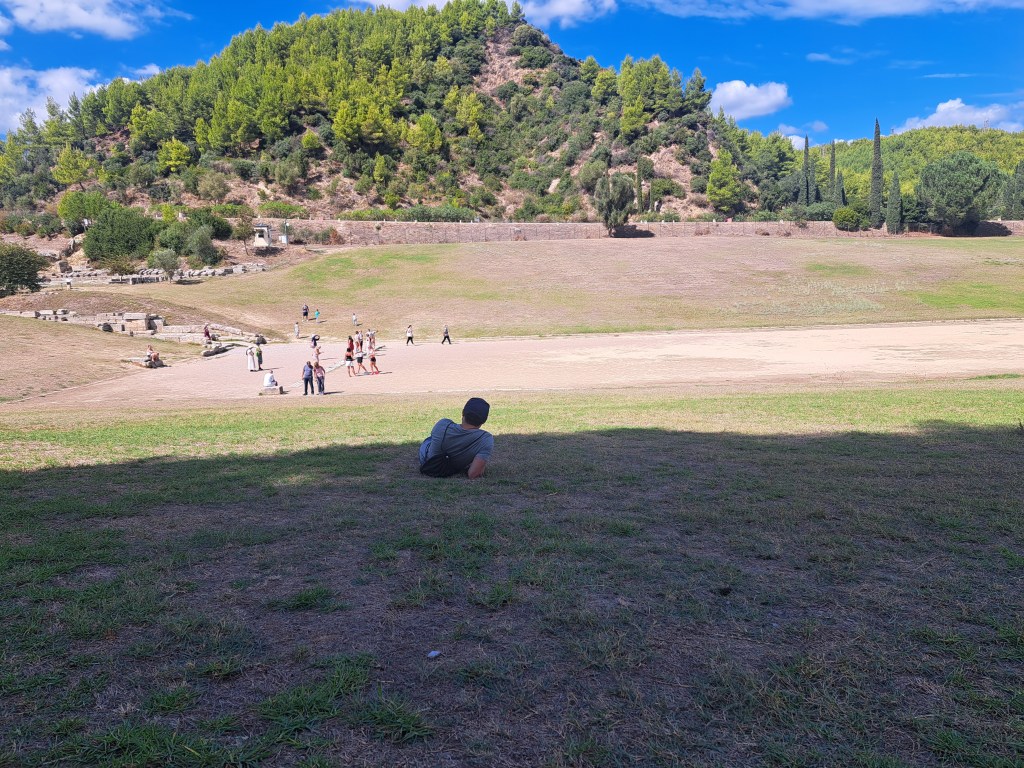
So, who attended? Males of course! Free, not enslaved Greek males and then with the Romans, they could be born outside of Greece. Women? Not allowed either as competitors or spectators. (One reason given is that in most of the competitions men competed naked.) There was a loophole though that allowed women to win the chariot races. How did this happen? They were not actually driving them, but they were allowed to own the chariots, so they were allowed to claim victory. Not much of a solace.
Outside of the Altis
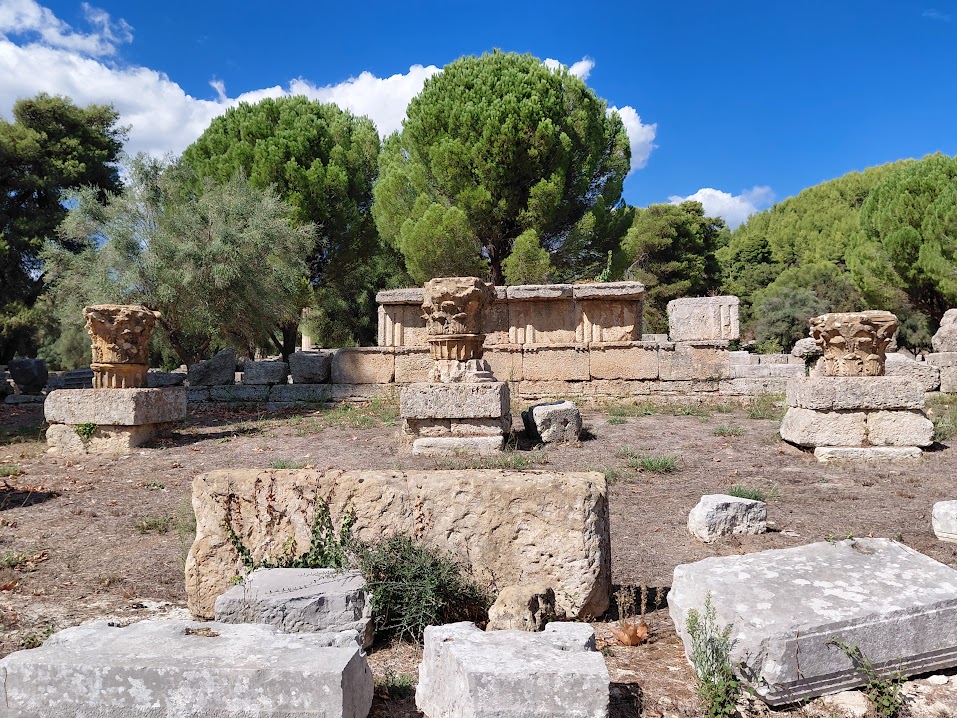
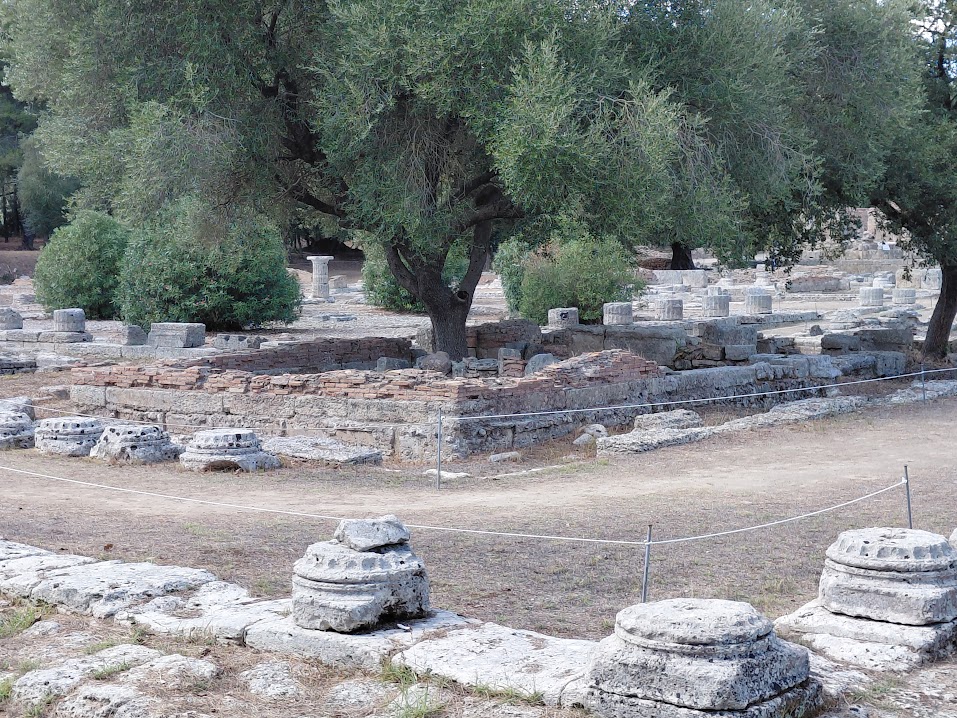
The Leondaio, the largest structure at ancient Olympia, was a guest house for official visitors and administrators, let’s say elite guests, not the average spectator. It was like a 4th century BC luxury hotel. Where did the average spectator sleep? In makeshift huts or tents or just the open air outside the altis. Just like Epitectus described…
While the many outer Ionic columns and inner Doric columns are no longer standing, you can see their bases, and lower foundations outlining the impressive internal central courtyard.
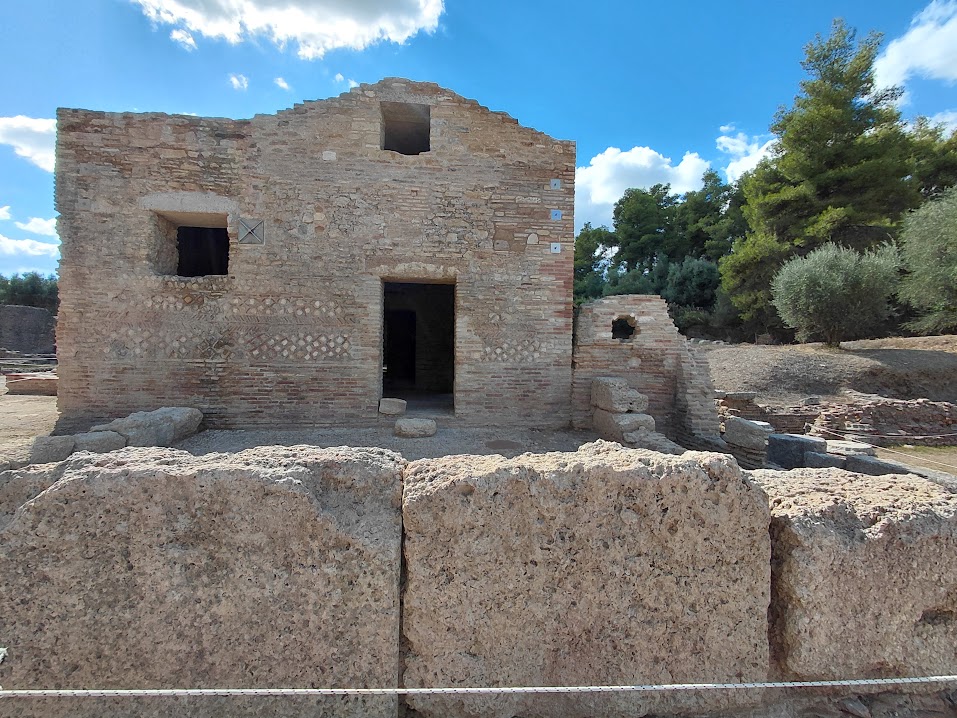
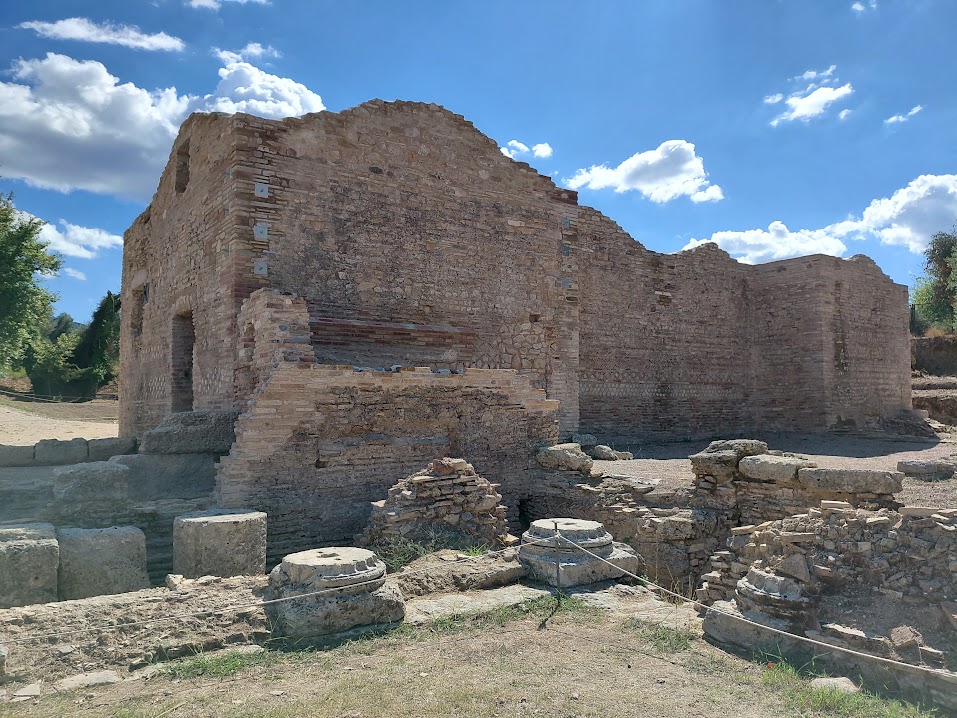
Near the Leondaion are the reconstructed baths. Unlike most of Olympia, this area is remarkably well-preserved and retains rare sections of its original height and brick ceilings.
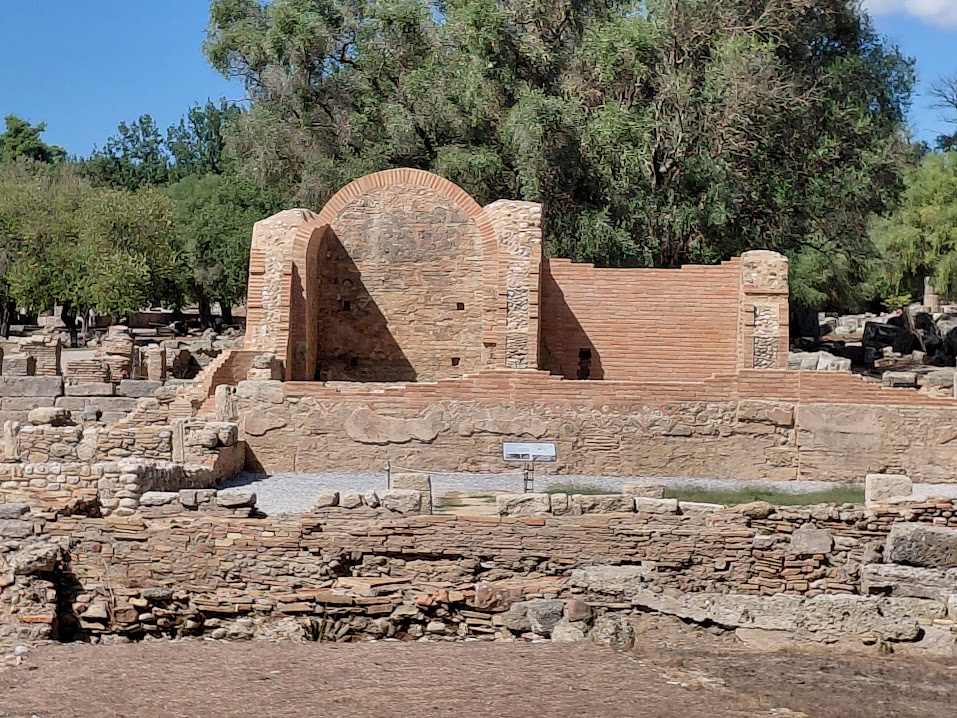
When you look inside, you can see restored mosaics on the floor.
Where Athletes Trained
In the early years of the Olympics, athletes just trained outside with no special building
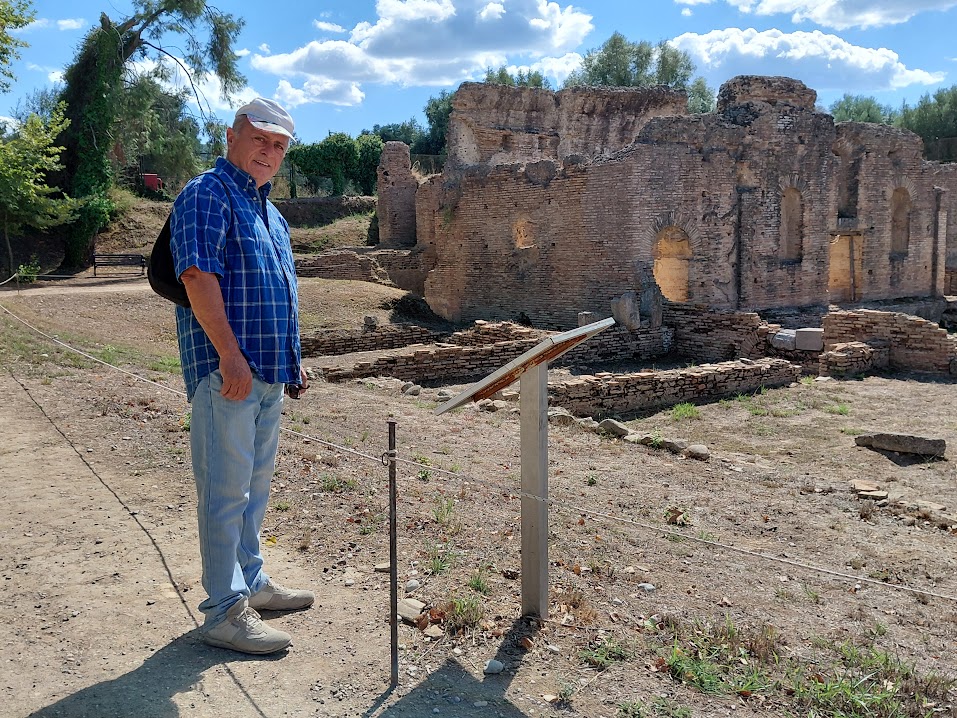
In the 3rd century BC, the Palaistra was built, where athletes of wrestling and boxing trained. The columns surround a central court. Inside are special rooms for undressing and anointing the body with oil, an important part of the competition.
If you went to watch a boxing match, you could for sure expect to see blood and gore. No boxing gloves. And only two rules: no biting and no gouging out eyes.
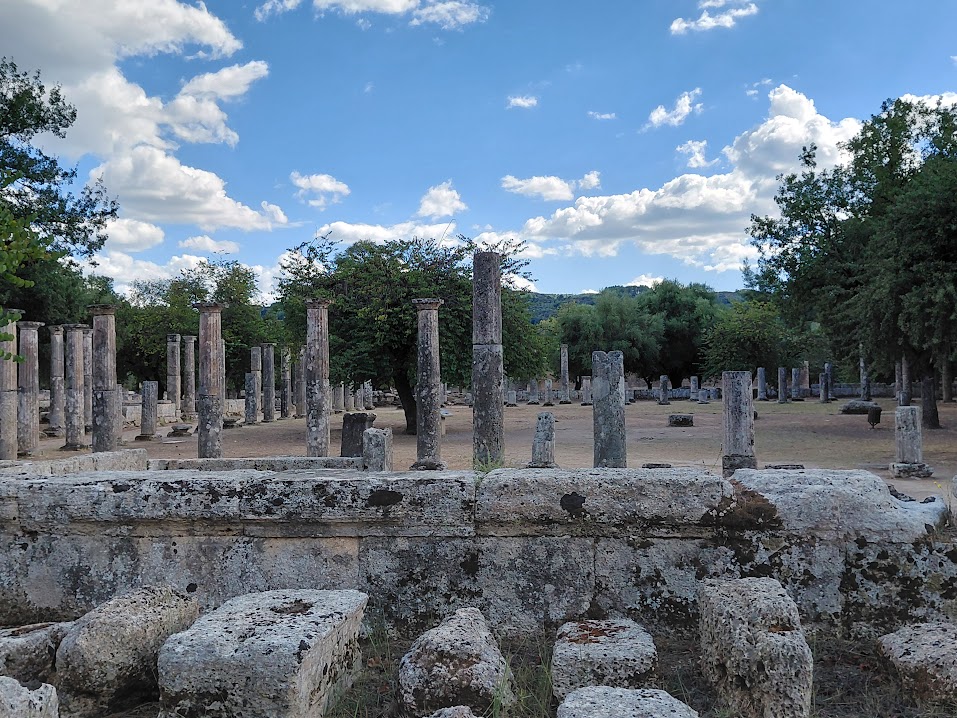
The palaistra too was where philosophers, orators and poets used to give their lectures and communicate ideas. It’s said that the historian Herodotus came to Olympia to read some of his new history work.
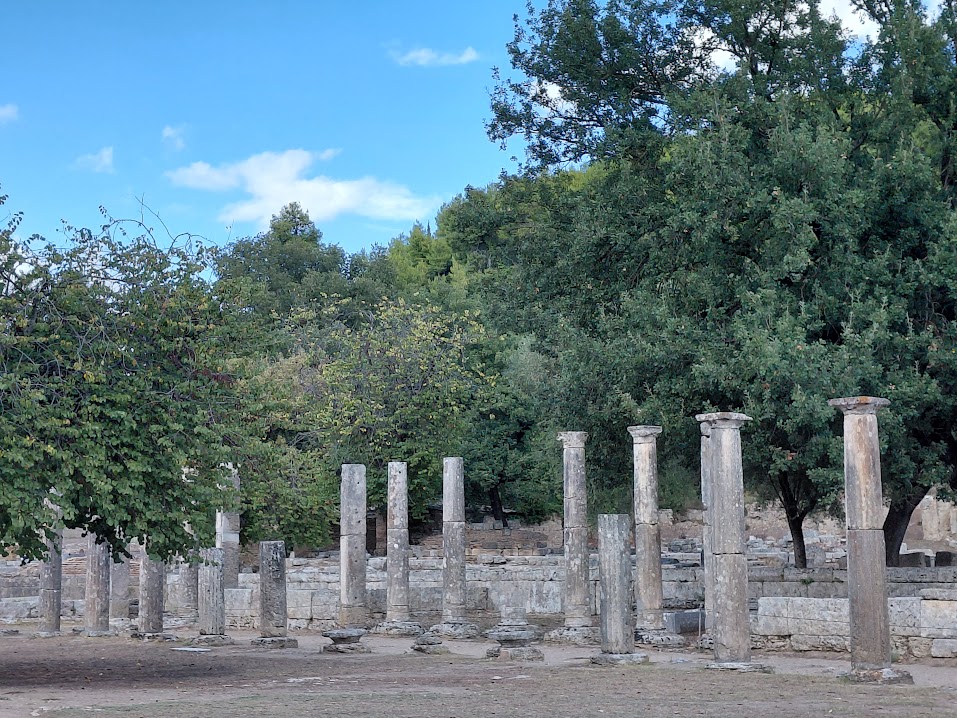
Next to the Palaistra was the Gymnasium, built in the 2nd c BC, where athletes trained for running events and the the javelin throw, discus throw and long jump.
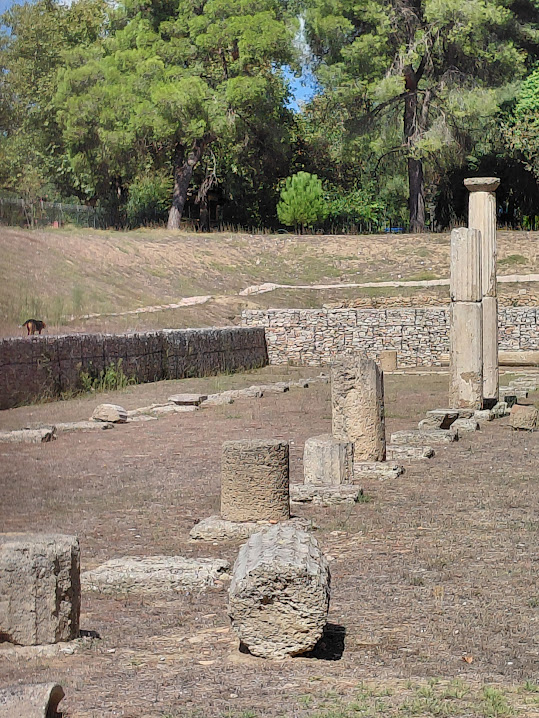
After Theodosius II closed the games and then all non Christian temples in the early 5th c AD, the competitions still continued for a bit, but interest was waning.
Christians moved into the area. This early Christian basilica was built on the site of Pheidias’ workshop.
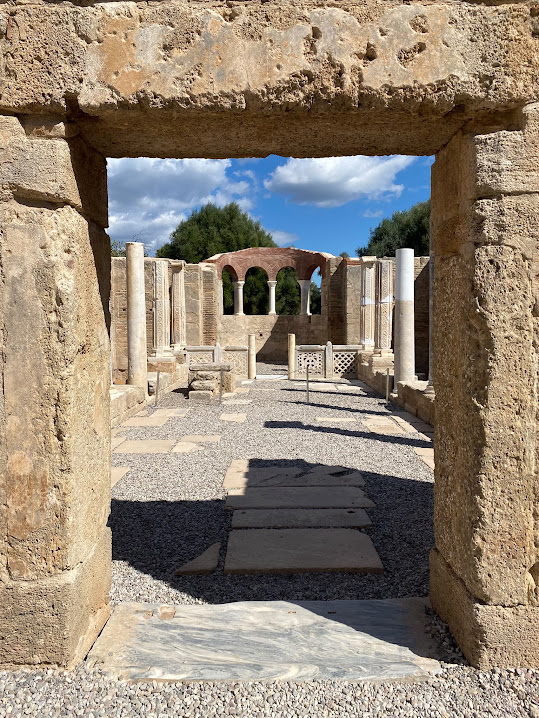
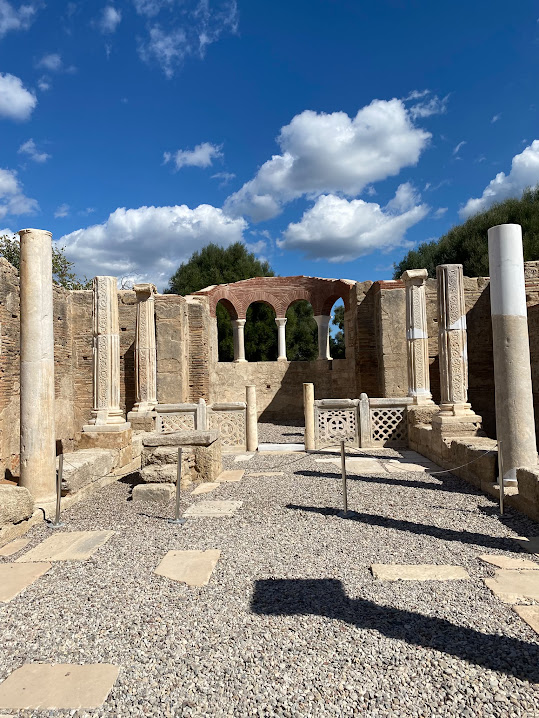
But just to complete Theodosius’ decree, there were floods, attacks by barbarians and two large 6th c AD earthquakes that finally flattened the temple of Zeus and the rest of ancient Olympia.
What was left of the site gradually started to sink under the earth. It wasn’t until the 19th century that excavations, first French, then German, began to renovate the ancient site. These excavations and the rediscovery of ancient Olympia fired the imagination of many and brought a kind of classical nostalgia in the late 19th century.
One of those most affected by the renovations was a French baron, Pierre de Coubertin, who fought tirelessly for reinstating the Olympics in a modern form and dreamed of sports as a way of breaking down social, political and religious borders. Thanks to him, the modern Olympics were reborn in Athens in 1896. An idealistic idea for sure but worth trying.
The Archaeological Museum
Your feet might ache but you don’t want to miss the Archaeological Museum, a short walk from the site’s main gate on a stone path.
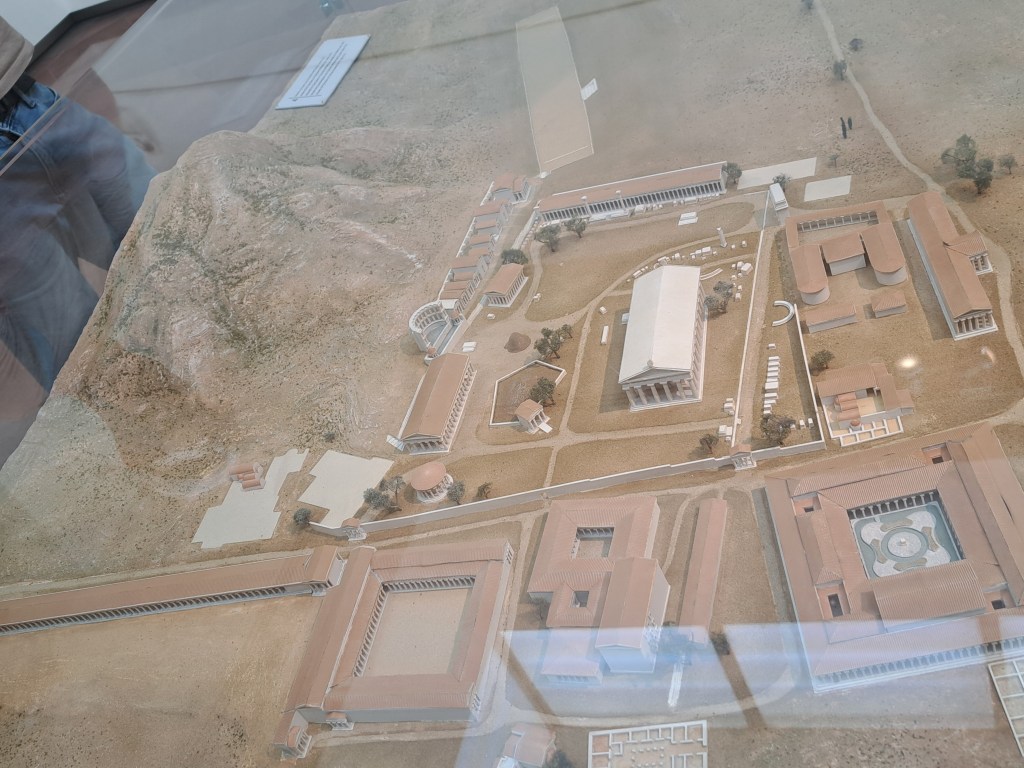
A vast room inside the museum shows you the statues on the Temple of Zeus pediments. On one side was the story of the Lapiths against the Centaur, always a popular theme on Greek temples, and on the other, the battle between Hippodameia and Pelops.
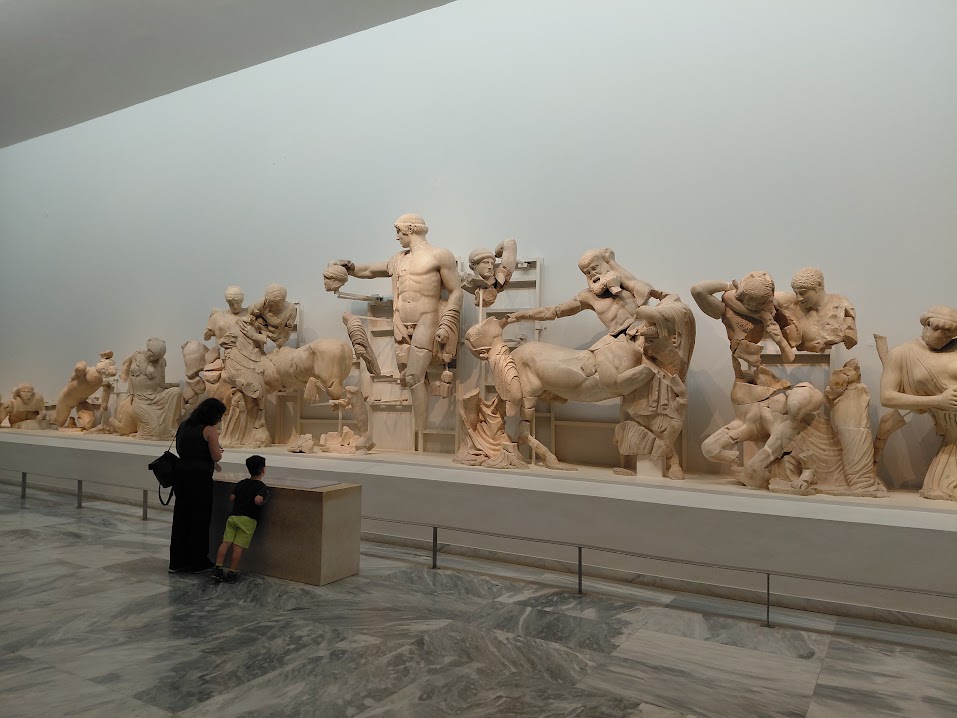
From the museum:
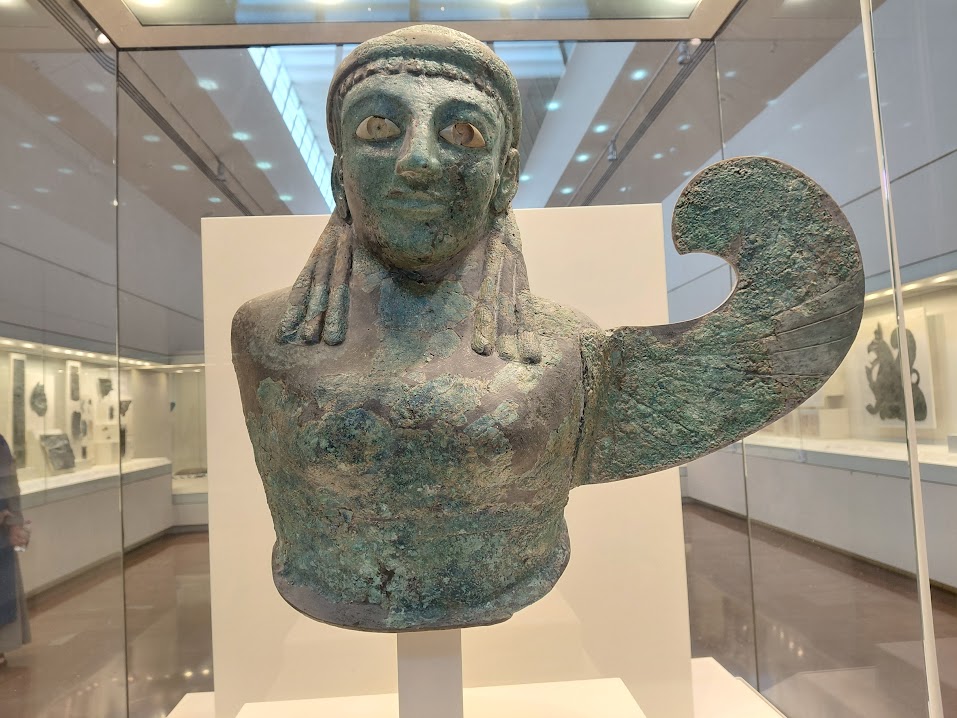
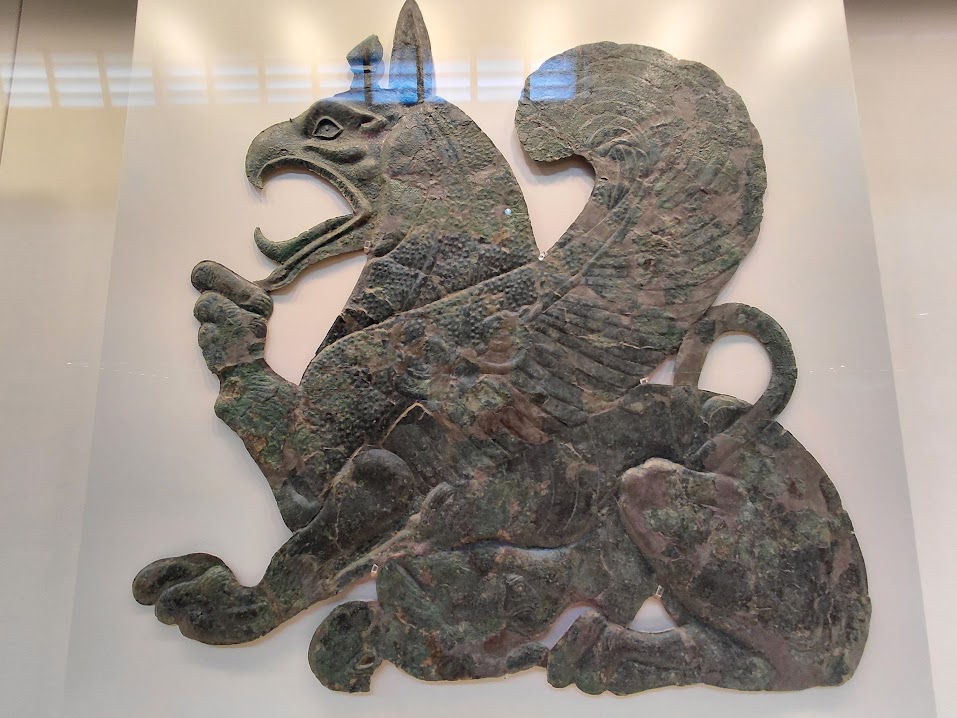
The first room had a number of bronze griffins. With the head and wings of an eagle and body, tail and back legs of a lion they represented great strength and vigilance.
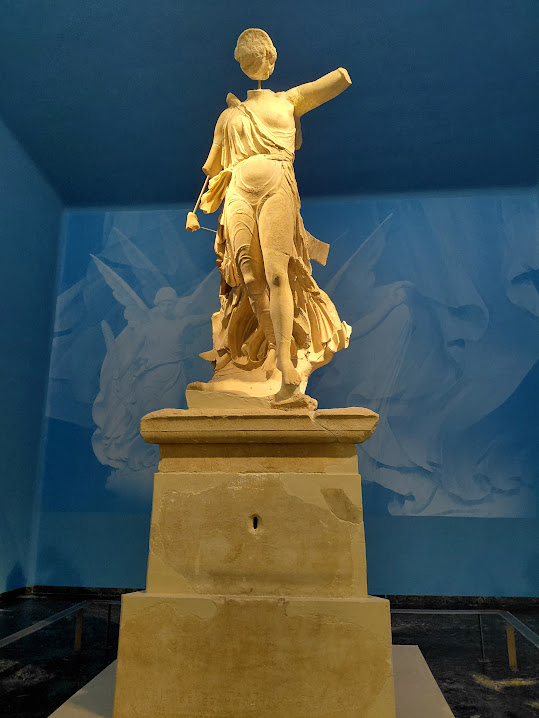
This beautiful and delicate Nike of Paleonos was a 2 meter tall (over 6 feet) marble votive offering to Zeus, that stood inside the Temple.
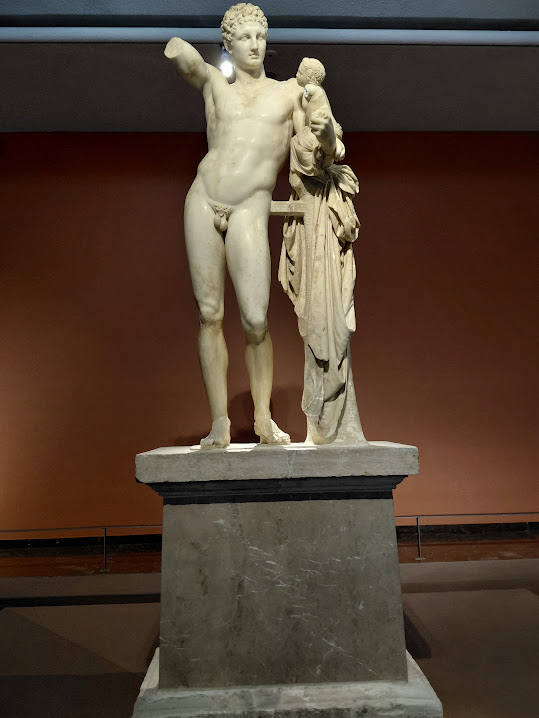
A museum highlight is surely this marble statue of Hermes, messenger of the gods, by the renowned sculptor Praxiteles from the 4th c BC. The story is that Hermes is entrusted by Zeus to take the infant Dionysos to the Nymphs, to nurse him. In his raised arm he is probably holding some grapes, symbol of Dionysos, god of wine, and the infant is reaching out for them. The statue originally stood in the Temple of Hera. There it was found in the late 19th c. when excavations began on the site.
There are two more museums, one the history of the Olympic games (which would have been interesting but we were totally zonked out) and also one on the particular excavations that the German archeological team had carried out.
As we saw, the ancient Olympic games were a mix of religious devotion and great spectacle. The games were never totally apolitical. Even in ancient times, they were a political tool for cities and city states to promote themselves. But they always went on, though even then there were sometimes boycotts and protests. As for the Olympic ideal of fair sportsmanship, this is an issue any time and any place, but certainly something to strive for.
We leave Olympia, deciding to go back to our village by driving to the west Ionian coast (about 15 minutes), then south until Kalo Nero (right before Kyparissia), east and then up to the mountains.
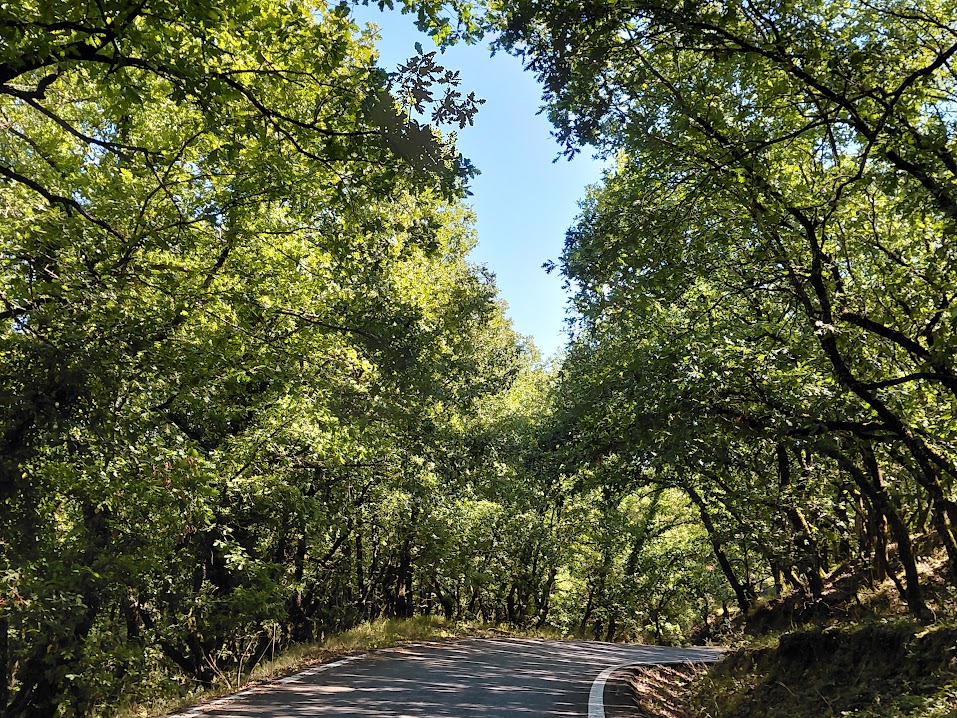
Here is what it looks like driving along the leafy mountain road up to our village. Happy trails!!
Practical Tips:
As the site is huge, you need at least 4 hours to experience it fully, maybe more time if you plan to go to more than one museum. Wear comfortable shoes and a hat and carry water, though there’s a snack bar near the Archaeological museum.
Ancient Olympia is a good 3 1/2 to 4 hour drive from Athens, so it’s really too far to do in one day… There are plenty of hotels around in the new town.
Off the main square I noticed the Hotel Pelops, that’s been around for over 40 years. From my Fodor’s 1983 Greece on $20 a day, the writer had great things to say about this hotel. “The charming Hotel Pelops is really a delight, from its Japanese paper lanterns to the owner’s special drink, a theodoris (wine, Campari and orange juice). The restaurant serves home-cooked meals and there are curtains in the showers.”
I love this reference to shower curtains. Anyone who’s stayed in a “rooms to let” or small hotels over the years, can attest to the rarity of having a shower curtain and as a result soaking wet bathroom floors …
Thank you for reading! What was most interesting / surprising to you about ancient Olympia and the ancient Olympic games? Please leave a comment.
Kali gymnastiki! Good exercise!
If you like what you read, hit the like button and subscribe. Please share with your friends and social media. I’d love to hear your comments below.
There’s no need to log in to leave a comment. Just give an email address and your name.
Subscribe to become part of the olivesandislands community! Get new blogs and occasional newsletters delivered directly to your inbox. It costs nothing to subscribe. Olivesandislands does not share email information.
Note: Be sure to click on the confirmation email after you give your email address.

Sherri Moshman Paganos is a writer and former educator, inspired by her life in Athens, where she and her husband are happily retired and enjoying their travels in Greece and abroad. You can check out her writing — fiction, non-fiction, poetry and articles here.


The landscape is stunning now so I can only imagine what it was like when the site was chosen for the sanctuary and games.
LikeLiked by 1 person
That’s right, being a fertile valley by the rivers, is likely one of the reasons it was chosen for the sanctuary. Also, in ancient times, Olympia was closer to the sea than it is today.
LikeLike
Wonderful account of this amazing site. I was there years go and stayed at the home of a friend not far from the site. It was November and her Mom made a soup from the meat of a large adult goat which she simmered over an open fire all night long! No additions, just the broth and the meat thickened with rice. We added lemon juice just before eating. It was most fantastic soup I’ve ever had.
This reminds me that they say the ancient Olympic athletes were fed large quantities of meat to give them strength. Some philosophers considered this “cheating” akin to the doping controversies of modern Olympic games. Bravo Sherri, very enjoyable read. I love the statue of Hermes with baby Dionysus. I believe it was also a work of Praxiteles? Bravo Sherri. Good work, Linda Makris
LikeLiked by 1 person
Thank you so much Linda. What a great story — I guess you needed a whole night to cook that meat! The taste of certain foods always stays in our memory… And interesting about the attitude given to the giving of meat to athletes, I didn’t know that. Yes the sculptor is Praxiteles, I added that in the text.
LikeLike
Great article.
If Nero were alive today, he and Trump would get along swimmingly.
LikeLiked by 1 person
Thanks Neil. Oh yes they’d get along great. Birds of a feather…If only we could nullify his administration the same way the judges did to Nero’s Olympiad!
LikeLiked by 1 person
The article brought me back to when I had visited Ancient Olympia. There’s something about this place that feels so alive as you walk among the ruins.
(You might like to read about the therapeutic practitioners who tended to the athletes, and the methods they used.)
Thank you, Sherri, for another very interesting entry!
LikeLiked by 1 person
Thank you Stella. Therapeutic practitioners for the athletes — that sounds intriguing! Will check that out.
LikeLike
A marvelous account of the visit and tour. I feel as though I were with you! Thank you, Sherri!
LikeLiked by 1 person
Thank you so much Starry!
LikeLike
Ancient Olympia is a mythic place full of magic energy ! Thank you for reminding me how much I love this area and for giving me the opportunity to visit it again through your article 💐
LikeLiked by 1 person
Thank you Olina — I’m glad you got a chance to relive a place so mythic and special to you (and to so many)!
LikeLike
I wish I’d known all these details when we visited Olympia years ago! Such an important site.
LikeLiked by 1 person
Thanks Roz … years ago I think it was also harder wasn’t it to find information.
LikeLiked by 1 person